Home · Kitchen · Cleaning
Best washing up liquids: six compared, and only one tells you how much to use
Six washing up liquids read against their own ingredient lists and their own dosage instructions, where those exist. Only two of the six publish a dose, which means that for the other four you cannot work out the cost of a sink of washing up at all. That includes the brand whose entire marketing rests on how little of it you need. We also went looking for the preservatives, because there is a real dermatological literature on hand eczema here, and the answer inverts the price list.
By Mrs House · Updated 27 August 2026 · 15 minute read
Mrs House is independent. Nobody pays for a place in a ranking here.
The short answer
Buy the Ecover at £4.25. It has the cheapest real cost per sink, which sounds absurd until you notice it is the only mass market bottle that tells you three millilitres is enough.
- Best overall: Ecover Lemon and Aloe, £4.25 for 950ml. 1.34p a wash at its stated dose.
- Cheapest per litre: Tesco Original, 62p for 500ml. No dose published, and preserved with MCI and MI.
- Best fragrance free: Bio-D Fragrance Free, £2.74 for 750ml. 4.57p a wash at its stated 12.5ml.
If you have hand eczema, avoid the isothiazolinones, which rules out Fairy and the Tesco bottle and nothing else here.
How we assessed these
Six bottles, one method. We could not put them in a sink and count plates, so we did the thing nobody else does: we read what each maker is legally obliged to publish, checked whether they actually publish it, and then costed each product on its own stated dose rather than on the price sticker.
That second step matters more than it sounds. A price per litre comparison is meaningless without a dose. Ecover costs £4.47 a litre against Fairy at £2.72, and yet Ecover works out cheaper per sink of washing up, because Ecover tells you three millilitres will do and Fairy tells you nothing at all. Where a maker publishes no dose we have used the Dutch national institute RIVM figure of seven grams per five litre sink, which is the default regulators use for consumer exposure, and marked it as an assumption every time.
Five things decided the scores.
Does it publish a dose. Without one you cannot cost it, and the brand benefits from the confusion.
Does it publish a full ingredient list. Annex VII of the detergents regulation requires manufacturers to make a full INCI ingredient list available on a website. That is a legal duty, not a courtesy, and three of the six here do not meet it.
Preservatives and fragrance allergens. Specifically the isothiazolinones, because the published research on allergic contact dermatitis is strong and the products that contain them are not the ones you would guess.
Certification you can check. A B Corp score with a number and a date counts. A Leaping Bunny logo with no licence number is a claim.
Owner evidence and price. Ratings from at least two retailers, plus the real cost of a year of washing up.
All prices read on 27 August 2026.
The ranking, at a glance
| Product | Size and price | Per litre | Cost per wash | Isothiazolinones? | Score | |
|---|---|---|---|---|---|---|
| 1 | Ecover Lemon and Aloe | 950ml, £4.25 | £4.47 | 1.34p at its stated 3ml | None declared | 3.8 |
| 2 | smol Washing Up Liquid | 4 x 500ml, £8.50 | £4.25 | 1.7p at 125 doses a carton | None declared | 3.5 |
| 3 | Bio-D Fragrance Free | 750ml, £2.74 | £3.65 | 4.57p at its stated 12.5ml | None declared | 3.4 |
| 4 | Tesco Original | 500ml, £0.62 | £1.24 | No dose published | Yes, MCI and MI | 3.1 |
| 5 | Method Coconut Water | 532ml, £3.50 | £6.58 | No dose published | None declared | 2.9 |
| 6 | Fairy Original | 1450ml, £3.95 | £2.72 | No dose published | Yes, BIT and MIT | 2.6 |
The two we would actually buy
Best overall
Publishes a dose
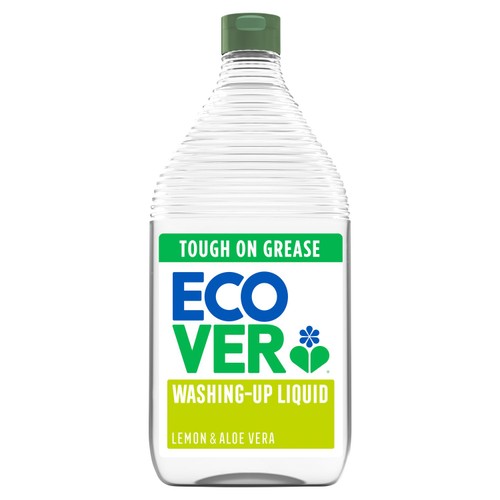
1. Ecover Washing Up Liquid, Lemon and Aloe Vera, 950ml
★★★★☆ 3.8 / 5
Ecover wins this on one sentence printed on the back of the bottle: one squeeze, three millilitres in five litres, is enough for a sink full of dirty dishes. It is the only mass market brand here that gives you a number, and once you have a number the whole category rearranges itself. At three millilitres, a 950ml bottle does about 317 sinkfuls, which is 1.34p a wash. Buy the five litre refill and it drops to 0.94p. A year of washing up, using the regulator’s figure of 426 sinkfuls, costs £5.72 from bottles or £4.02 from the refill.
It also publishes a full INCI list on its own site, which the detergents regulation actually requires and which three of the six here do not do. That list is worth reading, because it contains a genuine surprise. The main surfactant is sodium lauryl sulfate, plain SLS, the ingredient the internet most often tells people to avoid, and the brand that most people assume uses the harshest chemistry is running the milder ethoxylated version instead. What the list does not contain is any preservative at all. No isothiazolinones, no phenoxyethanol. The regulation requires preservatives to be listed regardless of concentration, so an absence in a compliant list means something.
The weaknesses are real. The five litre refill saves 30 per cent, which is genuinely good, but the 950ml bottle at £4.47 a litre still looks expensive on a shelf next to a 62p Tesco bottle, and plenty of people will never do the sum. The company Trustpilot page sits at 1.5 out of 5, heavily weighted to laundry complaints but including two specifically about washing up liquid causing split fingertips and sore skin. And the Leaping Bunny and B Corp claims come without a licence number or a directory entry we could find.
Pros
- The only mass market bottle here that publishes a millilitre dose, so it is the only one you can honestly cost
- 1.34p a wash from the bottle and 0.94p from the five litre refill, the cheapest real cost per sink in this comparison
- Full INCI list published on its own website, as the detergents regulation requires
- No preservatives declared at all, which means no isothiazolinones and no phenoxyethanol
- Bottle is 100 per cent post consumer recycled plastic, cap 50 per cent, and there are over 700 in store refill stations
- 4.5 out of 5 from 210 reviews at Waitrose
Cons
- £4.47 a litre on the bottle looks expensive next to own brand, and the dose is the only thing that rescues it
- Sodium lauryl sulfate is the lead surfactant, which is the more skin irritant of the two common sulfates
- The company Trustpilot page is 1.5 out of 5 from 105 reviews, with two of the one star reviews specifically about skin splitting and irritation from this product
- Leaping Bunny is claimed with no licence number, and the B Corp claim has no score, date or directory entry we could verify
- 3.6 out of 5 from 74 reviews at Ocado is respectable rather than good
- Older forum criticism about grease cutting is common, though the formula has changed since
Buy it if you want the lowest actual cost per sink and an ingredient list you can read, and you are prepared to measure rather than squirt.
Best certified
B Corp 99.3
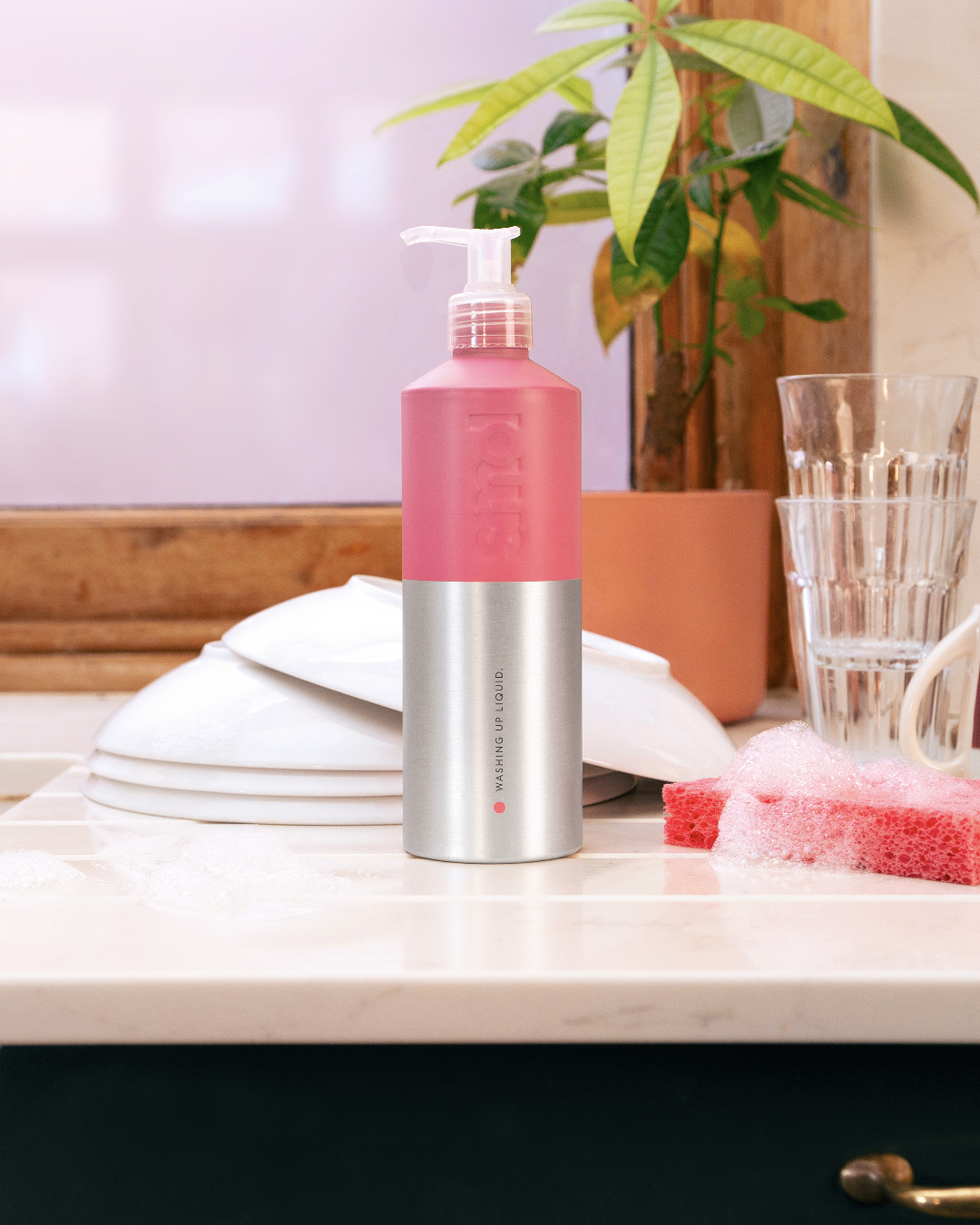
2. smol Washing Up Liquid, 4 x 500ml refill
★★★★☆ 3.5 / 5
smol is the only brand in this comparison whose certification we could look up and read a number against. It is a certified B Corp with a B Impact Score of 99.3, certified in December 2023, headquartered in Kent, and the entry is in the public directory. Everyone else here either has nothing or claims a logo without a licence number.
It also publishes a full INCI list on a dedicated ingredients page, and it publishes a dose count rather than a millilitre figure: roughly 125 doses per 500ml carton, which works out at four millilitres and 1.7p a wash. That is the second cleanest cost per wash in the group and, like Ecover, it only exists because the maker gave you the number. There is one detail nobody else here offers: denatonium benzoate, a bittering agent, so a child who gets it in their mouth spits it out.
Two things stop it winning. The first is that the surfactant story does not match the marketing. smol leads on sodium laureth sulfate, the ethoxylated sulfate, which is the same family as the professional Fairy formula rather than the glucoside-heavy chemistry the plant-powered positioning implies. The second is the evidence base. Its own comparison page still prices Fairy at a December 2023 figure, which is nearly three years stale and flatters smol badly. And its on-site review widget shows 427 reviews with not a single one star among them, which is not what a real review pool looks like. The independent forum comments tell a different story, and the theme is foam collapsing and people using more than the stated four millilitres. Since the whole 1.7p figure rests on that dose, that matters.
Pros
- Certified B Corp with a published score of 99.3 and a December 2023 certification date, the only checkable certification in this comparison
- Full INCI list on a dedicated ingredients page
- 1.7p a wash on the maker’s own published 125 doses a carton
- No isothiazolinones and no phenoxyethanol, preserved with sodium benzoate
- Contains a bittering agent so a child will spit it out, which no other product here does
- Card cartons rather than rigid plastic, with an optional refillable aluminium bottle
Cons
- Sodium laureth sulfate leads the formula, which is closer to Fairy’s chemistry than the plant powered marketing suggests
- Its own Fairy comparison page uses a December 2023 price, nearly three years out of date, and today Fairy is cheaper per litre than smol
- An on-site review widget showing 427 reviews and zero one star ratings should not be taken at face value
- Independent forum complaints are consistent about foam collapsing and needing more than the stated dose
- Colourant is declared but not named
- It is a subscription, so you cannot pick it up when you run out
Buy it if you want a certification you can actually check, a published dose, and you are happy on a subscription.
The British one, and the cheap one
Best for sensitive hands
B Impact 104.3

3. Bio-D Concentrated Washing Up Liquid, Fragrance Free, 750ml
★★★☆☆ 3.4 / 5
If your hands are the problem, this is the shortlist of one. No fragrance, so no fragrance allergens. No preservatives declared. No colourant. Made in the East Riding of Yorkshire by a company with the highest verified B Impact Score in this comparison at 104.3, certified in January 2022 and up from 80.2 two years earlier, against a median score for an ordinary business of 50.9. It has held Leaping Bunny approval for eighteen years, and it sells refills in five litre and twenty litre containers plus a network of zero waste shops that will decant it by weight.
Then it does something unusual, and we are going to give it credit for it even though it costs the product two places. It publishes an honest dose, and the honest dose is big: ten to fifteen millilitres, two teaspoons, for an average bowl. At the midpoint that is 4.57p a wash and only about 60 sinkfuls from a 750ml bottle, which makes it the second most expensive product here per wash. A brand that tells you the truth about how much you need finishes below brands that tell you nothing. That is the perverse incentive at the centre of this whole category and it is worth naming.
Its real failing is transparency, which is awkward given the positioning. Bio-D publishes regulation bands only, above 30 per cent anionic surfactant and below 5 per cent amphoteric, and names no actual surfactant anywhere on its site. Annex VII requires an INCI list to be available on a website. We could not find one. We also note that the product page gives a pH of 11.5, which is strongly alkaline for something you put your hands in, and which looks enough like a template error carried over from a laundry product that we would check the bottle before relying on it.
Pros
- Fragrance free, so no declared fragrance allergens at all, and no preservatives or colourants declared
- The highest verified B Impact Score here at 104.3, with a certification date and a public directory entry
- Leaping Bunny approved for eighteen years, and a Vegan Society trademark
- Refills in five and twenty litre sizes, with the five litre 28 per cent cheaper per litre, plus zero waste shops that decant by weight
- Bottle is 100 per cent post consumer recycled HDPE
- 4.9 out of 5 from 84 reviews at Ethical Superstore and 4.55 from 66 at Abel and Cole
Cons
- No INCI list published anywhere, only regulation bands, which is arguably short of what Annex VII requires and is a strange gap for a transparency brand
- The stated dose of 10 to 15ml is four to five times Ecover’s, so despite being called concentrated it costs 4.57p a wash
- About 60 sinkfuls from a 750ml bottle
- The published pH of 11.5 is strongly alkaline for a hand contact product and we could not verify it against a physical bottle
- The biodegradability claim cites no standard
- No product level negative reviews could be retrieved, so the complaint picture is incomplete
Buy it if you have sensitive hands or hand eczema and you want the fewest possible things in the bottle, and you are buying the five litre refill so the cost per wash comes down.
Cheapest per litre
62p

4. Tesco Original Washing Up Liquid, 500ml
★★★☆☆ 3.1 / 5
62p for 500ml, which is £1.24 a litre, less than half what Fairy costs per litre and a fifth of what Method costs. It scores 3.9 out of 5 from 89 reviews at Tesco, which is a better score than Fairy Original manages on the same website. If you are choosing on price and your hands are fine, this is the sensible answer and no amount of packaging design changes that.
It also does one thing better than Fairy does. Tesco names its preservatives on the product page. The problem is what they are. The listing declares methylchloroisothiazolinone and methylisothiazolinone, which together are the blend sold as Kathon CG, and that mixture is the one behind the isothiazolinone contact allergy epidemic of the last fifteen years. In the guide below there is a British Journal of Dermatology study that concluded rinse-off products preserved with 50 parts per million of MI or more are not safe for consumers, and a Swiss market survey that measured MI in detergents at up to 279 parts per million. Detergents sit entirely outside the limits that apply to cosmetics.
On everything else it is thin. No millilitre dose published, so you cannot cost a wash. No INCI list, only regulation bands. No certifications of any kind. No recycled content figure for the bottle. It is a cheap bottle of washing up liquid that does what a cheap bottle of washing up liquid does, and the one thing you need to know about it is on the label if you look.
Pros
- £1.24 a litre, less than half the price per litre of the cheapest Fairy pack
- 3.9 out of 5 from 89 reviews at Tesco, ahead of Fairy Original on the same site
- Names its preservatives and its fragrance allergens on the product page, which is more than some pricier brands manage
- Advises washing non-greasy items in cold water to save energy, which is sound
- Septic tank safe
Cons
- Preserved with methylchloroisothiazolinone and methylisothiazolinone, the Kathon CG blend, which is the mixture most implicated in isothiazolinone contact allergy
- No dose published, so the cost per wash cannot be worked out from anything the maker says
- No INCI list, only regulation bands
- No certifications at all
- No recycled content percentage published for the bottle
- Only 500ml, so the price per litre advantage is smaller than the sticker suggests against a 1.45 litre bottle
Buy it if price per litre is the thing you care about, nobody in the house has hand eczema or a known isothiazolinone allergy, and you wear gloves.
The expensive one, and the famous one
Most expensive
£6.58 a litre
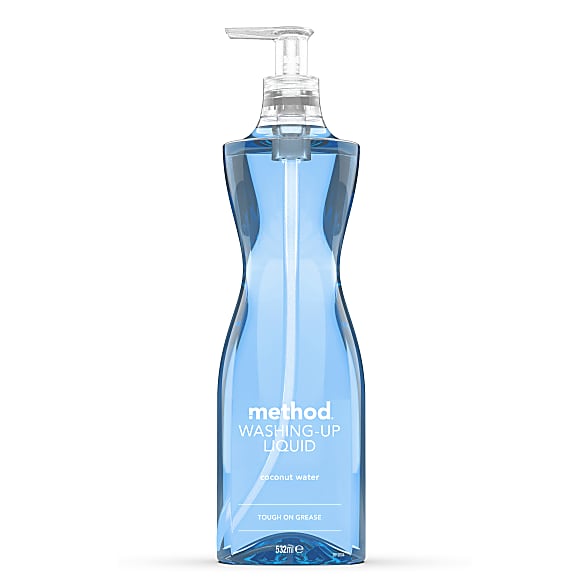
5. Method Washing Up Liquid, Coconut Water, 532ml
★★★☆☆ 2.9 / 5
Method does the disclosure properly. Its own shop publishes a full INCI list with a function label against every single ingredient, which is the clearest presentation of any brand here, and its FAQ says plainly that it provides the full INCI list. There are no isothiazolinones and no phenoxyethanol, and it is the only product in this comparison that admits in writing to containing a colourant, even though it will not tell you which one. That is a small piece of honesty that Fairy, which is famously green, does not offer.
The problem is the money. At £3.50 for 532ml at Ocado it is £6.58 a litre, more than six times the price per litre of the cheapest own brand and nearly two and a half times Ecover. Which? recorded it at an even higher price earlier in the year, so it moves about. And Method does not publish how much liquid a pump delivers, so like Fairy it cannot be costed per wash from anything the maker says. Using the regulator’s default that comes out at 4.61p a wash and about £19.62 a year, the most expensive in this comparison.
The reviews are also the weakest here, which was not what we expected: 3.2 out of 5 from 47 reviews at Ocado, the lowest score of any product in the test, and 3.9 from 33 at Tesco. And the pump bottle, which is the reason a lot of people buy it, is a single use plastic item with a pump that is not straightforwardly recyclable.
Pros
- Full INCI list published with a plain English function against every ingredient, the clearest disclosure in the comparison
- No isothiazolinones and no phenoxyethanol, preserved with alcohol like Ecover
- The only product here that declares a colourant in its ingredient list at all
- Leaping Bunny approval claimed with an annual independent audit, and the factory is certified zero waste
- The pump bottle is genuinely convenient and looks good on a sink
Cons
- £6.58 a litre at Ocado, over six times the cheapest own brand and the most expensive product here by a distance
- No dose published, so the cost per wash cannot be derived from the maker
- 3.2 out of 5 from 47 reviews at Ocado, the lowest score of any product in this comparison
- The colourant is declared but not named
- The pump bottle is single use plastic with a pump that is not easily recycled
- Leaping Bunny is claimed with no licence number, and there is no Vegan Society registration or B Corp certification
Buy it if you want the clearest ingredient list on the shelf and a pump bottle you are happy to look at, and the price per litre genuinely does not matter to you.
The market leader
No dose published
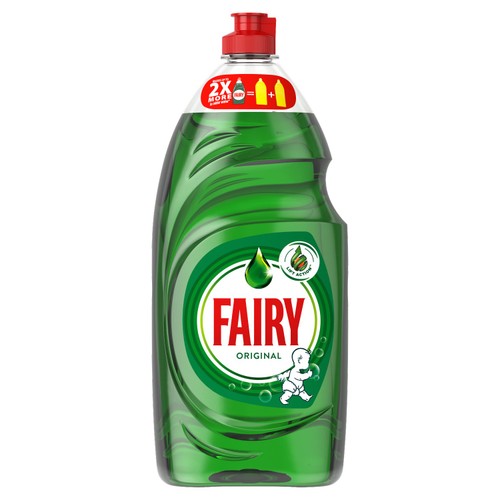
6. Fairy Original Washing Up Liquid, 1450ml
★★★☆☆ 2.6 / 5
Let us be fair to it first. A great many people think Fairy cleans better than anything else, and the review counts back that up: 5 out of 5 from 2,662 reviews at Waitrose on the 654ml bottle, and 4.9 from 10,144 at Tesco on Platinum Quickwash. Our score is not a judgement on whether it shifts grease. It is a judgement on what the brand will tell you, and on that it finishes last.
It publishes no dose. The pack says the formula is so concentrated you only need a drop, and that you get ultra long lasting suds from every drop, and that is the entirety of the guidance. Without a millilitre figure the concentration claim cannot be tested and the cost per wash cannot be calculated, which is a convenient place for a brand whose whole position is that you use less of it. The hard comparative claim, that Fairy lasts twice as long as the next best selling brand, has quietly disappeared from the packs. It was defended successfully at the Advertising Standards Authority in September 2013 against Persil washing up liquid, a product that is not sold in the UK today, and the ruling is no longer on the ASA website. Nothing in it ever concerned Aldi, Tesco or Ecover. At 2026 prices the cheapest Fairy pack is 2.19 times the price per litre of Tesco own brand, so even if the claim were still true and still applied, you would break even at best.
Two other things. Fairy is the only product here declaring both benzisothiazolinone and methylisothiazolinone, plus phenoxyethanol on top, which makes it the worst choice in this group for anyone with hand eczema. And we could not find a full ingredient list for it anywhere: fairy.co.uk redirects to a domain parking page, fairy.com returns a 404, and the P and G UK ingredients hub has no product level data. Annex VII requires that list to be on a website. We looked at five retailers and four company domains and found only regulation bands.
Pros
- Enormous positive review counts, including 5 out of 5 from 2,662 reviews at Waitrose and 4.9 from 10,144 at Tesco on the Platinum tier
- £2.72 a litre on the 1450ml bottle is reasonable for a branded product
- Names its fragrance allergens on the retailer listings
- Widely available in every supermarket in the country
Cons
- Publishes no dose anywhere, so its central concentration claim cannot be tested and the cost per wash cannot be worked out
- No full ingredient list on any working company website: fairy.co.uk redirects to a parked domain and fairy.com returns a 404
- The only product here declaring both benzisothiazolinone and methylisothiazolinone, with phenoxyethanol as well, which makes it the worst pick for hand eczema
- Its own refill pack costs £4.59 a litre against £2.72 for the rigid bottle, so the refill is 69 per cent more expensive than the plastic it replaces
- The liquid is visibly green and no colourant is declared anywhere
- No certifications of any kind, and Ethical Consumer scores the brand 9 out of 100
- Retailer scores are wildly inconsistent for the same liquid, from 3.2 at Ocado to 5.0 at Waitrose, which suggests the review pools are not comparable
Buy it if you have used it for years, it works for you, and you are buying the largest bottle rather than the refill or the small sizes.
Prices checked 5 August 2026 and may have changed since.
The clean pick, and the honest catch
Our clean pick
Bio-D Fragrance Free
Nothing in it that is there to make you like it
Why it wins on ingredients
✓
No fragrance, so no fragrance allergens
✓
No preservatives and no colourant
✓
The certification has a number and a date
✓
It is refillable in the real world
What you give up
✕
It will not tell you what the surfactant is
✕
It is the second dearest per wash
✕
The published pH looks wrong
The catch, said plainly. Our rule is that if a category has a genuinely clean option we name it, and here there is one, but it comes with an honest qualification. The Bio-D bottle has the shortest list of things in it and the only certification with a real number behind it, and it is the right answer for anyone with hand eczema or a known preservative allergy. It is not the right answer for most other people, because on its own recommended dose it costs three times what the Ecover costs per sink, and because it is the one brand here that markets itself on transparency and then will not name a single surfactant. Both of those things are true at once. And nothing on this page changes the underlying point that the thing wrecking your hands is mostly the hot water and the surfactant, not the brand, which is why every dermatology source we read says the same three words: wear the gloves.
What to look for when you buy one
Look for a dose before you look at anything else. This is the whole category in one instruction. Two of the six products here publish how much to use. Ecover says three millilitres in five litres. smol says roughly 125 doses per 500ml carton, which is four millilitres. Bio-D says ten to fifteen. Fairy, Method and Tesco publish nothing at all, and without a number there is no honest way to compare cost. It also means the brands making the loudest concentration claims are the ones that have made those claims untestable. When you are standing in the aisle, turn the bottle over and see whether anyone has given you a millilitre figure. If they have not, assume the price per litre is the only thing you know about it.
Then work out what you are actually paying per sink. Price per litre is the number on the shelf edge and it is close to meaningless here. Ecover costs £4.47 a litre and 1.34p a wash. Fairy costs £2.72 a litre and cannot be costed per wash at all. Bio-D costs £3.65 a litre and 4.57p a wash, because it asks for four times the dose. A cheap bottle you use four squirts of is more expensive than a dear bottle you use one squeeze of, and nothing on the front of either pack tells you which is which.
A full ingredient list on the website is a legal duty, not a favour. Annex VII of the detergents regulation requires manufacturers to make an ingredient data sheet available on a website, in INCI nomenclature. Ecover, Method and smol do it. Bio-D publishes regulation bands only. Tesco publishes bands plus its preservatives. Fairy publishes nothing we could find: fairy.co.uk redirects to a domain parking page, fairy.com returns a 404, and the P and G UK ingredients hub carries no product level data and points you at a US and Canadian service. That is the market leader, and it is not a small thing.
Do not trust the ingredient list on the retailer’s page. We found two clear cases of retailer data being years out of date or simply different from the maker’s. One retailer listed an Ecover product with bronopol, protein hydrolysate and citral, none of which appear in Ecover’s current formula, and with the wrong sulfate. Another listed a Method product with an extra fragrance allergen the maker does not declare. If you are checking for a specific ingredient because you react to it, check the manufacturer’s own page.
The preservative question is the one that matters for your hands, and it inverts the price list. There are two separate things going on with washing up and skin. Irritant contact dermatitis is caused by surfactants and hot water stripping the skin barrier, it is dose related, and it happens to everybody with enough exposure. Allergic contact dermatitis is sensitisation to a specific chemical, most often a preservative or a fragrance, and once you are sensitised a tiny exposure sets it off. For the second kind, isothiazolinones are the name to know. A randomised, blinded study in the British Journal of Dermatology found that every one of ten methylisothiazolinone-allergic subjects reacted to a soap preserved at 100 parts per million and seven of nine at 50, with no controls reacting, and concluded that rinse-off products preserved with 50 parts per million or more are not safe for consumers. A Swiss market survey of nearly two thousand products found only 7.6 per cent of cosmetics contained isothiazolinones but 42.9 per cent of detergents did, and measured methylisothiazolinone in detergents at up to 279 parts per million. Detergents sit outside the cosmetics limits entirely.
So check the label for four words. Methylisothiazolinone, methylchloroisothiazolinone, benzisothiazolinone, and Kathon, which is the trade name for the first two together. In this comparison Fairy declares benzisothiazolinone and methylisothiazolinone plus phenoxyethanol, and Tesco own brand declares methylchloroisothiazolinone and methylisothiazolinone. Ecover, Method, Bio-D and smol declare none. That is the cheapest and the most famous product both failing the test, and four others passing it, which is not the order anyone would guess from the shelf.
Wear the gloves. This is what the actual medical advice says. The British Association of Dermatologists names repeated contact with soaps, detergents and water as the cause of irritant hand dermatitis, and its advice is to always use protective gloves at home when in contact with irritating chemicals and water, with cotton lined gloves for longer wear. The NHS says the same and adds a practical detail: take them off every now and then, because sweating inside them makes symptoms worse, and wear cotton gloves under rubber ones if the rubber itself irritates. Neither source names a specific preservative, which is a gap in the public advice given how strong the research is.
Ignore the word biodegradable on a bottle, because it is a legal minimum. The detergents regulation requires ultimate aerobic biodegradability of at least 60 per cent in 28 days for the surfactants in any detergent sold to consumers. Every washing up liquid on that shelf has to meet it. Advertising it as a feature is advertising compliance with the law. The Competition and Markets Authority green claims guidance is explicit that claims must not suggest a product provides environmental benefits which are in fact necessary standard features. Plant based is similarly slippery: it describes where a molecule started, not what it does in a river.
You are almost certainly using far too much. Observational research across 29 countries watching people wash the same twelve place settings found water use ranging from 34.7 to 160.1 litres, and individual variation from 18.3 litres to 472.8 litres for the identical task. Mean detergent use came in at 29 to 35 grams a sink, against the regulator’s assumed seven grams and Ecover’s recommended three millilitres. That is roughly ten times the recommended dose. The same work found that the amount of detergent did not correlate with how clean the dishes got. People also run the water far hotter than they need, with average temperatures around 59 to 60 degrees.
The residue on your plates is a much smaller problem than the internet thinks. The Dutch national institute RIVM, whose fact sheets regulators use for consumer exposure assessment, models a deliberate worst case in which every plate is air dried and never rinsed with clean water. On those assumptions it estimates about 0.42 milligrams of product ingested per contact and roughly 0.15 milligrams a day, which is around one five thousandth of a single dose. Worth knowing too: the study that circulates as proof that dishwashing detergent damages your gut lining is about machine rinse aids at professional concentrations in cell culture, not hand washing up liquid.
And if you have a dishwasher, use it. Which? published figures in July 2026 from 33 recently tested machines: 4.5 litres of water per place setting washing by hand, against 926 millilitres on a main dishwasher programme and 696 in eco mode. For fourteen place settings that is 63 litres by hand against 12.96 in the machine, or almost 80 per cent less water. On cost, heating a nine litre bowl runs to about 11p, so fourteen place settings by hand costs roughly 77p, against about 29p of electricity for a dishwasher cycle. The caveats are that this assumes a full machine and excludes the impact of manufacturing the appliance.
Final verdict
Buy the one that tells you how much to use
Three things to take away.
The first is that the price on the shelf edge is not the price of washing up. Two of these six tell you how much to use and four do not, and once you apply the doses that exist, the expensive looking Ecover bottle turns out to cost 1.34p a sink while the reasonably priced Fairy bottle cannot be costed at all. A brand that will not publish a dose has made its own concentration claim impossible to check, and that is not an accident.
The second is that the two products most likely to give someone allergic contact dermatitis are the cheapest one and the most famous one. Tesco own brand carries the methylchloroisothiazolinone and methylisothiazolinone blend, and Fairy carries benzisothiazolinone and methylisothiazolinone plus phenoxyethanol. The four others declare no isothiazolinones at all. If anybody in the house has hand eczema, that single fact is worth more than everything else on this page.
The third is that most of what wrecks your hands is not the brand. It is hot water, too much detergent and no gloves. The observational research has people using something like ten times the recommended dose to no measurable benefit, at temperatures around 60 degrees. Use less, turn it down, put the gloves on. That advice is free and it works with whatever is already under your sink.
Our pick is the Ecover at £4.25 for the lowest real cost per sink and an ingredient list you can read, and the Tesco bottle at 62p if price is the only thing that matters and your hands are fine. If your hands are not fine, the Bio-D fragrance free is the one to buy.