Home · Bedroom · Pillows
Best pillows: six compared, and the research on synthetic versus feather goes the other way
A pillow is the piece of foam closest to your face for eight hours a night, and it is also the densest dust mite habitat in most beds. On the second point the published evidence points the opposite way to the usual advice: measured over twelve months, synthetic pillows carried roughly three times the mite allergen of feather ones.
By Mrs House · Updated 10 September 2026 · 15 minute read
Mrs House is independent. Nobody pays for a place in a ranking here, and no brand saw this page before it went live.
The short answer
Buy the Woolroom Deluxe Washable Wool Pillow. It is the only one here with no polyurethane and no polyester in it at all, and unusually for a natural pillow it genuinely washes at home.
- Best overall: Woolroom Deluxe Washable Wool, £99.99 at full price, and Woolroom discount hard, so watch for it at £70. Loose fill you pull out by the handful until the loft matches your shoulder.
- For neck pain: Dunlopillo Super Comfort Latex, £105 to £125. The fill type with the best clinical evidence behind it.
- For dust mites: Silentnight Deep Sleep, £15 for two. The only pillow here you can machine wash and tumble dry.
Washing beats every other dust mite intervention, which is how a £7.50 pillow can out-perform a £109 one.
How we assessed these
Six pillows, and three questions asked of each: what is it made of, what does it do to your neck, and can you wash it?
The third one turns out to matter more than we expected. Washing is the intervention with the best evidence behind it for dust mites, and most good pillows cannot be washed at all. The foam core of a memory foam pillow is a permanent, unlaunderable reservoir for skin scale, sweat and everything that lives on them, for the entire life of the pillow.
On materials we went and read the Furniture and Furnishings (Fire) (Safety) Regulations 1988 rather than repeating what other people say about them, because the answer for pillows is genuinely surprising. Pillows are furniture under the regulations, but they are expressly excluded from the cigarette test and they carry no fire label at all. What survives is this: a polyurethane foam filling still has to pass the wood crib test, which is the most demanding filling test in the regulation, and there is no pillow exemption from it. Feather, down, wool and hollowfibre take a different and much milder route and pass on their own merits by charring. So memory foam is the one fill here with a real regulatory push towards flame retardant chemistry, and nothing on the label will tell you.
Then we read the mite literature properly, which is where the surprise is, and it is set out below.
Prices checked September 2026, and several of these brands discount constantly.
The ranking, at a glance
| Pillow | Price | Fill | Washable | Adjustable | Score | |
|---|---|---|---|---|---|---|
| 1 | Woolroom Deluxe Washable Wool | £99.99 | British wool, loose fill | Yes, at home | Yes, remove wool | 4.7 / 5 |
| 2 | Simba Hybrid Pillow | £109 | Foam cubes and polyester | Cover and fibre only | Yes, remove cubes | 4.6 / 5 |
| 3 | Dunlopillo Super Comfort Latex | £105 to £125 | Natural latex, solid | Cover only | No | 4.4 / 5 |
| 4 | Soak and Sleep Hungarian Goose Down | £90 to £95 | 90 per cent goose down | Professional clean | Pick loft when buying | 4.3 / 5 |
| 5 | Panda Memory Foam Bamboo | £44.95 | Solid memory foam | Cover only | No | 4.0 / 5 |
| 6 | Silentnight Deep Sleep, 2 pack | £15 for two | Hollowfibre polyester | Yes, and tumble dries | No | 3.5 / 5 |
The two we would actually buy
Best overall
Our winner

Woolroom Deluxe Washable Wool Pillow
★★★★★ 4.7 / 5
The only pillow here with no polyurethane and no polyester anywhere in it. Five hundred and eighty grams of loose traceable British wool inside a zipped calico inner, plus another 300gsm of washable wool quilted into the cover itself, in a 200 thread count organic cotton case. No foam, no fibre, no down.
Because the fill is loose balls rather than a moulded block, you can tune it. Open the zip, pull handfuls out until the loft matches your shoulder, and stop. That makes it the only pillow here that works for a front sleeper as well as a side sleeper, because you can strip it right back. Reviewers rate that adjustment highly and one Best Buy award listed it as a headline strength.
It also washes at home, which almost no natural pillow at this level does. The cover unzips, the wool goes into the supplied calico bag, and the outer goes in the machine on a wool cycle at 40 degrees. That matters more than it sounds, and the dust mite section below explains why: washing is the single most effective mite intervention there is, and most good pillows cannot take it.
It scores well on comfort rather than just on credentials. Nine hundred and thirteen reviews on the product page run 88 per cent five star, one buyer with arthritis described it as like sinking into marshmallows, and an independent tester called it very comfortable with good support, medium to medium firm, dense rather than sink in. British Wool traceability to named farms, Allergy UK approval and OEKO-TEX Standard 100 on the cotton.
Now the complaints, and the first one is the consistent one. It smells of sheep when new. One tester recorded a slight sheepish smell on opening and one Trustpilot buyer said it took roughly six months of airing before they stopped noticing it. That is lanolin and wool grease rather than a solvent, so it is a very different thing from foam off-gassing, but it is real and you should know before you order.
The rest are practical. There is no spare fill in the box, so if you take wool out you have loose wool to store, and more costs £26 a bag. The zip has no pull tag and wool catches in the teeth, which one tester called awkward. And wool compacts, so it wants regular fluffing and occasional redistribution. One three star reviewer simply said it gives them neck ache, which is what happens if you leave the loft too high for your build. It cannot be tumble dried either, so washing it takes days.
Pros
- No polyurethane and no polyester at all, so no off-gassing and no flame retardant chemistry
- Loose fill you can remove by the handful, so it suits side, back and even front sleepers
- It genuinely washes at home, which almost no natural pillow does
- British Wool traceability, Allergy UK approval and OEKO-TEX Standard 100 on the cotton
- Eighty eight per cent five star across 913 reviews, and heavily discounted in sales
Cons
- It smells of sheep when new, and for one buyer that took months to fade
- No spare fill included, and more wool is £26 a bag
- The zip has no pull tag and the wool catches in it
- Wool compacts, so it needs fluffing and occasional redistribution
- No tumble drying, so washing it is a multi day job
Buy it if you want foam and polyester out of the thing your face is on, and you will fluff it. Skip it if a sheepy smell for the first few weeks would put you off it entirely.
Most adjustable
Coolest
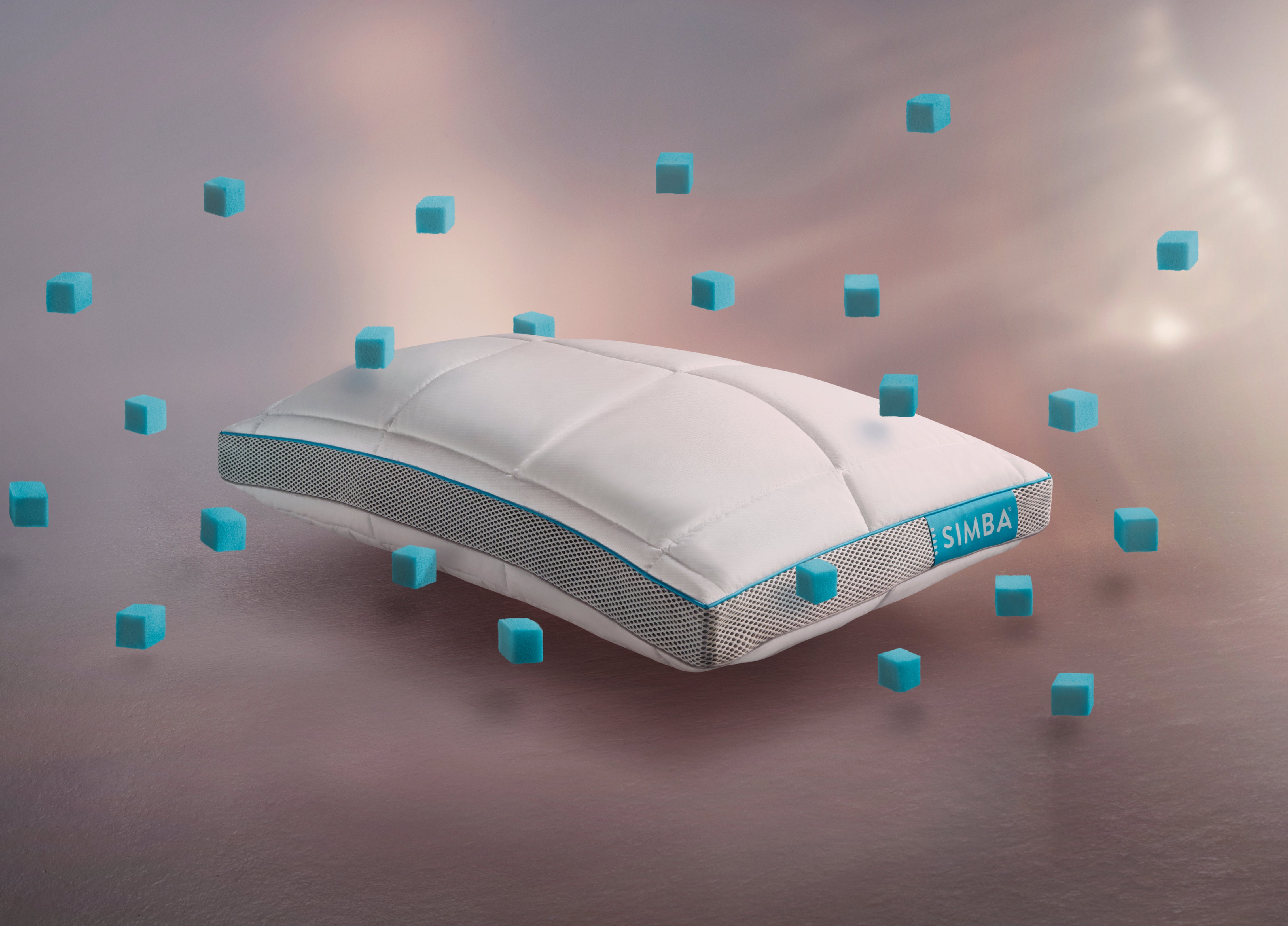
Simba Hybrid Pillow
★★★★★ 4.6 / 5
The most externally validated pillow in this comparison, with an aggregate 4.7 out of 5 from over 38,000 reviews and a run of UK awards behind it. You unzip it and pull foam Nanocubes out into a supplied bag until it fits you, and testers consistently say that adjustment is genuinely effective rather than a gimmick.
The cooling is measured rather than claimed, which we appreciate. One reviewer put a thermal camera on it and reported that the outline of the tester’s head had virtually disappeared after four minutes, and called it the best pillow they had ever used. The Stratos finish on the cover is a phase change material, which is a real mechanism rather than a marketing word.
Side sleeper support is the consistent praise from every UK outlet, and the cover and the fibre layers go in the machine at 40 degrees and can be tumble dried low, which is more washability than most premium pillows offer.
Now the materials, because this is a polyurethane pillow and we are going to treat it as one. The core is open cell visco-elastic polyurethane memory foam cut into cubes, wrapped in polyester fibre layers, a polyester inner cover and a polyester mesh border. Simba hold CertiPUR on the foam, which is real: it caps total VOC emissions and prohibits certain flame retardants, heavy metals, formaldehyde and phthalates. It does not mean zero emissions, it means emissions below a threshold.
One thing worth understanding about the cube design. Cutting foam into cubes massively increases the exposed surface area against a solid block. That is good for airflow, which is part of why it sleeps cool, and it is bad for the rate at which residual volatiles leave the material. In practice no UK tester reported an off-gassing smell, which is a meaningful signal, but the mechanism is there.
The practical complaints are consistent. Every single review lists the £109 price as the main con. It is too big for a standard pillowcase out of the box, with one tester calling the initial configuration almost too large to get into a regular case. It is wrong for front sleepers, being too lofty even at minimum fill. And the cubes misbehave: they go static while you adjust them, they shift slightly overnight so the feel changes by morning, and overstuffing can cause neck ache.
Pros
- Genuinely effective height adjustment, with cubes you remove into a supplied bag
- Measured cooling. A thermal camera test showed the head outline gone after four minutes
- Cover and fibre layers wash at 40 degrees and tumble dry low
- CertiPUR foam, which caps VOC emissions and prohibits certain flame retardants
- An aggregate 4.7 from over 38,000 reviews and a string of UK awards
Cons
- A hundred and nine pounds, which every reviewer names as the main drawback
- Too big for a standard pillowcase out of the box
- Wrong for front sleepers, being too lofty even at minimum fill
- The foam core cannot be washed, so it is a permanent mite reservoir
- The cubes shift overnight, so the feel can change by morning
Buy it if you sleep on your side, you want it cool, and you want to dial the height in exactly. Skip it if you sleep on your front, or you are trying to keep polyurethane away from your face.
The wool one, and the one for a child’s bed
Best for neck pain
Best evidence
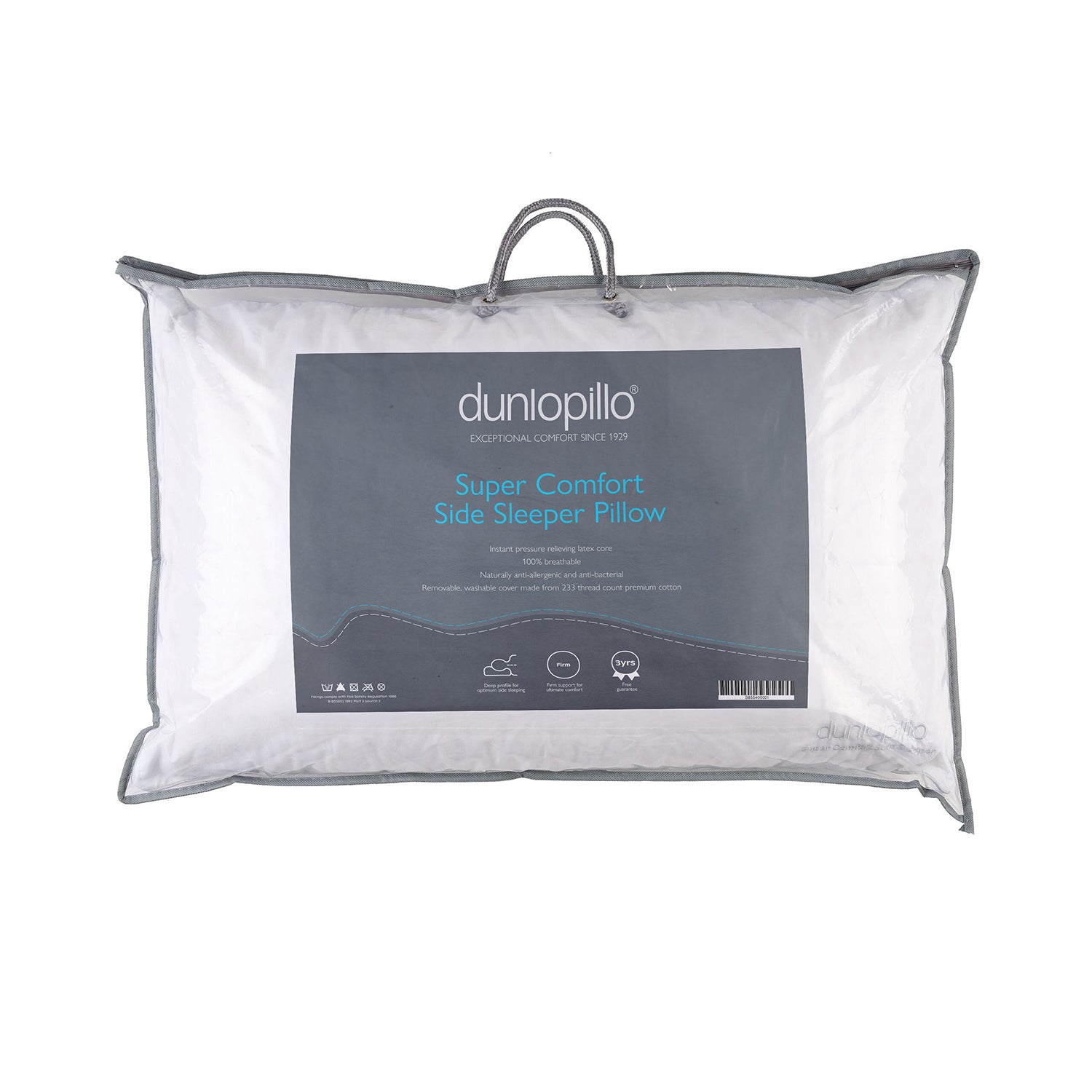
Dunlopillo Super Comfort Latex Pillow
★★★★☆ 4.4 / 5
If your reason for buying a new pillow is that your neck hurts, this is the fill type with actual clinical evidence behind it, and no other pillow on this page can say that. A 2021 systematic review and meta analysis of pillow designs found that rubber, meaning latex, pillows reduced neck pain with a standardised mean difference of minus 0.263 at p below 0.001, and that rubber and spring pillows reduced waking pain with a standardised mean difference of minus 0.228, across nine high quality studies and 555 participants.
That is a modest effect rather than a miracle, and we would rather give you the actual numbers than tell you a pillow will fix your neck. But it is more than exists for memory foam, for down or for hollowfibre, and it is why this sits third despite being the least fashionable thing here.
Verified buyers back it up. Feefo ratings run 4.6 out of 5 across 69 reviews, with one buyer with a neck injury saying it gives them the correct support they need. Multiple reviewers rated its suitability for allergy sufferers as exceptional, which makes sense: latex has a closed cell structure and the cover washes.
On materials it is a genuinely different proposition from the foam pillows. Natural latex is a plant polymer, not a polyurethane, so the polyurethane off-gassing pathway does not apply at all. It is moulded as one block by the Dunlop process, not shredded and not blended with memory foam. And it does not collapse: latex has the best recovery of any fill here, with a three year guarantee and the National Bed Federation approval mark. It also runs cooler than memory foam, because open cell pinned latex moves air in a way visco-elastic foam does not.
The complaints are specific. Latex has a characteristic ammonia and rubber smell. One Feefo reviewer said theirs always had a rubber smell, though another recorded no odour at all, so it seems to vary. It is heavy, two to three times the weight of a fibre pillow, which makes plumping and moving it a chore. And the height divides people: 17cm sounds tall but the latex compresses under load, so one buyer found it a little low and put a second pillow underneath while another wanted it firmer.
Two care points that matter. The core must never be machine washed, and it must never be dried in sunlight, because UV oxidises latex and it crumbles. Cover off at 40 degrees, and keep it out of a sunny window.
One thing to check before you buy. The composition wording varies by retailer, with some describing the cover as pure cotton and at least one as a cotton and polyester blend. Ask before you order if that matters to you. And note that no OEKO-TEX, GOLS or eco-INSTITUT certification is publicly stated on UK listings for this pillow, so do not assume any of them.
Pros
- Latex is the fill type with the best clinical evidence for reducing neck pain
- Not a polyurethane, so the foam off-gassing pathway does not apply
- The best recovery of any fill here, with a three year guarantee and NBF approval
- Runs cooler than memory foam, because pinned open cell latex moves air
- Buyers repeatedly rate its suitability for allergy sufferers as exceptional
Cons
- Latex has a rubber and ammonia smell, which some buyers report never fully goes
- Heavy, at two to three times the weight of a fibre pillow
- The height divides people, with some finding it too low and others wanting it firmer
- No OEKO-TEX, GOLS or eco-INSTITUT certification stated on UK listings
- Never dry it in sunlight, because UV makes latex crumble
Buy it if you wake with neck pain and you want the fill type the research actually supports. Skip it if you sleep on your front, or you have a latex allergy.
Best natural luxury
Lowest mite load

Soak and Sleep Hungarian Goose Down Pillow
★★★★☆ 4.3 / 5
Ninety per cent Hungarian goose down to ten per cent feather, at 600 to 650 fill power, in a pure cotton cambric casing. That ratio is the thing to notice, because most high street pillows sold as goose down are 85 per cent feather with a token amount of down in them. This is the real article and it is priced accordingly at around £90 to £95.
The chambered versions fix the classic down problem. A supportive inner chamber inside a soft outer layer means it does not collapse flat under a heavy head the way single chamber down does, and you choose your loft at the point of purchase rather than adjusting later. Soft suits front sleepers, Soft/Medium suits back sleepers, Medium/Firm suits side sleepers.
And this is the pillow the dust mite literature is unexpectedly kindest to, which is the opposite of what most people assume. A 1999 study put paired new synthetic and feather pillows on twelve beds for twelve months and measured the main mite allergen at roughly three times higher on the synthetic pillows. A 2004 study explained the mechanism: electron microscopy put the pore size of synthetic casings at 57 micrometres against 18 micrometres for feather casings, mites crossed every standard synthetic casing within 24 hours but had not crossed feather casings after 48, and dust penetration was 0.88 per cent through synthetic against 0.07 per cent through feather. A 2006 study found the same direction for fungi.
The casing here is made to NOMITE specification, which exists because down cannot be contained by an ordinary weave. So the mite barrier is a matter of construction rather than of any added chemical, which is exactly the right way round.
On traceability it is well documented. Made to EN, Downpass and EDFA standards with STeP accreditation, washed in thermal spring water. Downpass audits for live plucking and force feeding, which is the question this audience will ask.
The drawbacks are real. It is expensive. It is wrong for front sleepers even in the soft version. Down needs plumping daily and it is not a home wash, and Soak and Sleep’s own comparison copy points buyers towards professional cleaning. Given that washing is the single best mite intervention, that is a genuine tension: the pillow with the lowest measured allergen load is also the one you cannot easily launder. And quills work through eventually, which is the standard failure mode of anything containing feather.
Pros
- Ninety per cent goose down at 600 to 650 fill power, which is genuinely high end
- Chambered construction, so it does not collapse flat under a heavy head
- The published mite research favours feather casings over synthetic by a wide margin
- A NOMITE cotton cambric casing, so the barrier is construction rather than chemistry
- Downpass and EDFA accredited, with audited welfare standards
Cons
- Expensive, and reviewers of the equivalent pillow call it an investment
- Wrong for front sleepers, even in the soft version
- Not a home wash. The brand points you towards professional cleaning
- It needs plumping every day or it goes flat and stays flat
- Quills work through eventually, which is true of anything with feather in it
Buy it if you want the hotel feel, and the mite evidence matters more to you than home washing. Skip it if you are allergic to feathers, or you will not plump it daily.
The two we would not buy
Best value foam
For side sleepers
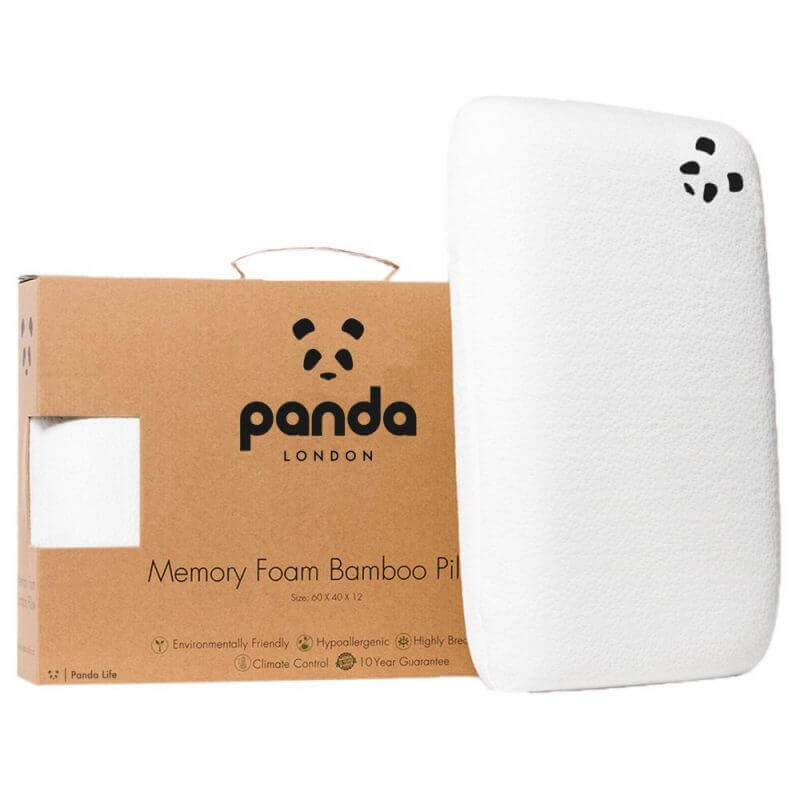
Panda Memory Foam Bamboo Pillow
★★★★☆ 4.0 / 5
Forty four ninety five for a solid block of memory foam in a bamboo viscose cover, with a 30 night trial and a ten year guarantee. Against £149 for the obvious premium alternative, that is the value pick in this category and testers say so.
Two things it does genuinely well. It holds its height, with one tester writing that it maintained that height throughout the night without sinking, which is the main complaint people have about cheap memory foam. And a tester specifically recorded no off-gassing detected, which for a memory foam pillow at this price is unusual and worth saying plainly.
It also carries OEKO-TEX Standard 100 with a published certificate number, which is more than the more expensive Simba publishes. That certificate sets limits on formaldehyde, aryl amines, phthalates, chlorinated phenols and specific flame retardants for the components it covers.
Now the honest framing, because this is the highest exposure item in the ranking on the argument this site cares about. It is a solid block of visco-elastic polyurethane sitting a few centimetres from your face for eight hours a night. Nothing else here is foam in that quantity that close. The tester finding no off-gassing is a real positive, and OEKO-TEX certifies textiles, so its scope on the foam core itself is worth checking rather than assuming. Panda do not publish CertiPUR for this product.
On fire chemistry this is the case where the regulation bites hardest. Polyurethane foam in slab or cushion form has to pass the wood crib test, which is the most demanding filling test in the regulations, and there is no pillow exemption from it. So a UK legal solid polyurethane pillow core is a combustion modified foam, and there is nothing on the pillow to tell you what was used. Panda state compliance with BS 7177, which is the mattress and bed base flammability standard rather than the pillow route, so read that claim carefully.
One more claim worth handling precisely. Panda market the bamboo as naturally antibacterial. Bamboo viscose is regenerated cellulose, chemically the same as any other viscose, and the American regulator has repeatedly acted against sellers making unsubstantiated antibacterial bamboo claims. If a biocide had actually been added, the Biocidal Products Regulation would require the pillow to be labelled with the active substance, and would entitle any buyer to written detail within 45 days free of charge. Asking for that is the practical test of any antibacterial claim on bedding.
The practical complaints: it is far too high for back and front sleepers, the contouring is restrictive if you change position in the night, the foam cannot be washed at all so the core is a permanent reservoir, and the black embroidery shows through white pillowcases.
Pros
- Forty four ninety five against £149 for the obvious premium rival
- It holds its loft overnight, which cheap memory foam usually does not
- A tester specifically recorded no off-gassing detected, which is unusual at this price
- OEKO-TEX Standard 100 with a published certificate number
- Ten year guarantee and a 30 night trial
Cons
- A solid block of polyurethane a few centimetres from your face for eight hours
- Far too high for back and front sleepers, and restrictive if you move in the night
- The foam cannot be washed at all, so the core is a permanent mite reservoir
- No CertiPUR published, and the BS 7177 claim is for mattresses rather than pillows
- The naturally antibacterial bamboo claim is not well supported by the chemistry
Buy it if you sleep on your side, you want memory foam, and you are not paying premium prices for it. Skip it if you sleep on your back or front, or foam near your face is the thing you are avoiding.
Best under £20
Fully washable
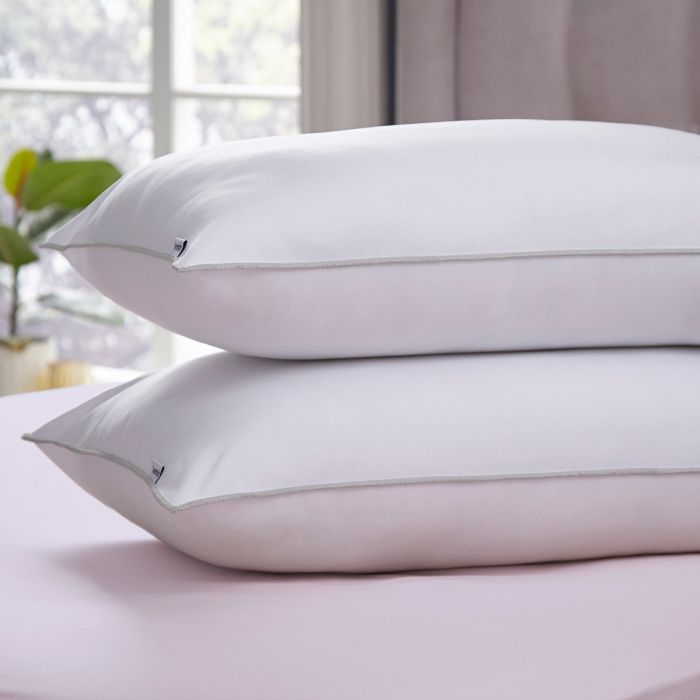
Silentnight Deep Sleep Pillow, 2 pack
★★★★☆ 3.5 / 5
Fifteen pounds for two, so £7.50 a pillow, and it earns its place here for one specific reason that has nothing to do with comfort. It is the only pillow in this comparison that fully machine washes and tumble dries.
That matters because of the mite evidence set out further up this page. Washing is the intervention with the best support behind it, and the good pillows mostly cannot take it. A memory foam core is wipe clean only, down needs professional cleaning, latex must never go in a machine. This one goes in at 40, comes out of the tumble dryer, and goes back on the bed. For a child’s bed, an allergy household or a guest room, that is worth more than a lot of the engineering above it.
It is also not bad. Four point two eight out of five from 645 reviews at one retailer, and the useful thing about those reviews is who is writing them. One verified buyer wrote that they have bought dearer pillows that did not give such a comfortable feel. Another said real support for side sleeping, still good after a week. It recovers, it is soft, and it does the job.
What you are giving up is structure and lifespan. It is hollowfibre polyester in a polyester microfibre cover, and hollowfibre compresses. Which? put hollowfibre lifespan at a couple of years and other guidance puts polyester at six months to two years. The retailer classifies it as medium soft and suitable for back sleepers, and it does not have the structure for a broad shouldered side sleeper regardless of what one happy reviewer says.
One review is worth quoting because it names a real failure mode. A buyer wrote that it was a bit too soft and overstuffed, so their head sinks too far into it and they wake with a blocked nose. That is what a pillow that is too soft for you does, and it is a good reminder that cheap does not mean harmless if the loft is wrong for your build.
Two practical warnings. Buyers regularly order a single from one retailer thinking it is the pair, so check what you are buying. And Silentnight describe it as hypoallergenic while the retailer says non allergenic. Both are marketing terms rather than certifications, and Silentnight’s separate anti allergy range is the one that actually carries British Allergy Foundation approval. Do not confuse the two.
Pros
- The only pillow here you can machine wash and tumble dry, which is the best mite intervention
- Seven pounds fifty each, and buyers who own dearer pillows still rate it
- Four point two eight out of five across 645 reviews
- A two year Silentnight guarantee even at this price
- Perfect for a child’s bed, a guest room or a rental
Cons
- Hollowfibre compresses. Expect two years at best, and often less
- Medium soft and classed for back sleepers, so it lacks structure for broad shoulders
- Polyester fill in a polyester cover that you are told to launder, so it sheds microfibres
- Overstuffed for some, and a too soft pillow causes its own problems
- Hypoallergenic here is a marketing word, not a certification
Buy it if washability is the point, it is for a child or a guest, or you replace pillows often. Skip it if you have broad shoulders and sleep on your side, or you want it to last.
Prices checked 5 August 2026 and may have changed since.
The clean pick, and the honest catch
Our clean pick
Woolroom Deluxe Washable Wool
No foam, no polyester, and it washes
Why it wins on materials
✓
There is no polyurethane in it at all
✓
No flame retardant chemistry, and none required
✓
It washes at home, which is the mite answer
✓
Adjustable, so it fits your shoulder
What you give up
✕
It smells of sheep when new
✕
It needs looking after
✕
It is not the neck pain answer
The catch, said plainly. This is a genuinely clean pillow and it is also a pillow that asks something of you: fluff it, tune the loft properly, and put up with a sheepy smell for the first few weeks. If that sounds like too much, there are two honest alternatives on this page. The Soak and Sleep down pillow is chemically just as inert, has no polyurethane and no polyester in it, and the mite research actively favours feather casings over synthetic. It loses only because you cannot wash it at home. And the £7.50 Silentnight is polyester through and through, which is the worst material story here, but it is the only pillow you can put through a hot wash and a tumble dryer, and if dust mite allergy is the actual problem you are solving then washability may genuinely beat materials. We would rather say that than pretend the expensive answer is always the right one.
What to look for when you buy one
Loft is the whole thing, and it depends on your shoulders
Almost every complaint about a pillow is a loft complaint wearing a disguise. The job of a pillow is to fill the gap between your head and the mattress so your neck stays in line with your spine, and how big that gap is depends on how you sleep and how broad you are.
Side sleepers need the most, because the gap is the width of your shoulder. Broad shoulders need more again, and this is where cheap soft pillows fail. Back sleepers need medium, enough to support the curve of the neck without pushing the chin towards the chest. Front sleepers need almost nothing, and ideally a pillow you can strip back to almost flat, because anything lofty twists the neck all night.
Combination sleepers are the awkward case, and it is why the heavily contoured memory foam pillows get complaints about being restrictive. If you turn over three times a night you want something that lets you, not something moulded to one position.
The dust mite evidence, which goes the opposite way to the usual advice
Everybody has been told that feather pillows are bad for allergies and synthetic ones are the safe choice. The published measurements say the reverse, and it is worth setting out properly.
A 1999 study put paired new synthetic and feather pillows on twelve beds for twelve months and then measured the main house dust mite allergen on both. The synthetic pillows carried roughly three times as much as the feather ones.
A 2004 study found the mechanism. Electron microscopy measured the pore size of standard synthetic pillow casings at around 57 micrometres, against around 18 micrometres for feather casings. Mites crossed every standard synthetic casing within 24 hours but had not crossed the feather casings after 48. Dust penetration was 0.88 per cent through synthetic against 0.07 per cent through feather. The reason is not the fill, it is the fabric: down cannot be contained by an ordinary weave, so feather pillows have always used a tight cambric casing, and that same tight weave keeps mites and dust out.
A 2006 study found the same direction for fungi, with more species in synthetic pillows than feather ones.
None of this means a feather pillow is right for you if you are allergic to feathers, which is a separate and real thing. And it does not overturn the biggest finding of all, which is that washing works. If dust mite allergy is your actual problem, the ranked order of usefulness is: wash the pillow regularly and hot, use a tightly woven encasement, keep bedroom humidity under about 50 per cent, and only then worry about what the fill is made of.
Fire regulations, and what they mean for a pillow
This one is genuinely surprising, so here is what the Furniture and Furnishings (Fire) (Safety) Regulations 1988 actually do. Pillows are included in the definition of furniture. But they are then expressly excluded from the cigarette resistance test and from the cover match test, and a pillow carries no fire safety label at all, which is why you have never seen one.
What survives is the filling test, and this is where the fills separate. A polyurethane foam filling in slab or cushion form has to pass the wood crib ignition test, which is the most demanding filling test in the regulation, and there is no pillow escape route from it. Untreated commodity foam does not pass it. Feather, down, wool and hollowfibre take a much milder route and pass on their own merits by charring rather than sustaining flame. Latex gets its own separate and gentler test.
The practical consequence: a memory foam pillow legally sold in the UK almost certainly contains flame retardant chemistry somewhere in the foam, and nothing on the label will tell you what. A wool, down or hollowfibre pillow does not need any, and manufacturers of those do not add it. That is the single clearest material difference on this page and almost nobody writes about it.
What CertiPUR and OEKO-TEX actually cover
CertiPUR applies to the polyurethane foam. It sets a ceiling on total volatile organic compound emissions and prohibits certain flame retardants, heavy metals, formaldehyde and phthalates. It is real and it is independently tested. It does not mean zero emissions, it means emissions below a threshold, and it is not a government scheme.
OEKO-TEX Standard 100 applies to textiles. It tests against a long list of restricted substances and requires compliance with the relevant chemical regulations. Class 1 is the infant class and the strictest. What it does not automatically do is certify a foam core inside a certified cover, so if a foam pillow claims OEKO-TEX, it is worth knowing which components the certificate actually covers.
Neither one means chemical free, and any brand implying otherwise is overselling a real certificate.
Antibacterial and antimicrobial claims, and how to test them
A lot of pillows are sold as naturally antibacterial, usually on the basis of bamboo. Bamboo viscose is regenerated cellulose, chemically the same as any other viscose, and the antibacterial performance of the raw plant does not survive that process in any well evidenced way. The American regulator has acted more than once against sellers making unsubstantiated bamboo antibacterial claims.
Here is the useful bit. If a genuine biocide had been added to a product, the Biocidal Products Regulation requires the item to be labelled with the active substance and the biocidal property claimed, and entitles any buyer to written detail free of charge within 45 days of asking. So if a brand claims antibacterial performance, email and ask which active substance is present. Either you get an answer, in which case you know what is in your pillow, or you do not, in which case the claim is about the plant it started as rather than the product you bought.
How often to replace one, and how to test yours
The honest answer is that it varies enormously by fill and nobody should give you one number. Hollowfibre and microfibre polyester are the shortest lived, commonly two years and often less. Memory foam and latex go considerably longer, with latex the most durable fill here. Down lasts well if you plump it, and wool lasts longest of all provided it is fluffed and occasionally redistributed.
The test that works for a fibre or down pillow: fold it in half, and if it stays folded rather than springing back, it is finished. For a foam or latex pillow, look for a permanent dent where your head goes that does not recover during the day.
And before you replace it, consider washing it, if the label allows. A large part of what makes an old pillow feel dead is accumulated body oil and skin scale rather than the fill failing.
Encasements do more than the pillow choice does
If allergy is the reason you are here, a tightly woven pillow encasement is a cheaper and better lever than upgrading the pillow. It puts a barrier with a small enough pore size between you and whatever is in the fill, it can be washed hot far more easily than the pillow itself, and it works regardless of which pillow is inside it. Look for a stated pore size or an allergy certification rather than the word hypoallergenic, which means nothing in particular.
Final verdict
Match the loft, then the material
Two decisions, in this order, and most people do them the wrong way round.
First, get the loft right for how you sleep. Side sleepers with broad shoulders need real height and firmness, back sleepers need medium, front sleepers need almost nothing. Nearly every complaint in every review pool on this page is somebody whose pillow was the wrong height for them, and no amount of certification fixes that. If you are not sure, buy something adjustable: the Woolroom lets you pull wool out by the handful, the Simba lets you pull foam cubes out into a bag.
Then decide on the material. If you want foam and polyester away from your face, the Woolroom Deluxe is the only pillow here with neither, and it washes at home, which almost no natural pillow does. If your neck hurts, latex is the fill with the actual evidence behind it and the Dunlopillo is the one to try. If you want the hotel feel, the Soak and Sleep down pillow is chemically inert and the mite research is on its side.
And if dust mite allergy is the real problem, do not spend a hundred pounds on a pillow. Buy the £7.50 Silentnight two pack, wash them hot every few weeks, put a tightly woven encasement over them, and keep the bedroom under 50 per cent humidity. That will do more than any pillow on this page.