Home · Bedroom · Bedding hygiene
Best pillow sprays: six compared, and two of them preserve with a formaldehyde releaser
You spray these onto the thing you press your face into for eight hours. So we read all six ingredient lists properly, and two of them are held together by a preservative that slowly releases formaldehyde. What that does and does not mean is explained further down, because the word on its own is not the whole story.
By Mrs House · Updated 10 September 2026 · 9 min read
Mrs House is independent. Nobody pays for a place in a ranking here, and no brand saw this page before it went live. Our own bedding hygiene spray used to sit on this page and has been moved to the bedding sprays comparison, because it is not a pillow spray and it should never have been judged as one.
The short answer
Buy the Tisserand Sleep Better at about £12. It is the only one of the six with no alcohol and no parfum anywhere in it, and it names six of its fragrance allergens when three of the others name none at all.
- Best overall: Tisserand Sleep Better Body and Pillow Mist, about £12 for 100ml. Water, polysorbate and lavender oil, in that order, and six allergens declared.
- Cheapest worth having: Boots Botanics Peaceful Night, £7.50 for 100ml. A full nine ingredient list, though phenoxyethanol sits third.
- Skip: This Works Deep Sleep at £33.33 per 100ml and Feather and Down at £8. Both are preserved with a formaldehyde releaser.
None of these will put you to sleep. The evidence for lavender is thin, and not one of the six has a trial of its own product to point at.
How we assessed these
Six sprays sold to go on a pillow at bedtime. We deliberately kept fabric refreshers, bedding hygiene sprays, stain removers and dust mite killers off this page. Those are different products doing a different job and they are compared against each other in our bedding sprays guide.
For each one we found the full ingredient list, then read it in order, because order is quantity. We recorded whether alcohol or synthetic parfum sits above the essential oils the bottle is named after, which of the 26 declarable EU fragrance allergens are named, and what preserves the bottle. We worked out a price per 100ml rather than comparing bottle prices, because the sizes run from 30ml to 125ml and the price per 100ml runs from £7.50 to £86.67.
Then we went after the claims. Where a brand cited a sleep study we went looking for it, and where a brand said proven we checked whether anything had been published. We also read the systematic reviews on lavender and sleep rather than the brands’ summaries of them.
Every product is scored on the same five parts: does it work (35 per cent), what it is made of (25 per cent), value (15 per cent), everyday use (15 per cent) and honesty of the claims (10 per cent).
The ranking, at a glance
| Spray | Size | Per 100ml | Alcohol or parfum first? | Preservative | Allergens named? | Score | |
|---|---|---|---|---|---|---|---|
| 1 | Tisserand Sleep Better | 100ml | £12.00 | No, water first | Sodium benzoate and potassium sorbate | Yes, six | 4.0 |
| 2 | Boots Botanics Peaceful Night | 100ml | £7.50 | No, water first | Phenoxyethanol, third | Yes, three | 3.7 |
| 3 | The White Company Pillow Mist | 125ml | £17.60 | Alcohol denat, first | None named | No | 3.1 |
| 4 | This Works Deep Sleep | 75ml | £33.33 | Parfum, third | Diazolidinyl urea | No | 2.8 |
| 5 | Feather and Down Sweet Dreams | 100ml | £8.00 | Parfum, second | Bronopol | No | 2.7 |
| 6 | NEOM Perfect Night’s Sleep | 30ml | £86.67 | Alcohol denat, first | None named | No | 2.6 |
Diazolidinyl urea and bronopol are both formaldehyde releasing preservatives. That is a fact about the chemistry, and what it does and does not mean is set out in the buying guide below.
The two we would actually buy
Best overall
No alcohol, no parfum

1. Tisserand Sleep Better Body and Pillow Mist
★★★★☆ 4.0 / 5
About £12 for 100ml at Ocado, £13 direct, and cheaper again if you catch it at Sainsbury’s. That puts it in the gap between the supermarket sprays and the luxury ones, which is where most people actually want to be.
The first three ingredients are aqua, polysorbate 20 and lavender oil. There is no alcohol in it and there is no parfum in it. Every scent component is named as the botanical it came from, and the declaration carries six of the 26 EU listed allergens: linalool, limonene, geraniol, coumarin, benzyl benzoate and eugenol. Three of the sprays on this page name none. It is preserved with sodium benzoate and potassium sorbate with citric acid, which is the ordinary, unglamorous, non formaldehyde releasing way of doing it.
Two things stop it scoring higher. The claim on the box is that clinical trials have shown lavender can improve sleep quality, which is a claim about an ingredient rather than about this bottle, and no study is cited. And there are three different ingredient lists in circulation for it, the current one, a shorter retailer version, and an older one that still contained phenoxyethanol, so older stock may not be the formula described here.
Pros
- No alcohol and no parfum anywhere in the list
- Six fragrance allergens named, the best disclosure on this page
- No formaldehyde releaser, no isothiazolinone, no phenoxyethanol in the current formula
Cons
- The sleep claim is about lavender, not about this product, and cites no study
- Vegan Society and cruelty free are claimed with no certificate number published
Best value
£7.50 per 100ml
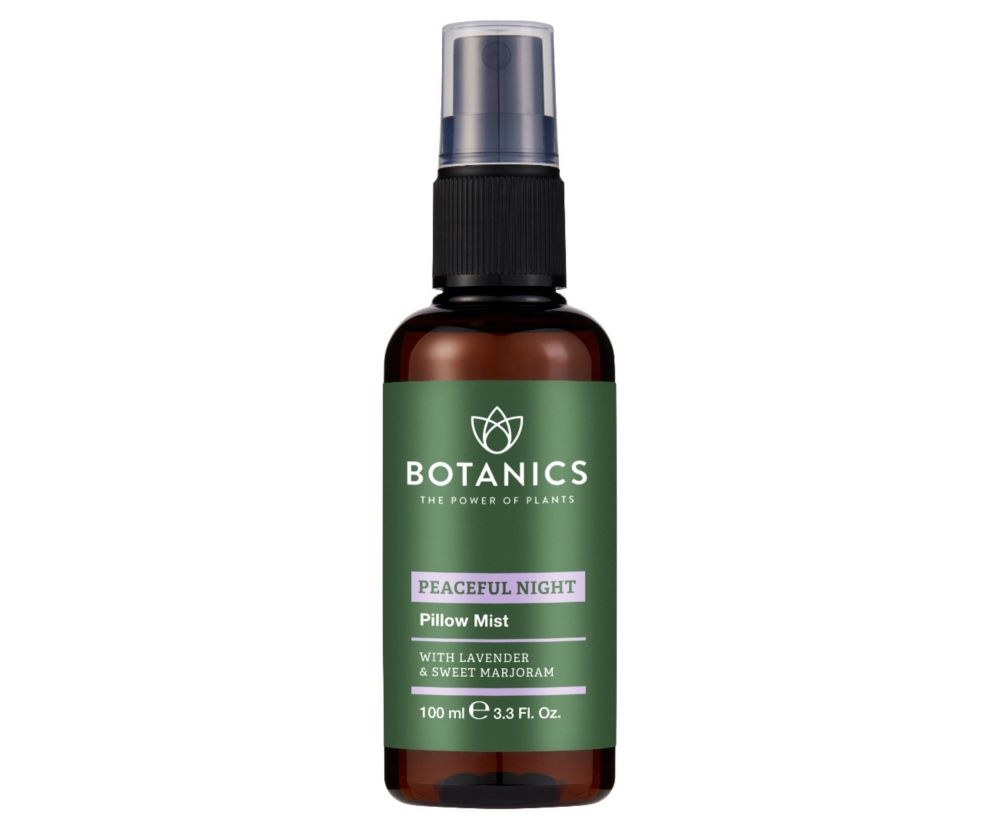
2. Boots Botanics Peaceful Night Pillow Mist
★★★½☆ 3.7 / 5
£7.50 for 100ml, the cheapest thing here that publishes a proper list, and the one to buy if you want to spend under a tenner and still know what you are spraying.
Nine ingredients, printed in full. No alcohol and no parfum, lavender and sweet marjoram named as themselves, and three of the 26 declarable allergens declared. That is better than three of the premium sprays on this page manage at two and three times the price.
The catch is phenoxyethanol in third position. It is not a formaldehyde releaser and it is not an isothiazolinone, and it is permitted at up to one per cent in cosmetics, so this is a much smaller objection than the ones further down this page. It is still a synthetic preservative sitting third in a product sold on being botanical. The other problem is the marketing. The 82 per cent felt calm figure is a 75 person consumer panel from 2019, not a trial, and the 100 per cent natural line on the front does not survive its own ingredient list.
Pros
- Full nine ingredient list published, no alcohol, no parfum
- Three fragrance allergens named
- Half the price of the next cleanest spray here
Cons
- Phenoxyethanol third in the list
- The 82 per cent figure is a consumer panel, and the 100 per cent natural claim is not accurate
The premium ones
Best of the premium ones
Claims nothing it cannot back

3. The White Company Sleep Soothing Pillow Mist
★★★☆☆ 3.1 / 5
£22 for 125ml, £17.60 per 100ml, 4.9 from 102 reviews, and it is the most restrained premium product here. It says the mist is scented with lavender, sage and chamomile and that you should spritz it on bed linen. It does not tell you it will make you sleep, and it does not cite a study, which after reading the other five is a relief.
The formulation is the catch. Denatured alcohol is the first ingredient and parfum is the fourth, so the essential oils that give it its name sit below both. The alcohol is doing real work, dissolving the fragrance and self preserving the bottle, which is why there is no preservative to declare. But the directions give the game away: spray from at least fifteen inches, patch test on a discreet section first, and do not directly spray onto furnishings. For a product called a pillow mist, that is an odd set of instructions.
Pros
- Makes no sleep claim and cites no study, which is rare in this category
- 4.9 from 102 reviews on its own site
- No preservative needed, because the alcohol does that job
- Only three of the 26 declarable allergens named
Cons
- Denatured alcohol is the first ingredient and parfum the fourth, above the essential oils
- Its own directions say do not directly spray onto furnishings, and to patch test first
- £17.60 per 100ml
- The White Company publishes no ingredient list on its own page, we found it at a stockist
- A differently formulated Sleep Mist exists under a near identical name, so check which you are buying
Buy it if you want the scent and the brand and you will spray it on the linen rather than the pillow. Skip it if you are avoiding alcohol on your bedding.
The famous one
£33.33 per 100ml
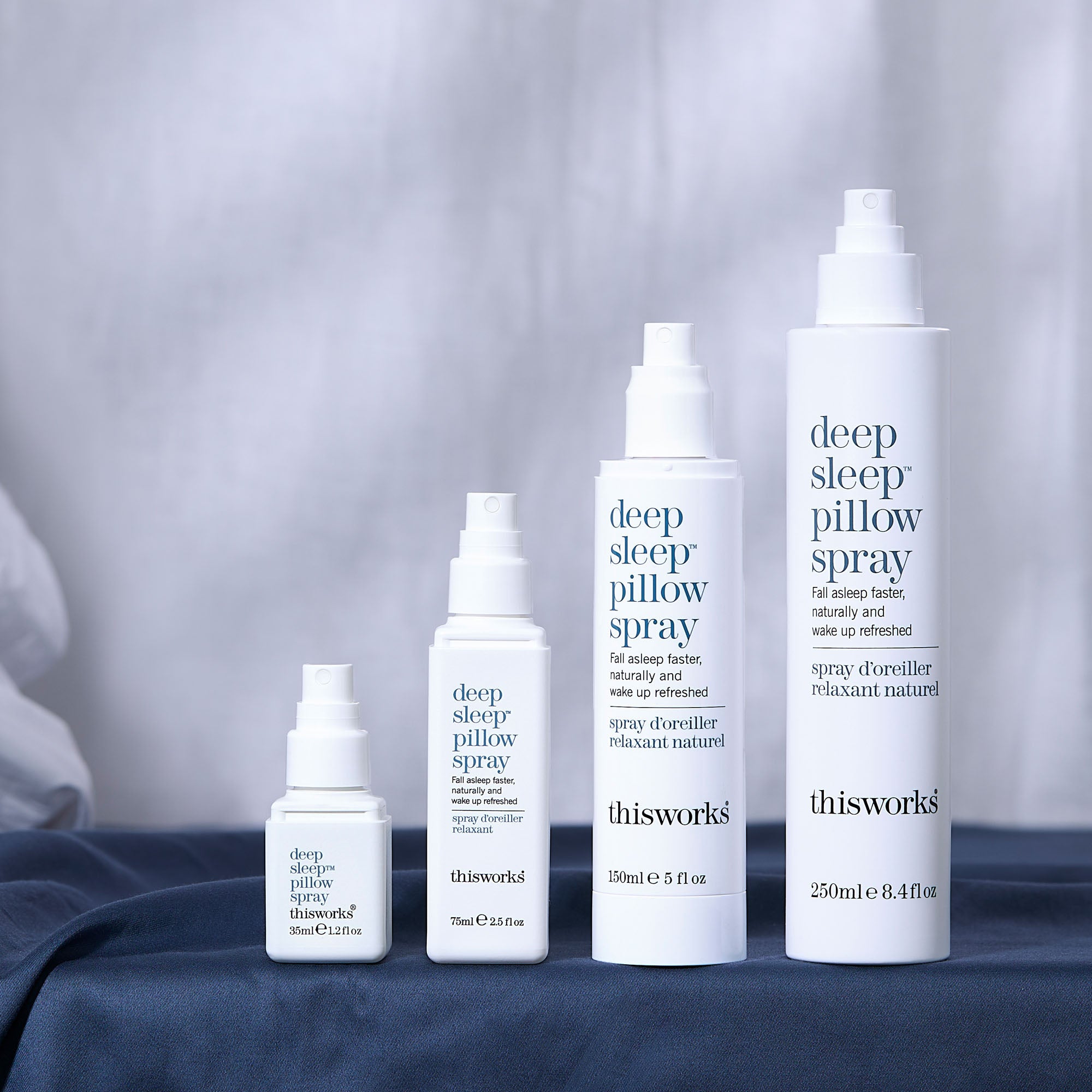
4. This Works Deep Sleep Pillow Spray
★★★☆☆ 2.8 / 5
£25 for 75ml, £33.33 per 100ml, and the best known pillow spray in the country. Credit where it is due on the formulation: it is water based rather than alcohol based, and the lavender, patchouli, ho wood and vetiver oils sit high in the list. It is not a cheap fragrance in a bottle.
The problem is the numbers on the front. Eighty nine per cent fell asleep faster, ninety seven per cent slept better. Read the footnote and it is a panel of a hundred people answering a questionnaire, measured against no product at all rather than against an unscented spray. For something whose entire mechanism is a nice smell and a bedtime routine, the unscented control is the one comparison that would mean anything, and it is missing. We could find no peer reviewed publication of any of it. Being water based also means it needs preserving, and the preservative is diazolidinyl urea, a formaldehyde releaser. What that means in practice: it is a legal, permitted preservative that gives off tiny amounts of formaldehyde to stop the bottle growing bacteria. It is not a cancer risk at these levels. It is one of the more common causes of allergic contact dermatitis, so it matters if you already react to things, and it matters more on a pillow than on a bathroom cleaner.
The two we would not buy
Proven, with no study
£8 per 100ml

5. Feather and Down Sweet Dreams Pillow Spray
★★½☆☆ 2.7 / 5
£8 for 100ml, which is the second cheapest here and the reason a lot of people buy it. It is sold on a soothing blend of lavender and chamomile essential oils, and the Superdrug listing goes further and says those oils are proven to encourage calm and a restful night’s sleep, aimed at people who suffer from insomnia. There is no study cited anywhere for that, and proven is the strongest word anybody uses on this page.
Read the list and the blend is not really the point of the product. Parfum is the second ingredient, immediately after water, while the chamomile and lavender oils are tenth and eleventh. One of the declared allergens is alpha isomethyl ionone, which is synthetic and cannot come from lavender or chamomile. It is preserved with sodium benzoate and bronopol, and bronopol is the other formaldehyde releaser on this page. Same caveat as above: permitted, low level, not a cancer risk in a bottle, and a recognised contact allergen. The instruction is to spray a generous amount directly onto your pillow, which is the one place on this page we would least want a known sensitiser sitting.
Last place
£86.67 per 100ml

6. NEOM Perfect Night’s Sleep Mist
★★½☆☆ 2.6 / 5
£26 for 30ml, which is £86.67 per 100ml and by a distance the most expensive thing on this page. NEOM is a certified B Corporation with a real score behind it, the brand sits at 4.5 on Trustpilot across nearly eight thousand reviews, and John Lewis has it at 4.8 from 141. The company is not the problem.
The bottle is. It is sold on 100 per cent natural fragrances, and Parfum is the third ingredient, ahead of water, with denatured alcohol first. Those two things cannot both be the headline. It names six of the 26 declarable fragrance allergens, the highest count here, which matters if anyone in the house reacts to fragrance. The brand’s own directions tell you to spritz above your pillow rather than onto it and not to spray towards your face, and the warning starts with the word flammable. For eighty seven pounds per hundred millilitres we expected better than a contradiction on the front of the pack.
Pros
- A certified B Corporation with a published impact score
- 4.8 from 141 reviews at John Lewis, and 4.5 across nearly 8,000 brand reviews on Trustpilot
- Publishes its full ingredient list on its own site
- No preservative needed, because it is alcohol based
Cons
- £86.67 per 100ml, the most expensive here by a wide margin
- Says 100 per cent natural fragrances while Parfum is the third ingredient, above water
- Six of the 26 declarable allergens named, the highest count on this page
- Its own directions say spray above the pillow and not towards your face
- A 30ml bottle, so it runs out quickly
Buy it if you already love the scent and the price genuinely does not matter. Skip it if you read the front of the pack and expected the list to match it.
Prices checked 10 September 2026 and may have changed since. Price per 100ml is worked out from the pack price at the retailer named, so an offer or a gift set will move it.
The clean pick, and what it does not do
Our clean pick
Tisserand Sleep Better
No alcohol, no parfum, and six allergens named
Why it wins on materials
✓
No parfum anywhere in it
Every scent component is a named botanical oil. Three of the other five declare parfum, and two of those put it in the first four ingredients, above the lavender the bottle is sold on.
✓
No formaldehyde releaser
Sodium benzoate and potassium sorbate with citric acid. This Works uses diazolidinyl urea and Feather and Down uses bronopol, and both of those release formaldehyde slowly into the air of a closed room.
✓
No denatured alcohol
The two alcohol led sprays here both carry patch test warnings, and one of them tells you not to spray it directly onto furnishings, which is an odd instruction for a product called a pillow mist.
✓
Six allergens named, not hidden
Linalool, limonene, geraniol, coumarin, benzyl benzoate and eugenol, printed on the declaration. Nobody else on this page names more than three, and three of them name none at all.
What you give up
✕
The sleep claim is about lavender, not about this
Clinical trials have shown lavender can improve sleep quality is a claim about an ingredient, with no study cited and no trial of this product. We mark it down for exactly the reason we mark the others down.
✕
Three ingredient lists are in circulation
The brand’s current list, a shorter retailer version at Ocado and Waitrose naming two allergens, and an older version that still contained phenoxyethanol. Clearance stock may be the older formula, so read the bottle you are actually handed.
✕
The certification has no number
Vegan Society registered and cruelty free, both stated in the brand’s own FAQ with no certificate number published, and Leaping Bunny is not claimed. A certification you cannot look up is a claim like any other.
The catch, said plainly. The clean pick rule on this site says a comparison has to name one option with nothing questionable in it. The Tisserand takes that slot on the ingredients, and it takes it comfortably: it is the only spray of the six with no alcohol, no parfum and no formaldehyde releaser, and it names twice as many allergens as anything else here. What it cannot do is what the category is sold on. There is no trial of this product, or of any of the other five, showing that spraying it on a pillow makes you sleep. If that is what you are buying, none of these six can honestly sell it to you.
What to look for when you buy one
Read the list in order, because order is quantity. If parfum sits above the lavender, you are buying a fragrance compound with a little lavender in it, whatever the front of the bottle says. On this page that is true of three of the six.
Find the preservative, and know what a formaldehyde releaser actually is. A water based spray has to be preserved or it grows bacteria. Diazolidinyl urea, DMDM hydantoin, imidazolidinyl urea and bronopol all work by giving off very small amounts of formaldehyde over time, and two of the six here use one. Here is the fair version, because the word frightens people more than the facts warrant. These are permitted preservatives, capped by cosmetic regulations, and above a low threshold the pack has to carry a warning. At the levels used in a bottle like this they are not a cancer risk, and the inhalation research that gives formaldehyde its reputation is about industrial exposure, not a spray on a pillowcase. What is genuinely documented is allergy: formaldehyde and its releasers are among the more common causes of allergic contact dermatitis, and if you already react to cosmetics or have eczema, this is a real reason to avoid them. On a pillow, which is against your face all night, we would rather see a different preservative. That is a preference with a reason behind it, not an alarm.
Alcohol first is not automatically bad, but read the directions. It dissolves the fragrance and dries fast, and it means the bottle preserves itself with no added preservative at all. It is also why the most alcohol heavy product here tells you to patch test and not to spray it onto furnishings, and why the warnings begin with the word flammable.
Work out the price per 100ml. The bottles run from 30ml to 500ml and the shelf price hides everything. On this page the range is 60p to £86.67, which is a hundred and forty fold spread for products doing broadly the same job.
Treat sleep claims as marketing until somebody shows you a control group. The strongest evidence on this page is a panel of a hundred people compared against no product at all. An unscented spray is the comparison that would mean something, and nobody runs it.
Let it dry, and spray the linen rather than your face. Only one of the six tells you to let it dry, and it is the three pound one. Two brands tell you to spray generously straight onto the pillow. Spray from a distance, let it dry, and patch test dark or delicate bedding first.
Final verdict
Read the back, not the front
The gap between the front of these bottles and the back of them is the widest we have found in any category on this site. A spray sold on lavender that lists denatured alcohol first and parfum fourth. A spray sold on sleep that is preserved with a formaldehyde releaser. A 30ml bottle at £86.67 per 100ml that names no preservative at all.
Buy the Tisserand if you want the cleanest formulation and you can live with the fact that no pillow spray has ever been shown to work. Buy the Boots Botanics if £12 feels like a lot for scented water, because at £7.50 it is most of the way there. And if what you actually want is a bed that smells clean rather than a bed that promises sleep, that is a different product, and it is compared here.