Home · Cleaning · Floors
Best floor cleaners: six compared, and the winner smells of nothing
The floor is the one surface a crawling baby and a barefoot household are in constant contact with, and it is the surface where residue is most likely to be left behind on purpose. The UK number one floor cleaner declares six named fragrance allergens on its label. The one that came top of our ranking declares none, and buyers complain about it.
By Mrs House · Updated 9 September 2026 · 14 minute read
Mrs House is independent. Nobody pays for a place in a ranking here, and no brand saw this page before it went live.
The short answer
Buy the Bona Wood Floor Cleaner if you have sealed or engineered wood. It is pH neutral, no rinse, GREENGUARD Gold certified for indoor air emissions and effectively unscented, which is the whole point.
- Best overall: Bona Wood Floor Cleaner, about £21 for a 4 litre refill at B and Q. Works out around 21p a room.
- Best ingredient list: Bio-D Concentrated Floor Cleaner, £4.08 for 750ml. Doses at 10ml a bucket, about 5p, scented with sweet orange oil.
- Skip: Flash Crisp Lemon, £2.25 a litre. Six named allergens and no published dose.
On tile, LVT or vinyl you want the Hard-Surface Bona instead. Buying the wrong Bona is the easiest mistake in this category.
How we assessed these
Six floor cleaners, and one rule we set before we started: every ingredient list here is transcribed from the pack, the brand’s own page or a retailer listing that reproduces the label. Where a brand does not publish a full list, we say so rather than guessing, and one of our top two does not publish one.
We weighted this differently to most categories, for a reason. A worktop gets wiped and then things get put on it. A floor gets a diluted product spread across the largest horizontal surface in the house and then left to dry in place, and whatever is in it evaporates into the room air for hours afterwards. That is what the phrase leaves a fresh scent actually means. It means fragrance was deliberately left on your floor to keep coming off it.
So we looked for four things. Quaternary ammonium compounds, the biocides used in antibacterial floor cleaners, which are respiratory sensitisers and which leave residue behind on a surface people touch with bare skin. Isothiazolinone preservatives, methylisothiazolinone in particular, which are among the most common contact allergens in household products. The named fragrance allergens, which under the Detergents Regulation only have to be printed once they exceed 0.01 per cent, so every one you see on a label is a material present above that threshold. And dilution rate, because over dosing is what causes the sticky film everybody complains about.
Then we checked what each one is safe on, because acidic products etch limestone and marble, and alkaline ones are wrong for oiled and waxed wood. Prices were checked in September 2026.
The ranking, at a glance
| Cleaner | Price | Per bucket | Fragrance | Preservative | Score | |
|---|---|---|---|---|---|---|
| 1 | Bona Wood Floor Cleaner | £21 for 4L at B and Q | About 21p a room | None declared | None declared | 4.7 / 5 |
| 2 | Bio-D Concentrated Floor Cleaner | £4.08 for 750ml | About 5p | Sweet orange oil, limonene | None. No MIT, BIT or MI | 4.5 / 5 |
| 3 | Miniml Floor Cleaner, Almond | £3.99 for 750ml | About 13p | Perfume. Citronellol, linalool | Not declared | 4.2 / 5 |
| 4 | Method Squirt + Mop, Almond | £3.00 at Sainsbury’s | 8p to 13p a room | Perfume, and it is strong | Not declared | 3.8 / 5 |
| 5 | Sainsbury’s Green Care Home | £2.00 for 1L | About 7p | Perfumes, laurel and basil | Phenoxyethanol | 3.4 / 5 |
| 6 | Flash Crisp Lemon | £2.25 for 1L | Dose not published | Six named allergens | Not declared | 2.9 / 5 |
The two we would actually buy
Best overall
Our winner
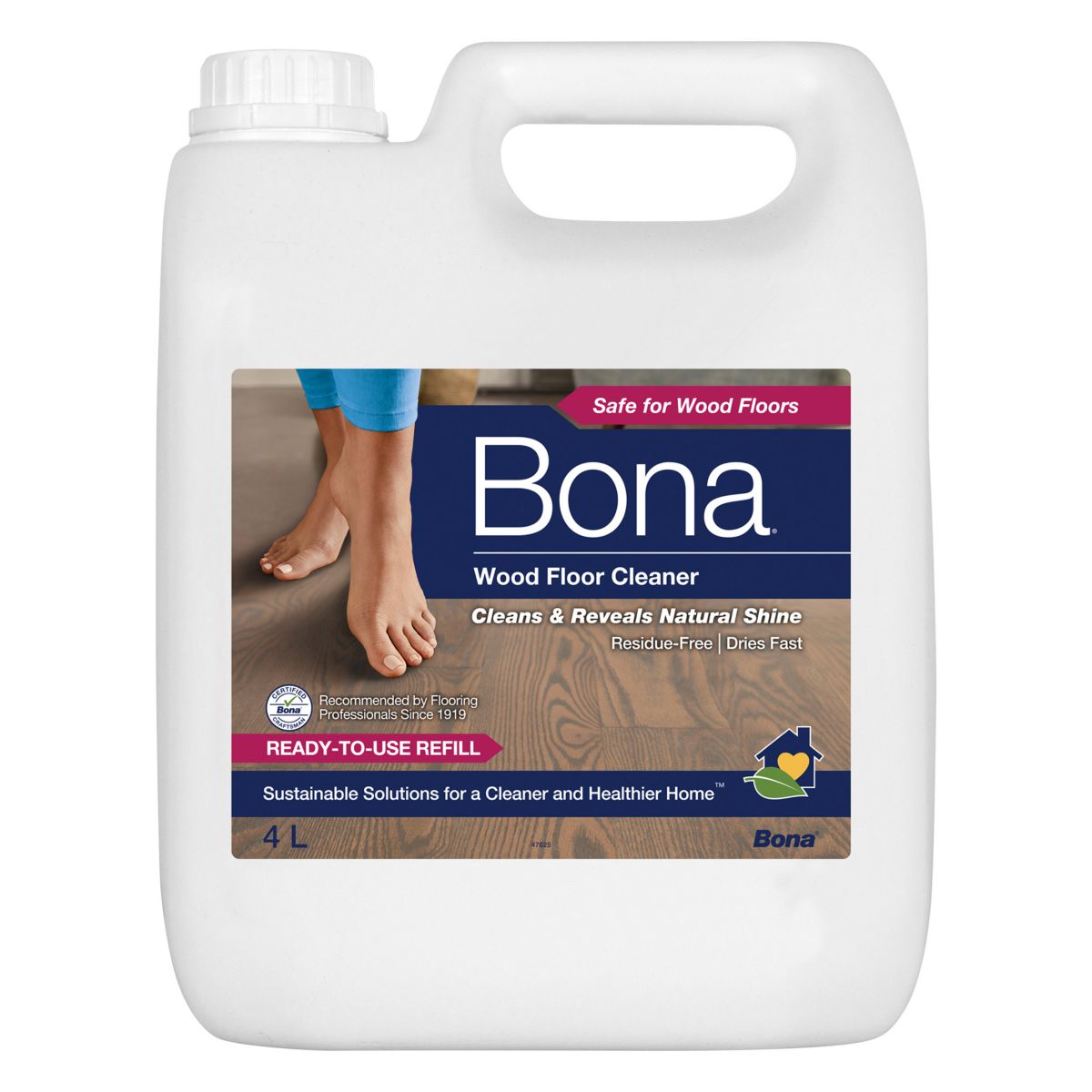
Bona Wood Floor Cleaner
★★★★★ 4.7 / 5
The single best thing about this product is what the reviewers complain about. Read the B and Q feed and you find this: the only criticism is that it does not have any odour, and we have solved this by adding a few drops of lavender oil. That is a five star review, and the thing being complained about is exactly why it wins.
It is water based, pH neutral, ready to use so there is no way to overdose it, and it is a no rinse formula designed to flash off and leave nothing behind. Bona hold GREENGUARD Gold certification on their waterborne cleaners, which is a chemical emissions standard: the product has been tested for volatile organic compound emissions into indoor air against limits set with sensitive people, children included, in mind. That is precisely the right certification for something you spread across the biggest horizontal surface in your house. The US EPA Safer Choice mark is also legible on the bottle.
Owners are consistent about two things. It dries fast and leaves no residue, with one describing it as streak free, odourless, no noticeable residue, fast drying, so the kitchen was usable again in a very short time. And it does not make floors slippery, which is the most repeated point in the whole feed and which matters more than it sounds if anybody in the house is unsteady. One buyer with a solid bamboo floor said it cleans without making it slippery and retains the natural colour and finish.
It is also the one people trust on floors they are frightened of. Engineered boards, oiled boards, parquet, natural pine. Several buyers say they were worried about getting a new engineered floor too wet with a normal mop. Long term repeat buyers report years of use on oak.
Two criticisms we take seriously. The first is transparency, and it is a real one. Bona do not publish a full ingredient list. Not on the UK pack, not on their site, not through their retailers. So our recommendation rests on the certifications, the pH neutral no rinse behaviour and the absence of any declared fragrance or preservative, rather than on a line by line disclosure. If your requirement is full transparency rather than good third party certification, this does not meet it.
The second is that the range is confusing and buying the wrong one is easy. There are at least six Bona cleaner products on UK shelves. This one is for wood. For laminate, LVT, vinyl, tile and stone you want Bona Hard-Surface instead. And there are separately branded scented versions in Lavender Thyme, Lemon Mint and Cedar Wood, which is itself good evidence that the plain Wood Floor Cleaner is the deliberately unscented one. On price: £10.99 for a 1 litre spray is steep, but the 1 litre bottle refills from the 4 litre jug at £21, which brings it to about 21p a room.
Pros
- Effectively unscented. No perfume declared, no named allergens, and buyers complain about it
- GREENGUARD Gold certified for chemical emissions into indoor air, plus US EPA Safer Choice
- pH neutral and ready to use, so there is no dilution to get wrong and no etching risk
- No rinse, no residue, and repeatedly praised for not making floors slippery
- Refilling the 1L spray from the 4L jug brings it to about 21p a room
Cons
- Bona do not publish a full ingredient list anywhere, and that is a genuine gap
- The range is confusing. This one is wood only, and Hard-Surface is a different product
- Ten ninety nine for a 1 litre spray is roughly five times a supermarket concentrate
- The reviews we could read are all five star, which makes it hard to read critically
- Not a grout cleaner, and pH neutral will not lift ingrained soiling
Buy it if you have sealed, engineered or oiled wood and you want nothing left behind on it. Skip it if your floors are tile, LVT or vinyl, in which case buy Bona Hard-Surface instead.
Best value
Fully disclosed

Bio-D Concentrated Floor Cleaner
★★★★★ 4.5 / 5
Here is the whole ingredient list, printed on the back of the bottle and matching the website exactly: 5 to 15 per cent anionic surfactant, and below 5 per cent amphoteric surfactant, lactic acid, Citrus Sinensis oil, sodium chloride, citric acid and limonene. Contains limonene, may produce an allergic reaction. That is the entire formula, published, which is more than the product that beat it will do.
The economics are the other headline and they are remarkable. The dose is 10ml per 5 litre bucket, which is by a wide margin the lowest dose rate here. A 750ml bottle gives you seventy five buckets at about 5.4p each. The 5 litre refill gives five hundred buckets at about 4.1p. Bio-D’s own page makes the comparison, saying mainstream cleaners need two to six times more product for the same result, and the arithmetic supports them.
Bio-D state No MIT, BIT or MI on the pack rather than only in marketing, which is a genuine, checkable point of difference. The isothiazolinones are among the most common contact allergens in household cleaning products and they turn up in a lot of floor cleaners. There are no quats either, so no biocide residue on a surface people walk on barefoot. The one review we could verify on the 750ml says it cleans hard floors really well and does not leave any sticky residue.
Now the honest parts, and there are two. It is not fragrance free. It contains sweet orange oil, it declares limonene, and it carries the statutory sentence about producing an allergic reaction. Do not let the eco packaging imply otherwise. Limonene is the single most common fragrance allergen in household cleaning products and it oxidises in air into more sensitising compounds.
And the pack carries a GHS07 hazard pictogram, the exclamation mark in a red diamond, with the signal word Warning. That is because the product is acidic at pH 3.1. Which brings the practical warning: keep it off marble, limestone, travertine and unsealed grout, because acid etches natural stone and you cannot undo that. It is fine on sealed tile, vinyl, LVT and sealed wood.
The other niggle is that it is a concentrate in a bottle with no dosing chamber, and the instruction is one dessert spoon per bucket, which invites people to pour. Overdosing is what causes the sticky film. Measure it. And it is not a supermarket product, so you have to plan or use a refill shop.
Pros
- The entire ingredient list is published, on the pack and on the site
- No MIT, BIT or MI, stated on pack. No quats, no dyes, no optical brighteners, no phosphates
- Ten millilitres per bucket, which works out at about 5p a bucket, or 4p from the refill
- B Corp certified, made in Hull, and widely available on tap in zero waste refill shops
- The one verified review specifically says no sticky residue
Cons
- Not fragrance free. Sweet orange oil, and limonene declared with an allergy warning
- Carries a GHS07 warning pictogram, which none of the others in the top three do
- Acidic at pH 3.1, so keep it off marble, limestone, travertine and unsealed grout
- No dosing chamber, and the one dessert spoon instruction invites overdosing
- A very thin verified review base, two or three per size on the retailers we could read
Buy it if you want the whole formula printed on the bottle and the cheapest cost per bucket here. Skip it if you have natural stone floors, or fragrance of any kind is the thing you are avoiding.
The wool one, and the one for a child’s bed
Best refill brand
One bottle, all floors

Miniml Floor Cleaner, Calming Almond
★★★★☆ 4.2 / 5
Miniml are a York based refill brand and the model is the point: a 5 litre bulk container that keeps topping up a 750ml bottle, sold as 200 washes for £21.45, which is around 43p per 100ml. Zero waste shops stock it on tap. The brand state it works on all washable surfaces, floors, tiles and painted wood, so it is a genuine one bottle answer for a house with mixed flooring.
What matters for this site is that there are no quats and no declared preservatives. That is worth being precise about, because two of the ingredients look alarming if you are scanning a label quickly and are not. Lauramine oxide is an amine oxide, not a quaternary ammonium compound. Cocamidopropyl betaine is an amphoteric betaine, not a quat. Neither is a biocide.
The verified review we could find says it cleans vinyl and laminate really well, leaves no sticky residue and the bottle lasts for ages. It is a no rinse formula and the brand claim no sticky residue, which lines up.
Two problems, and both are about the brand’s own paperwork rather than the liquid. First, the fragrance. It is declared as perfumes, with citronellol, linalool and benzyl alcohol all named, and Miniml publish a full perfume pyramid running apple, almond, violet leaf, rose, jasmine, lavender and vanilla. Miniml describe it as a 100 per cent natural origin fragrance to ISO 16128, and it is worth understanding what that claim is: it is a statement about where the feedstock came from, not a statement about allergenicity. Citronellol and linalool are recognised contact allergens regardless of whether they were distilled from a plant or made in a reactor.
Second, the dosing. Miniml’s own page says one or two capfuls per 5 litre bucket, and the 5 litre refill is sold as 200 washes, which implies around 25ml. The retailer selling it says use 50ml per bucket, which is double, and would halve the number of washes and roughly double the cost per bucket to about 21p. Those two published figures cannot both be right. We have used the brand’s own figure and we are flagging the discrepancy rather than quietly picking one.
The other honest caveat is evidence. Miniml quote over 100,000 happy customers at brand level, but the product page carries no individual reviews we could read and the retailer had exactly one. We are not going to pretend that is a body of evidence.
Pros
- A proper refill model, with a 5 litre bulk container sold as 200 washes
- No quats, and no declared preservatives
- Works on all washable floors, tiles and painted wood, so it suits a mixed floor house
- Made in York, and widely stocked on tap in zero waste refill shops
- No rinse formula, and the one verified review confirms no sticky residue
Cons
- Heavily fragranced, with citronellol and linalool declared and a full perfume pyramid published
- The brand and the retailer publish contradictory dilution rates, one double the other
- The brand and the retailer also disagree on which surfactant class is the 5 to 15 per cent one
- Almost no readable product level reviews, so the evidence base is very thin
- Not sold in supermarkets, so it is a deliberate purchase
Buy it if you want to refill rather than rebuy and you like the idea of a floor that smells of almond. Skip it if you want a floor that smells of nothing, or you want a dose rate you can trust.
Most available
No bucket needed
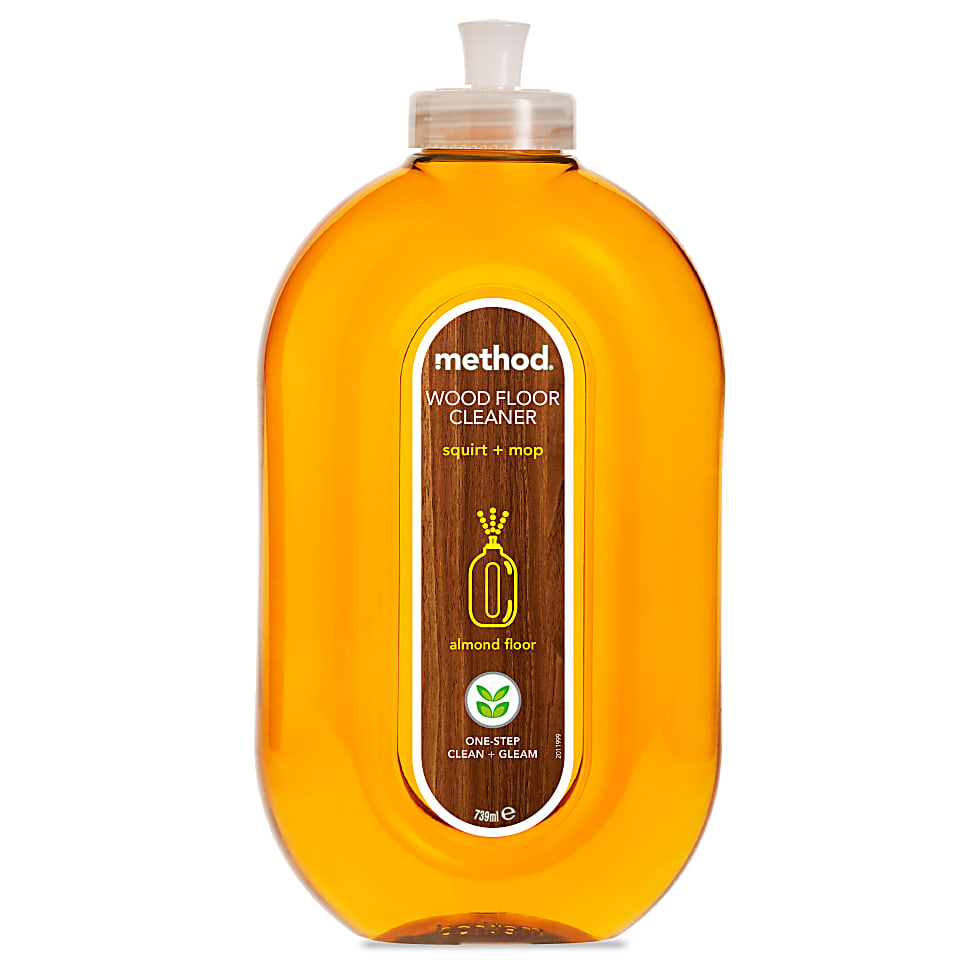
Method Squirt + Mop Wood Floor Cleaner, Almond
★★★★☆ 3.8 / 5
This is the most widely available greener option in the ranking. Sainsbury’s, Tesco, Waitrose, Ocado, B and Q, Robert Dyas, and it is £3.00 at Sainsbury’s. It is used neat, squirted straight at the floor from a directional nozzle, so there is no bucket, no measuring and no dilution to get wrong. A room takes roughly 20ml, which puts it at somewhere around 8p to 13p a room, considerably cheaper in use than the shelf price suggests.
It genuinely works on wood. Buyers on solid oak and engineered boards report a good shine with no cloudy residue and no streaks, and it cuts grease. The no bucket format is the top reason people rate it: one buyer wrote that a floor cleaner that does not need diluting and goes straight onto the floor makes it so much easier.
And then there is the fragrance, which is where this product loses two full points and which we would not normally dwell on except that its own buyers describe the problem better than we could. A two star reviewer wrote that it is convenient and cleans floors fine, however it is so strongly scented that it is very unpleasant to use. A one star reviewer, cleaning a newly exposed varnished wood floor, wrote that it made the place stink like a hair salon or a waiting room and gave them a headache.
That is not a niche complaint. It is the same product other reviewers repurchase specifically because they love the smell, which tells you the fragrance loading is high and deliberate. On a floor, high and deliberate means it keeps evaporating into the room for hours after you finish.
The ingredient disclosure is the legal minimum and no more: less than 5 per cent non ionic surfactants, perfume, with plant origin marked. That is it. For a brand positioned on transparency it is a thin list, and one reviewer at another retailer put it well, saying it is more of a natural ingredients product but still contains rubbish and telling people to read the ingredients carefully.
Minor gripes: the squeeze nozzle gives uneven coverage for some people, and a few report a slightly tacky film. It is Leaping Bunny certified. Note also that this is the wood version. There are Wild Rhubarb and Lemon and Ginger multi surface versions in the same bottle shape, so read which one you are picking up.
Pros
- Used neat with no bucket, no dilution and nothing to measure wrong
- Around 8p to 13p a room, which is cheaper in use than the shelf price suggests
- Genuinely good on solid and engineered wood, with no cloudy residue reported
- Sold nearly everywhere, which none of the other low tox options here are
- Leaping Bunny certified, and it cuts grease well
Cons
- The fragrance loading is high. Buyers describe it as very unpleasant and headache inducing
- Ingredient disclosure is the legal minimum and nothing more
- Some report a slightly tacky film left behind
- The squeeze nozzle gives uneven coverage for some people
- Easy to pick up the wrong variant, since the multi surface versions look almost identical
Buy it if you want something greener than Flash that you can buy in any supermarket, and you like almond. Skip it if anybody in the house reacts to fragrance, or you want to know what is in the bottle.
The two we would not buy
Supermarket own brand
Cheapest here
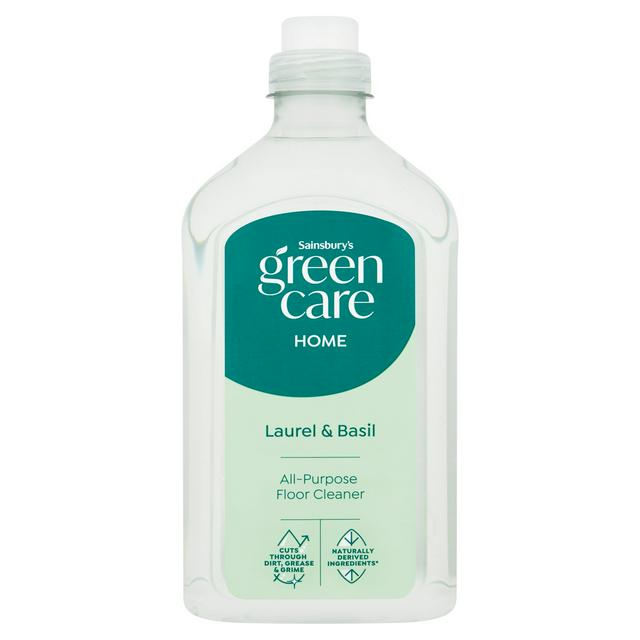
Sainsbury’s Green Care Home Laurel & Basil Floor Cleaner
★★★☆☆ 3.4 / 5
Two pounds a litre, 35ml per 5 litre bucket, which gives about twenty eight buckets at roughly 7p each. It is the only supermarket own label product on UK shelves that is actually badged as a floor cleaner and positioned on naturally derived ingredients, which is why it is here rather than a cheaper generic all purpose bottle.
It works, on the evidence. Buyers report it is streak free, dries quickly, leaves no residue and is kind to new tiles. One five star reviewer made a point worth passing on, that drying quickly avoids the risk of slips, which is a real safety benefit and not something the marketing mentions.
The reason it sits fifth is what those reviews are actually about. Read the ten most recent and eight of them lead on the smell rather than the cleaning: leaves a lasting fragrance, the smell lasts, smells divine, lovely fresh fragrance. One reviewer said it is a far cry from most typical overpowering smells associated with floor cleaners, which is a compliment about fragrance being nicer rather than about there being less of it. When a product is bought principally for what it leaves behind in the room air, that is worth naming.
The full ingredient statement is: less than 5 per cent non ionic surfactants, anionic surfactants, soap, also contains perfumes and preservation agents, phenoxyethanol. Two useful things in that. First, the preservative is named and it is phenoxyethanol rather than an isothiazolinone, which is a meaningfully better choice and Sainsbury’s deserve credit for both the choice and for printing it. Second, no named fragrance allergens are declared, which means any of the twenty six are below the 0.01 per cent threshold. That is genuinely better than Flash. It is not the same as allergen free and we are not going to report it that way.
The pack carries the eye rinsing precautionary set on the back, the same wording we found on the Green Care glass cleaner. And it contains soap, which is the ingredient most likely to build up as a dull film in a hard water area.
One last thing on the review data, which is a general warning rather than a criticism of this product. One review on this listing is rated one star and the text reads that the buyer is pleased with the performance and the price and that it made cleaning their dog covered kitchen floor easy. The star rating contradicts the text. That is a good reason not to lean on supermarket averages, here or anywhere.
Pros
- Two pounds a litre and about 7p a bucket, the cheapest usable option here
- The preservative is named, and phenoxyethanol is a better choice than an isothiazolinone
- No named fragrance allergens declared, which is a real difference from Flash
- No quats, no dyes, no optical brighteners, no phosphates declared
- Buyers report it dries fast and streak free, which reduces slip risk
Cons
- Sold almost entirely on the fragrance, and eight of the ten most recent reviews lead on smell
- Carries the eye rinsing precautionary wording on the back
- Contains soap, which builds up as a dull film in hard water areas
- Ingredient disclosure is the legal class list rather than a full formula
- Sainsbury’s only, so it cannot be a national default recommendation
Buy it if you shop at Sainsbury’s, you want cheap, and a named preservative is enough transparency for you. Skip it if the point of your cleaning routine is putting less fragrance into the house.
The benchmark
What most people buy
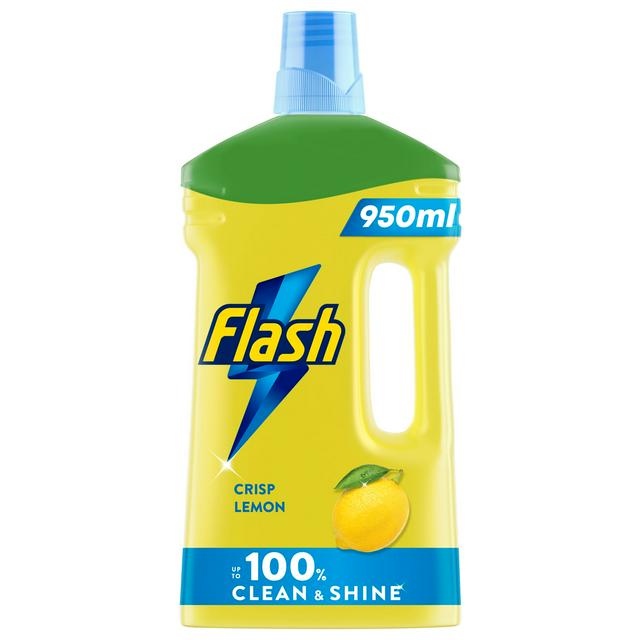
Flash Multipurpose Crisp Lemon Floor Cleaner
★★★☆☆ 2.9 / 5
This is what is under most sinks in Britain and the bottle says so, carrying the claim number one UK floor cleaner. It is £2.25 a litre, it is in every supermarket and every discounter, and on Tesco it holds 4.8 out of 5 across more than 2,800 reviews. It is in this ranking so you can see the comparison, and we are going to be straight that the criticism is of the label rather than of the performance.
It performs. Buyers report a streak free shine with no residue, grease lifted first time, and it working on laminate, wood and tile alike. There is essentially no critical review text on the 1 litre in the grocery feeds we could read, and we would rather say that than manufacture a complaint.
What we can criticise is the label, and here it is. The declared list reads: less than 5 per cent anionic surfactants, non ionic surfactants, perfumes, citral, citronellol, Citrus Aurantium peel oil, Citrus Limon peel oil, geraniol, hexyl cinnamal, limonene, linalool, linalyl acetate, pinene, terpineol, tetramethyl acetyloctahydronaphthalenes.
Count the fragrance materials against the cleaning ones. The perfume block is longer than the surfactant block. Six of those are on the list of named allergens that must be declared under the Detergents Regulation: citral, citronellol, geraniol, hexyl cinnamal, limonene and linalool. Each one only has to be printed once it exceeds 0.01 per cent of the product, so six named allergens means six materials present above that threshold. The last one on that list, the tetramethyl acetyloctahydronaphthalenes, is a synthetic musk, and the job of a musk in a formula is to make the scent persist rather than fade.
That is the whole argument on this page in one label. Persist where? On your floor, evaporating into the room, for hours after you have finished. And the reviews confirm that is precisely what people are buying it for: seven of the nine five star reviews on one listing lead on the scent, and the clearest of them says the smell is so fresh that adding it to the cleaning water is a must.
The pack also carries the hazard statement causes serious eye irritation with the eye rinsing instruction, and a set of surface restrictions that catch people out. Not suitable for untreated or oiled wood. Avoid aluminium, copper and brass. Use diluted on painted and varnished surfaces. And the dilution rate is not published online by either supermarket, which for the best selling floor cleaner in the country is a strange gap.
Pros
- It cleans well, lifts grease first time and leaves a streak free shine on tile, laminate and wood
- Two pounds twenty five a litre and available in literally every shop
- An enormous review base, with 4.8 from more than 2,800 reviews at one supermarket
- No quats declared in this variant, though the antibacterial variants are different formulas
- A bottle lasts a long time, which repeat buyers consistently report
Cons
- Six named fragrance allergens on one label, and a synthetic musk to make the scent persist
- The perfume block on the ingredient list is longer than the surfactant block
- Carries the hazard statement causes serious eye irritation
- Not suitable for untreated or oiled wood, and must be diluted on painted and varnished surfaces
- The dilution rate is not published online by either major supermarket
Buy it if you want the cheapest thing that definitely works and fragrance is not a consideration in your house. Skip it if anybody crawls on your floors, or anybody in the house is asthmatic or eczema prone.
Prices checked 5 August 2026 and may have changed since.
The clean pick, and the honest catch
Our clean pick
Bona Wood Floor Cleaner
It leaves nothing behind, including a smell
Why it wins on what it leaves
✓
Effectively fragrance free
✓
No quats, and no biocide residue
✓
Certified for what it puts in the air
✓
pH neutral, no rinse, no residue
What you give up
✕
No published ingredient list
✕
It is expensive, and it is wood only
✕
The review evidence is thin and uniformly positive
The catch, said plainly, and there is a better answer if full transparency is your rule. If you want a genuinely fragrance free product with a complete published formula, it is not in this ranking at all. Koh Universal Cleaner, 2 litres for about £10.95, publishes the entire thing: potassium hydroxide and purified water, nothing else. No perfume, no preservative, no dye, no quat, no isothiazolinone, and it is certified fragrance free through the National Asthma Council Australia’s Sensitive Choice programme. Two honest caveats. It is strongly alkaline, so it is wrong for oiled, waxed or otherwise unsealed wood. And Koh do not publish a floor specific dilution rate, which is a real gap. Our answer, if you have mixed floors: Koh on the tile, porcelain, LVT and sealed vinyl, and Bona on the wood.
What to look for when you buy one
Use far less than you think
This is the single most useful thing on the page. Almost every complaint about a sticky, dull or streaky floor comes from too much product, not from the wrong product. Surfactant that is not rinsed away stays on the floor, attracts dirt, and builds up into a film that gets worse every time you mop. Then people buy a stronger cleaner, use more of it, and make it worse.
The dose rates in this comparison range from 10ml to 35ml per 5 litre bucket, which is a threefold spread, and the low dose products clean just as well. If your floors have gone dull, the fix is not a new product. Mop twice with plain warm water, wringing the mop out properly each time, and start again with half what you were using.
Rinse or no rinse
A no rinse formula is designed to break down or flash off and leave nothing behind, which is why the ones that do it well, like Bona, are the ones buyers describe as leaving no residue and not making the floor slippery. A conventional detergent needs rinsing whether or not the label says so, and almost nobody rinses. If you are using a supermarket concentrate, going over the floor with clean water afterwards makes a visible difference on any dark or glossy surface.
Ready mixed, concentrate or pod
Ready to use costs the most per litre and is the hardest to get wrong, which is why we picked one as our winner. Concentrate is by far the cheapest per bucket, at 4p to 7p against roughly 20p, but it depends on you measuring. If the bottle has no dosing chamber, use a measuring spoon rather than the cap. Spray mop refill cartridges are the most expensive way to buy floor cleaner and their main advantage is that the mop meters the product for you, which does genuinely solve the overdosing problem.
What the label is actually telling you
UK cleaning products are labelled under the Detergents Regulation, which requires ingredient classes above set thresholds rather than a full formula. That is why you will see less than 5 per cent non ionic surfactants, perfume, and nothing more, and it is legal.
Two things it does force, and both are useful. Preservatives must be named regardless of level, so if a label says nothing about a preservative, there probably is not one. And the twenty six named fragrance allergens must be declared once each exceeds 0.01 per cent of the product. So counting them is a genuinely informative exercise. One product on this page declares zero. Another declares six.
Quats, and why they matter more on a floor
Quaternary ammonium compounds, which show up on labels as benzalkonium chloride, didecyldimethylammonium chloride and similar, are the biocides in antibacterial cleaners. They work by persisting on the surface, which is the whole point of them and also the problem. Occupational research has linked repeated quat exposure with asthma and respiratory sensitisation, and a floor is a surface that bare feet, crawling babies and pets are in constant contact with. None of the six products on this page declares a quat, which is worth knowing, but many antibacterial floor cleaners do. If your floor cleaner is sold on killing 99.9 per cent of bacteria, read the label.
One thing worth saying plainly. A domestic floor does not need disinfecting. Ordinary detergent and water physically lifts soil, including bacteria, and takes it away in the bucket. Disinfection is for a surface you cannot physically clean or one that has had raw meat juice on it, and even then it belongs on a worktop rather than on a floor.
Isothiazolinones, and why they are named
Methylisothiazolinone and its relatives are preservatives, and they are among the most common causes of contact allergy from household products. They are also the reason preservatives must be named on a detergent label. If you have unexplained hand dermatitis and you mop without gloves, this is the ingredient family to look at first. Bio-D print No MIT, BIT or MI on the pack, which is a checkable claim. Phenoxyethanol, which the Sainsbury’s product uses, is a meaningfully better choice.
What is safe on what
Sealed hardwood and engineered wood want a pH neutral, low moisture, no rinse product. Never soak wood, and never use a steam mop on it.
Oiled and waxed wood must not have anything alkaline on it, which rules out most all purpose cleaners and rules out Koh. Use a product specifically stating it suits oiled floors, and remember the cleaner does not replace periodic re oiling.
Laminate is a photographic layer under a wear layer, and its weak point is the joints. Damp mop only, and never flood it.
LVT and vinyl are tolerant of most things but hate solvent, so keep acetone, white spirit and strong degreasers away.
Natural stone, meaning marble, limestone, travertine and unsealed slate, is the one that genuinely cannot be undone. Acid etches it permanently, so keep anything acidic well away. That includes vinegar, lemon, and the Bio-D at pH 3.1. Use pH neutral, always.
Ceramic and porcelain tile will take almost anything, which is why the grout goes first. Grout is porous cement and it wants a dedicated grout cleaner rather than more floor cleaner.
Hard water, and the cloudy film
If you are in a hard water area, some of the dullness on your floor is limescale left behind as the water evaporates, not product residue. Soap based cleaners make it worse, because soap plus hard water is precisely how soap scum forms, and one product on this page declares soap. If your floors go cloudy no matter what you use, try a synthetic surfactant based cleaner rather than a soap based one, use less of it, and rinse.
The plain truth about sealed floors
A sealed floor is a non porous surface with a bit of dust and some footprints on it. Warm water and a well wrung microfibre flat mop deals with the overwhelming majority of that, and a small amount of a low residue cleaner handles the rest. If your routine involves a strong smelling product, a lot of it, and no rinse, you are not cleaning the floor so much as coating it.
Final verdict
Buy for the floor, then for the air
Two questions, in this order.
What is the floor made of? That decides more than anything else. Sealed or engineered wood wants pH neutral and low moisture, which is the Bona Wood. Tile, LVT, vinyl and laminate want Bona Hard-Surface, or the Bio-D, or the Miniml. Natural stone wants pH neutral and nothing acidic, ever, which rules the Bio-D out at pH 3.1. Oiled or waxed wood rules out anything alkaline. Get that wrong and no amount of low tox credentials will help you.
Then, what do you want left behind? Our answer is nothing, and that is why the Bona wins despite refusing to publish its ingredients: no declared fragrance, no declared preservative, no quats, GREENGUARD Gold for what it emits into the air, and buyers who complain that it does not smell of anything. If you would rather have the whole formula printed on the bottle, the Bio-D gives you that at about 5p a bucket, and you accept orange oil and a declared limonene allergen in exchange.
And if you take nothing else from this page, take this. Use less. Halve whatever you are using now, wring the mop out properly, and go over dark or glossy floors with clean water afterwards. That will do more for how your floors look, and for what is in the air of your house, than switching brands ever will.