Home · Bedroom · Bedding hygiene
Best bedding sprays: six compared, and only one of them can prove a germ claim
These go onto the sheets you sleep in, and then they stay there until the next wash. So we read all six ingredient lists in order, chased the safety data sheets, and checked whether the claims on the front have a published test behind them. One of the six names a standard. The cheapest one is preserved with two isothiazolinones.
By Mrs House · Updated 10 September 2026 · 10 min read
Mrs House is published by the owners of Zleepy, whose spray is one of the six reviewed below and finishes first. It is scored on the same five pillars, with the same weights, as everything else on this site, and the two things keeping it off a higher number are set out in full further down rather than left out. Nobody pays for a place in a ranking here.
The short answer
Buy the Zleepy Microbiome. It is the only one of the six with no synthetic fragrance, no alcohol and no quat biocide in it, and the refill subscription works out cheaper than buying the bottle again.
- Best overall: Zleepy Microbiome, £14.95 for 200ml, or £8.95 a month for a 20ml refill that makes the bottle again. Eight ingredients, water first, ferment preservatives.
- Best cheap one: Bio-D Fabric Refresher, £3.82 for 500ml. 76p per 100ml, and the only brand here that names any of its fragrance allergens.
- If it genuinely needs disinfecting: Zoflora Disinfectant Mist, £2.50 for 300ml. The only product here naming EN 1276 and a contact time, and it is 74 to 75 per cent ethanol.
Do not buy the Astonish. It is 18p per 100ml because it is preserved with two isothiazolinones, in a spray you leave sitting on a bed sheet.
How we assessed these
Six sprays whose job is to freshen or sanitise bedding between washes. We deliberately left pillow and sleep mists off this page. Those are sold on scent and on helping you drop off, they are compared against each other in our pillow spray guide, and mixing the two would tell you nothing useful about either.
For each one we found the full ingredient list, then read it in order, because order is quantity. We recorded what preserves the bottle, whether any of the 26 declarable EU fragrance allergens are named rather than hidden behind the word parfum, and whether there is a quaternary ammonium biocide in there and at what concentration. Where a brand publishes no list at all, that is recorded as the finding it is.
Then we went after the safety data sheets rather than the marketing pages, because that is where the concentration bands and the CLP hazard classification actually live. And we went after the germ claims. If a bottle says it kills 99.9 per cent of bacteria, we looked for the standard it was tested to and the contact time that goes with it. Five of the six make a claim of some kind. One names a standard.
Every product is scored on the same five parts: does it work (35 per cent), what it is made of (25 per cent), value (15 per cent), everyday use (15 per cent) and honesty of the claims (10 per cent). That rule was applied to our own product too, and it is why ours is on 4.5 rather than higher.
The ranking, at a glance
| Spray | Size and price | Per 100ml | Ingredients published? | Preservative or biocide | Standard named? | Score | |
|---|---|---|---|---|---|---|---|
| 1 | Zleepy Microbiome | 200ml, £14.95 | £7.48 | Not by the brand, in full here | Two ferment based | No | 4.5 |
| 2 | Bio-D Fabric Refresher | 500ml, £3.82 | 76p | Yes, allergens named | No MIT, BIT or parabens | No claim made | 4.0 |
| 3 | Zoflora Disinfectant Mist | 300ml, £2.50 | 83p | Bands only | Ethanol 74 to 75 per cent | Yes, EN 1276 and EN 14476 | 3.5 |
| 4 | Norfolk Natural Living | 300ml, £14.50 | £4.83 | Yes, four items | Sodium benzoate | No | 3.4 |
| 5 | Febreze Fabric Refresher | 500ml, £2.50 | 50p | No, nothing at all | Not published | No | 3.2 |
| 6 | Astonish Fabric Refresher | 750ml, £1.35 | 18p | Yes | BIT and MIT | No | 2.9 |
Benzisothiazolinone and methylisothiazolinone are both preservatives the EU restricts in leave-on cosmetics because of contact allergy. A fabric spray is not a cosmetic, so the restriction does not reach it, which is the whole point of the entry at number six.
The two we would actually buy
Best overall
This one is ours
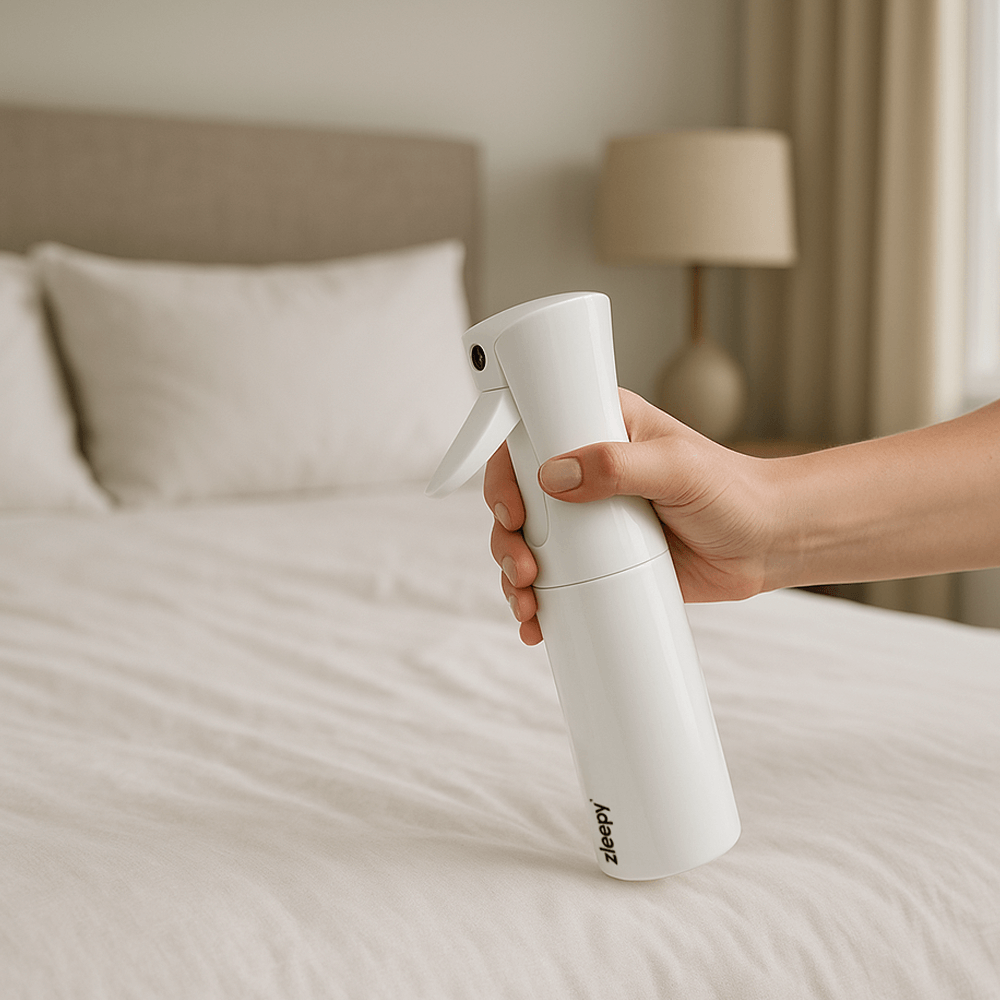
1. Zleepy Microbiome Bedding Hygiene Spray
★★★★½ 4.5 / 5
£14.95 for 200ml, which is £7.48 per 100ml, or £8.95 a month for a 20ml refill pouch you mix with tap water in the bottle you already have. On subscription that works out at about £4.48 per 100ml, so the refill is not a loyalty tax, it is genuinely the cheaper way to buy it.
Here is the full list, in order: aqua, live Lactobacillus ferment, caprylyl/capryl glucoside, Leuconostoc and radish root ferment filtrate, Lactobacillus and Cocos nucifera fruit ferment, Simmondsia chinensis seed oil, Vanilla planifolia fruit extract, Lavandula angustifolia oil. Water, a probiotic, a sugar surfactant made from coconut and corn, two ferment based preservatives, jojoba, then steam distilled vanilla and lavender. Eight things.
Set that against the rest of this page. One is three quarters ethanol. One publishes nothing at all. One is held together by two isothiazolinones. Two carry a quaternary ammonium biocide at a concentration they will not print. This has no synthetic parfum, no alcohol, no formaldehyde releaser, no isothiazolinone and no quat, and because there is no alcohol in it there is no flammability warning and no instruction to let it dry before anything touches it.
What it does not have is proof. The claim is that the ferments outcompete odour causing bacteria on the fibre, and no EN standard is named and no test result is published. It is a plausible mechanism and it is not a tested one. The other thing, and we would rather say it than have you find it: Zleepy does not publish this ingredient list on its own product page. You are reading it here because we published it. Those two things are what keep this at 4.5 rather than 4.7.
Best of the cheap ones
Names its allergens

2. Bio-D Fabric Refresher, Cotton Fresh
★★★★☆ 4.0 / 5
£3.82 for 500ml, which is 76p per 100ml, and it is the sensible answer for most people who just want the bed to smell clean on a Wednesday.
It is the only brand on this page that names any of the 26 declarable EU fragrance allergens rather than hiding the lot behind the word parfum. It names two, alpha-iso-methylionone and hexyl cinnamal. That sounds like a small thing until you notice that five other brands here name none. Bio-D also states across its whole range that it uses no methylisothiazolinone, no benzisothiazolinone and no parabens, which is the opposite of what the product at number six does.
What it gives up is evidence of a different sort. Bio-D publishes no safety data sheet for this product, so there is no CLP classification to check and no concentration bands to read. It also makes no germ claim at all, which we score as honesty rather than as a failure, because a fabric spray that says it freshens and then only freshens is behaving itself.
The proven one, and the expensive one
The only real standard
And three quarters alcohol
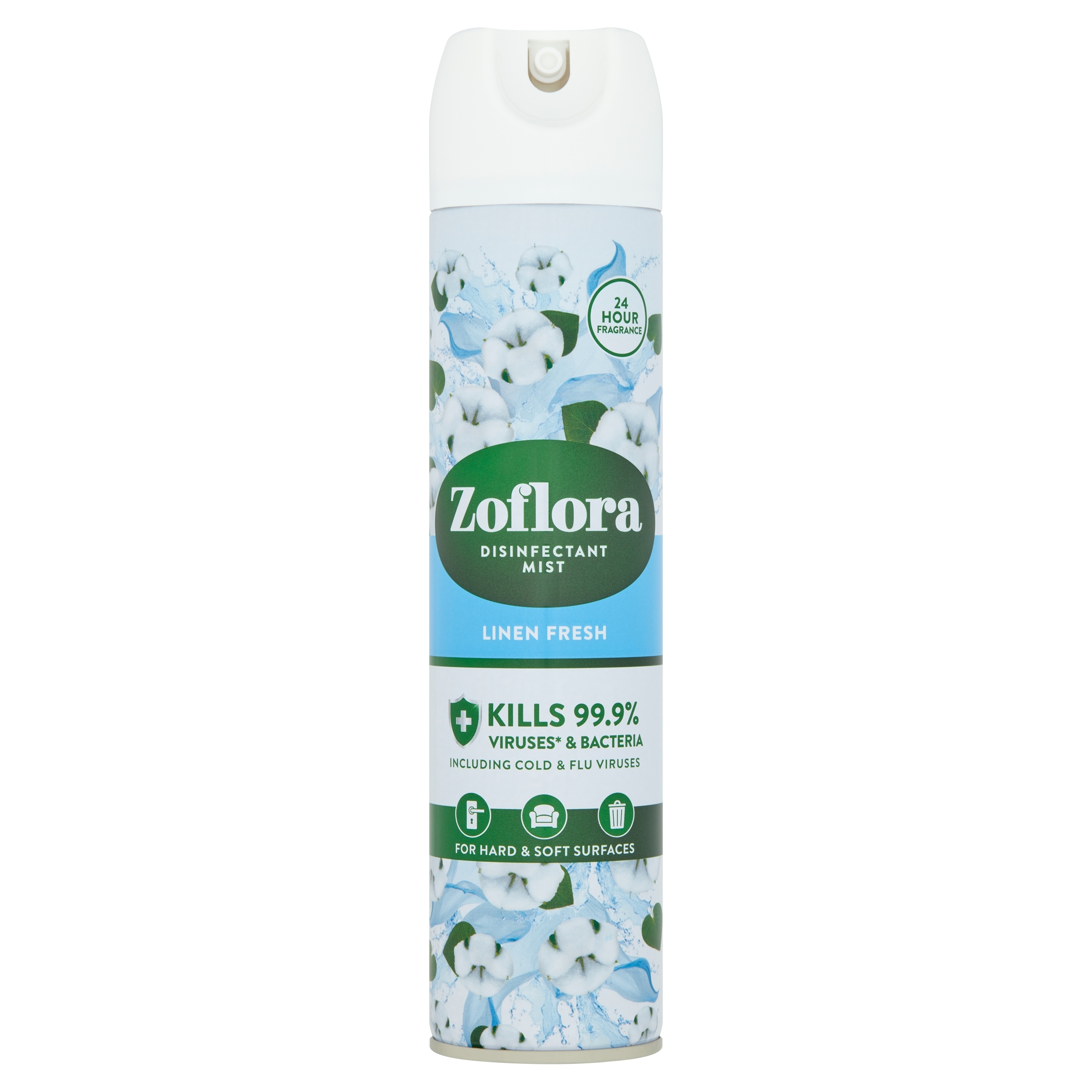
3. Zoflora Disinfectant Mist, Linen Fresh
★★★½☆ 3.5 / 5
£2.50 for 300ml at Tesco, 83p per 100ml, and it is the only product in this comparison that can actually back a germ claim. The label names EN 1276:2019 and EN 14476 with a five minute contact time. Nobody else here names a standard at all. We spent a long time expecting this one to score badly and it does not, because doing the test and printing the number is precisely what this site asks brands to do.
Then you read the rest of the can. It is 74 to 75 per cent ethanol with benzalkonium chloride at 0.01g per 100g, which means the ethanol is doing the work. It is classified H222, H229 and H319, signal word Danger, which is flammable aerosol, pressurised container and serious eye irritation. The fragrance is declared as parfum and nothing more.
So it comes down to what you actually want. If something has been ill in that bed and you want the mattress disinfected to a standard, this is the one on this page that will do it and prove it. If what you want is a spray to freshen the sheets you are getting into tonight, dousing them in three quarters alcohol and undeclared fragrance is a strange way to go about it, and it is why this finishes third rather than first.
The shortest list
£4.83 per 100ml

4. Norfolk Natural Living Linen and Garment Refresher
★★★½☆ 3.4 / 5
£14.50 for 300ml, which is £4.83 per 100ml, and the shortest published ingredient list in the category: distilled water, witch hazel, parfum, then gluconolactone and sodium benzoate as the preservative. Four things, printed plainly, which is more than most of this page manages.
The catch is the third of those four. Parfum sits above the preservative, so there is a meaningful amount of fragrance in here and not one of the 26 declarable allergens is named. The brand also describes the witch hazel as naturally antibacterial, which is a germ claim with no standard, no organism list and no contact time behind it, and that is the same failure we mark everyone else down for.
It smells lovely and it is beautifully made. At £4.83 per 100ml against 76p for the Bio-D, you are paying six times as much for a shorter list and a weaker claim, and that is what the value score reflects.
The famous one, and the one to avoid
The default
Publishes nothing

5. Febreze Fabric Refresher, Classic
★★★☆☆ 3.2 / 5
£2.50 for 500ml, 50p per 100ml, and the one most people reach for. It works. It knocks odour off a sofa and a duvet reliably, which is why it has been the default for twenty years.
What Procter and Gamble will not do is tell you what is in it. We checked the brand site, Tesco, Ocado, Sainsbury’s and Poundland, and there is no UK ingredient list and no named preservative anywhere. The only hard numbers come from the distributor safety data sheet: alcohol at 1 to 5 per cent, polyethylene glycol phenyl ether at 1 to 5 per cent, and didecyldimonium chloride at under 1 per cent, with the mixture classified not hazardous.
Didecyldimonium chloride is a quaternary ammonium biocide. On the separate Antibacterial version P&G does declare it, at 0.33g per 100g, as a PT2 biocidal product, and even there no EN standard is named for the kill claim. So the position is that there is a biocide in the bottle you spray on your bedding, the concentration is not published for this version, and the germ claim on the sister product has no test named. It scores 3.2 because it does the job cheaply, and it does not score higher because you cannot check a single thing about it.
Last place
Two isothiazolinones

6. Astonish Fabric Refresher, Cotton Fresh
★★★☆☆ 2.9 / 5
£1.35 for 750ml, which is 18p per 100ml and the cheapest thing on this page by a wide margin. Here is what the 18p buys.
Astonish publishes its own ingredient PDF, and the safety data sheet confirms it, so credit where it is due: they tell you. What they tell you is that this spray is preserved with benzisothiazolinone and methylisothiazolinone, both of them, in a product whose own marketing points it at bedding and which is designed to be sprayed on and left there. Methylisothiazolinone is the preservative that caused a contact allergy epidemic serious enough that the EU banned it outright from leave-on cosmetics in 2017. A fabric spray is not a cosmetic, so none of that applies here, and that is exactly the loophole this sits in.
The safety data sheet carries no EUH208 sensitiser wording. And the range is not even consistent with itself: the newer Lavender Escape variant drops the isothiazolinones and puts phenoxyethanol third instead, so two bottles from the same brand on the same shelf are preserved in completely different ways and neither says so on the front.
If you have eczema, or a child who does, or you simply do not want a known contact sensitiser sitting on the surface your face is on for eight hours, spend the extra £2.47 on the Bio-D.
Prices checked 10 September 2026 and may have changed since. Price per 100ml is worked out from the pack price at the retailer named, so a multipack or an offer will move it. Safety data sheet figures are quoted as the bands the manufacturer publishes, because that is all a manufacturer is required to give.
The clean pick, and the honest catch
Our clean pick
Zleepy Microbiome, and it is ours
Eight ingredients, and none of them are a biocide
Why it wins on materials
✓
No quaternary ammonium biocide
Two of the sprays on this page carry a quat, and neither publishes the concentration for the version most people buy. This has none. The ferments work by crowding out the bacteria that make a bed smell, not by killing everything on the fibre.
✓
No isothiazolinone and no formaldehyde releaser
Two ferment based preservatives instead. The cheapest spray here is held together by benzisothiazolinone and methylisothiazolinone together, in a product you leave on a bed sheet.
✓
No alcohol, so nothing to air off
The two disinfectant aerosols in this category are 50 to 75 per cent ethanol and both tell you to let the fabric dry completely before contact. This is water based, carries no flammability classification, and you can make the bed straight after.
✓
No synthetic parfum at all
Steam distilled vanilla and lavender, named as themselves at the end of the list where the quantity actually is. Four of the other five declare fragrance as parfum and name not one of the 26 EU listed allergens between them.
What you give up
✕
The bacteria claim has no test behind it
No EN standard is named and no result is published. Zoflora, of all things, is the only product here that names EN 1276 and a contact time. Until there is an EN 1276 or EN 1650 result on the ferment formula, outcompetes bad bacteria is a mechanism rather than a measurement, and it is scored as one.
✕
Zleepy does not publish this list itself
Checked again on 10 September 2026. The product page, the refill page and the subscription page all give a summary of what is in and what is out, and none of them prints the ingredient list. You are reading it on this page because we published it. We mark other brands down for exactly this, so it is marked down here.
✕
It is not the cheapest
£7.48 per 100ml, or £4.48 on the refill subscription, against 18p for the Astonish and 50p for the Febreze. If price is the only thing that matters to you, this is not your spray and the Bio-D at 76p probably is.
The catch, said plainly. The clean pick rule on this site says every comparison has to name one option with nothing questionable in it. On specification the Zleepy is the only spray of the six with no synthetic fragrance, no denatured alcohol, no formaldehyde releaser, no isothiazolinone and no quaternary ammonium biocide, so it takes that slot on the ingredients. It is also made by the people who publish this site. Both of those things are true at once, which is why the two marks against it are printed above in the same size type as the four marks for it. If you would rather buy from someone with no stake in this page, buy the Bio-D. It finishes second and we would be happy with it in our own house.
What to look for when you buy one
Read the list in order, because order is quantity. If parfum sits in the first three, you are buying fragrance with a carrier rather than a cleaner with a scent. If alcohol is first, you are buying a solvent, and on bedding that means waiting for it to flash off before you can get in.
A germ claim without a standard is not a germ claim. Kills 99.9 per cent of bacteria means nothing on its own. The things that make it mean something are the standard, usually BS EN 1276 for bacteria or EN 14476 for viruses, the organisms it was tested against, and the contact time. If a bottle gives you the percentage and not the other three, treat the percentage as decoration. On this page exactly one product out of six gives you all four.
Isothiazolinones are the ones to learn. Methylisothiazolinone, benzisothiazolinone, methylchloroisothiazolinone. They are effective, cheap preservatives and they are also a well documented cause of contact allergy, enough that the EU removed MI from leave-on cosmetics entirely. Fabric sprays sit outside those rules, so the ones that use them are doing nothing illegal. You are still the person whose face is on the sheet.
Work out the price per 100ml, not the price on the shelf. The bottles on this page run from 200ml to 750ml and the price per 100ml runs from 18p to £4.83, a spread of nearly twenty seven times. And check whether a refill exists, because a concentrate you dilute at home is usually cheaper per use than the bottle and it is the only meaningful thing any of these brands do about packaging.
None of this replaces washing the sheets. Every honest source on bedding hygiene says the same thing: a 60 degree wash is what actually deals with dust mites and bacteria, and a spray is what you use in between. Any product suggesting otherwise is selling you a way to wash less often.
Final verdict
The bottle that tells you least costs the least
There is a straight line running down this page. The spray with eight readable ingredients costs £7.48 per 100ml. The spray that publishes nothing at all costs 50p. The spray preserved with two isothiazolinones costs 18p. You are not paying more for a better smell, you are paying more for a shorter list and for someone being willing to print it.
Buy the Zleepy if what you want is the cleanest thing you can put on a bed, and take the refill subscription rather than the bottle, because it is cheaper per use and it is the only packaging story in this category that amounts to anything. Buy the Bio-D if you want most of that for a quarter of the price and no connection to us whatsoever. Buy the Zoflora only when something actually needs disinfecting, and then let it dry properly before anyone gets in.
And whatever you buy, it is a spray for between washes. It is not a wash.