Home · Bedroom · Bedding
Best bed sheets: six compared, and the 1000 thread count one counts each thread more than once
Six double fitted sheets from £5 to £89, checked against the two claims this category runs on. Thread count, which the most expensive sheet here inflates by a method its own website describes in writing. And the word bamboo, which is not a permitted fibre name in UK law and which one brand uses in its product title and then corrects two paragraphs further down its own page. Five of the six show an OEKO-TEX logo. One publishes the number, and we put that number through the register.
By Mrs House · Updated 27 August 2026 · 16 minute read
Mrs House is independent. Nobody pays for a place in a ranking here.
The short answer
Buy the John Lewis Crisp and Fresh percale at £10.80. Two hundred threads is an honest number for single ply cotton, and it washes at 60 degrees, which is the temperature that actually kills dust mites.
- Best overall: John Lewis Crisp and Fresh Percale, £10.80 for a double. 100 per cent Egyptian cotton, 200 thread count.
- Best certified: Piglet in Bed White Linen, £89. The only checkable certificate number in this group, 11-62294.
- Skip: Soak and Sleep Supima Sateen, £80.50. The maker says the yarns are plied before weaving, which is exactly how a 250 becomes a 1000.
On single ply cotton, a thread count much above 400 is arithmetic rather than quality.
How we assessed these
Six sheets, one method. We cannot sleep on them for you, and we are not going to pretend otherwise. What we can do is check the two numbers this category sells on, and read every word each retailer publishes about fibre, care and certification against what the law and the standards actually say.
Five things decided the scores.
Is the thread count physically possible? Thread count is a count of yarns per square inch, defined by ISO 7211-2 and ASTM D3775. Above roughly 400 to 500 on single ply cotton the yarns will not physically fit. Higher numbers come from counting each ply of a multi ply yarn separately, so a 250 thread count woven from four ply yarn is sold as a thousand.
Is the fibre named lawfully? The textile labelling rules carry a closed list of permitted fibre names. Bamboo is not on it. Viscose, lyocell, modal and cupro are. That matters because they describe different processes with different environmental footprints.
Is there a certificate number? A logo is a claim. A number is checkable. We put the one number published in this group through the OEKO-TEX register, and we tested the register first with invented numbers to be sure it was actually returning real records.
Can you wash it hot? Dust mites die at around 55 to 60 degrees. Four of these six carry care labels that forbid it.
Does it fit, and do owners say so? Pocket depth is the single largest cause of complaints in this category, and two of these six state their own depth two different ways on the same page.
All prices read on 27 August 2026.
The ranking, at a glance
| Sheet | Double price | Fibre | Thread count | Certificate number? | Score | |
|---|---|---|---|---|---|---|
| 1 | John Lewis Crisp and Fresh Percale | £10.80 | 100% Egyptian cotton | 200 | No | 3.7 |
| 2 | Piglet in Bed White Linen | £89.00 | 100% linen | None claimed | Yes, 11-62294 | 3.5 |
| 3 | Dunelm Pure Cotton | £12.00 | 100% cotton | 180 | No | 3.2 |
| 4 | Panda 100% Bamboo | £47.70 | Bamboo viscose | 320, claimed as 1200 equivalent | No | 2.9 |
| 5 | Soak and Sleep Supima Sateen | £80.50 | 100% Supima cotton | 1000, from plied yarn | No | 2.7 |
| 6 | Dunelm Super Soft Microfibre | £5.00 | 100% recycled polyester | 85 | No | 2.4 |
The two we would actually buy
Best overall
Washes at 60
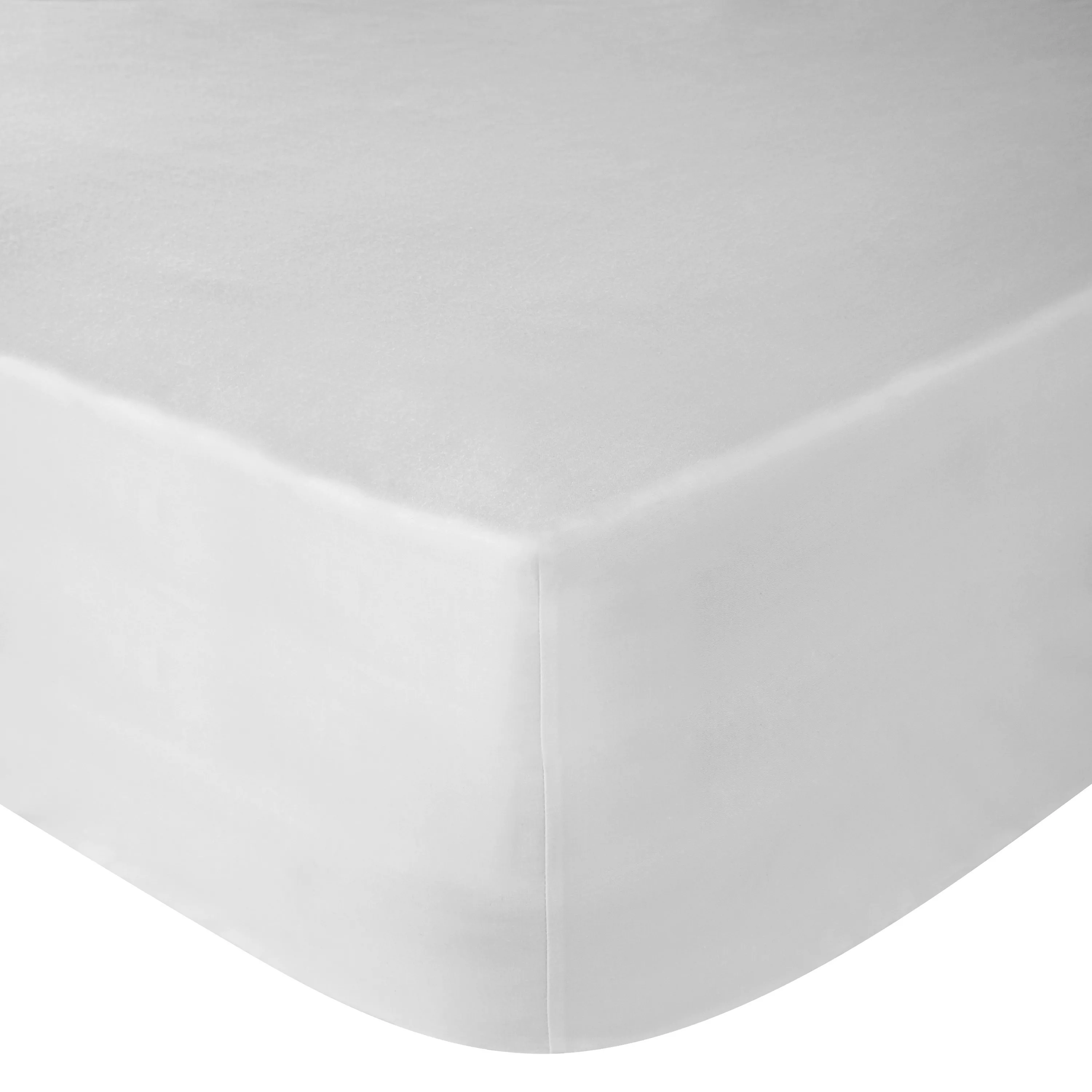
1. John Lewis Crisp and Fresh Egyptian Cotton Percale 200 Thread Count Fitted Sheet
★★★★☆ 3.7 / 5
Two hundred threads per square inch of single ply Egyptian cotton, woven percale, £10.80 for a double at the time of writing against a list price of £24. Everything about that sentence is unremarkable, which is exactly the point. Two hundred is a number that can physically exist in a plain woven cotton sheet, it does not need any creative counting to reach, and percale at that count is the crisp, cool, hard wearing construction that hotels have used for a century.
The thing that pushed it to the top, though, is on the care label. It washes at 60 degrees. Dust mites die at around 55 degrees, and the research on this is unambiguous: a 60 degree wash kills mites outright while a 40 degree wash has been measured as removing something like one in fifteen of them. Four of the six sheets in this comparison carry care instructions that forbid a wash that hot, which means that if allergy is why you are reading this, most of the shelf is already ruled out. This one is not.
The gaps are the usual ones. John Lewis does not state whether the yarn is single ply, which for a 200 count is a formality but is still information it chooses not to give. There is no certificate number, no GSM, no origin. And at 4.2 out of 5 it has the lowest average rating of the six, though the review platform would not serve us the actual complaints, so we cannot tell you what people are unhappy about. That gap is the reason it scores 3.7 rather than higher.
Pros
- 200 thread count on single ply cotton is a physically honest number that needs no ply counting to reach
- Washes at 60 degrees, which is the temperature that actually kills dust mites, and only two of these six will take it
- £10.80 for a double at the time of writing, against £24 list
- Percale is stated explicitly, so you know the construction rather than guessing from the feel
- 100 per cent Egyptian cotton, up to a 30cm mattress depth
Cons
- 4.2 out of 5, the lowest average rating in this comparison
- The review platform would not serve individual reviews to us, so we cannot tell you what the complaints are about
- No certificate number for any standard
- Single or multi ply is not stated anywhere on the page
- No GSM, no shrinkage figure and no country of manufacture published
- Percale feels crisp rather than silky, which some people simply do not like
Buy it if you want a cotton sheet that does the job, at a temperature that helps with allergies, without paying for a number on the packaging.
The clean pick
Cert 11-62294

2. Piglet in Bed White 100% Linen Fitted Sheet
★★★★☆ 3.5 / 5
This is the only sheet in the comparison that publishes an OEKO-TEX certificate number, 11-62294, and it is the only claim on this whole page that we could independently verify. We put it through OEKO-TEX’s own public register and it returns a valid record covering bed linen in linen. To be sure the register was actually checking anything, we first fed it two invented numbers, which returned nothing. Five brands here show the logo. One shows the number.
It also does the honest thing on thread count by not claiming one at all. Linen yarn is far thicker than combed cotton, so a high count is physically impossible, and a brand that quietly leaves the field blank rather than inventing a number deserves credit for it. The flax is European, woven at a family run mill in Guimaraes in northern Portugal, and the double is cut at 140cm wide rather than the 135cm everyone else uses, which is a slightly generous fit.
Two things stop it winning. The first is the price: £89 for one double fitted sheet, more than eight times the John Lewis percale. The second is stranger. For an £89 sheet, Piglet publishes no care instructions at all. We searched the entire page for a wash temperature, a tumble drying instruction and an ironing instruction and found nothing but the word prewashed, and the materials and care link in the site navigation does not resolve. It also states its own pocket depth two different ways, 36cm in the size chart and up to 40cm in the description.
Pros
- The only sheet here that publishes an OEKO-TEX certificate number, 11-62294, which we verified in the register ourselves
- Claims no thread count, which is the correct and honest position for linen
- European flax woven at a named mill in northern Portugal, with the provenance actually stated
- Cut at 140cm wide against the 135cm everyone else uses, so a slightly generous fit
- 4.4 out of 5 from 10,924 reviews on Trustpilot at brand level, with 2 per cent at one star
- Linen gets softer with washing rather than wearing out, which is the argument for the price
Cons
- £89 for a single double fitted sheet, more than eight times the John Lewis percale
- No care instructions published anywhere on the page: no wash temperature, no drying, no ironing
- Pocket depth given as 36cm in the size chart and up to 40cm in the description copy
- Only nine reviews on the product itself, which is not a sample
- No GSM and no weave stated
- Prewashed is the only shrinkage statement, with no figure behind it
Buy it if you want linen, you want the one certificate in this group you can actually look up, and the price is not the constraint.
The cheap cotton one, and the bamboo one
Best for deep mattresses
Five depths
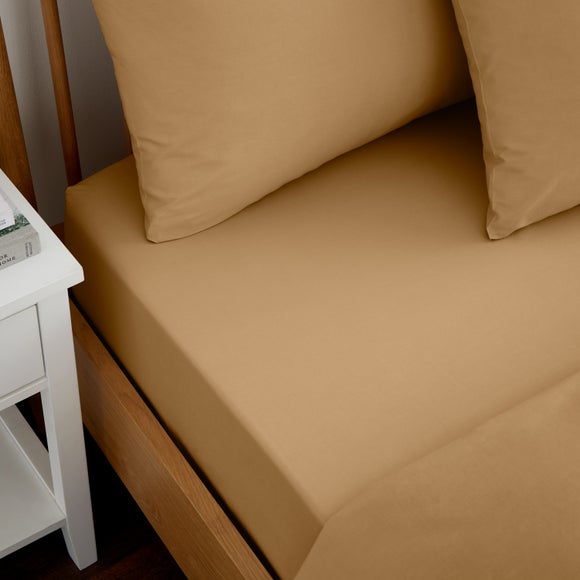
3. Dunelm Pure Cotton Fitted Sheet
★★★☆☆ 3.2 / 5
£12 for a double, 180 thread count, 100 per cent cotton, and the most useful thing about it is that Dunelm sells it in five separate mattress depths from 25cm to 40cm. Pocket depth is the single biggest cause of complaints in this entire category, and it is the one variable most retailers make you guess at. Being able to buy the depth you actually need, rather than the depth the brand decided to make, is worth more than a hundred extra threads.
180 is another honest number. Nobody is counting plies to reach it and nobody is pretending it is something it is not, which puts it in better company than the two most expensive sheets here.
Where it falls down is on the certification and on the shrinkage. Dunelm says the sheet is OEKO-TEX MADE IN GREEN certified, produced in STeP certified factories, and that the production stages throughout the supply chain can be traced. Traceability under MADE IN GREEN works by a product ID printed on the label, and Dunelm publishes neither that ID nor a STANDARD 100 certificate number, so the one thing the scheme exists to let you do is the one thing you cannot do. There is also no shrinkage figure, which is conspicuous, because shrinkage and colour patching after washing are exactly what owners complain about.
Pros
- Five mattress depths from 25cm to 40cm, which solves the biggest single cause of complaints in this category
- £12 for a double at 25cm depth, and £20 for the 40cm
- 180 thread count is an honest number for the price with no ply counting behind it
- 100 per cent cotton, described as responsibly sourced
- Machine washable and tumble dryable on low, so it fits into an ordinary laundry routine
Cons
- Claims MADE IN GREEN certification and supply chain traceability but publishes neither a product ID nor a certificate number, which is the only thing that would make traceability possible
- No shrinkage figure published, and shrinkage is one of the two recurring complaints
- Owners report colour patching after washing and line drying, with white patches appearing on coloured versions
- Weave is not stated, so you do not know whether you are getting percale or something else
- No country of manufacture published
- No GSM
Buy it if you have a deep mattress and you want plain cotton at a plain price, and you are buying white so the patching complaints do not apply.
The bamboo one
Not a legal fibre name

4. Panda 100% Bamboo Fitted Sheet
★★★☆☆ 2.9 / 5
People love how these feel, and we are not going to argue with that. What we can do is read the page. The product title says 100 per cent bamboo. The detail copy, further down the same page, says 100 per cent bamboo viscose made from organic bamboo. The second statement is correct and the first one is not, because bamboo is not a permitted fibre name under the textile labelling rules. We read the annex that carries the closed list of permitted names in full and the word bamboo appears in it zero times. Viscose is there, lyocell is there, modal and cupro are there. Bamboo is not, and the distinction is not pedantry: viscose is a chemically regenerated fibre and the process matters.
To Panda’s credit it also sells a Signature Plus line declared as 100 per cent lyocell made from organic bamboo, which is a genuinely different and generally cleaner process and is a lawful fibre name. So the company plainly knows the difference. It is the shorthand in the title that is the problem, and it is the same shorthand that has cost American retailers millions in regulatory settlements.
The other claim is the thread count. Panda says 320 thread count bamboo fabric, equivalent to 1200 thread count cotton. There is no standard, no test method and no published basis for that equivalence anywhere on the site. And there is a practical problem too. It washes at a maximum of 30 degrees, so this sheet can never be washed at the temperature that kills dust mites. The fit complaints are the loudest theme in its reviews, and the page does not help: the specification says a 32cm skirt and the description says 35cm depth.
Pros
- Genuinely soft, and the recurring positive in owner reviews is how it feels
- The detail copy declares bamboo viscose correctly, even though the title does not
- A lyocell version exists and is correctly declared, which is the better process if that is what you want
- £47.70 for a UK double at the time of writing, against £53
- In stock across five colours
Cons
- The product title says 100 per cent bamboo, which is not a permitted fibre name standing alone under the textile labelling rules
- The 1200 thread count equivalent claim has no standard, no test method and no published basis
- Maximum 30 degree wash, so it can never be washed hot enough to kill dust mites
- Pocket depth is stated as both 32cm and 35cm on the same page, and fit is the dominant complaint
- No certificate number published for any standard
- No GSM and no weave stated, so you cannot tell sateen from percale from jersey before it arrives
Buy it if you want the feel and you are buying it for that, and you have read the fibre and wash temperature notes above and are content with both.
The thread count exhibit, and the plastic one
1000 thread count
From plied yarn

5. Soak and Sleep White Supima Cotton 1000 Thread Count 40cm Deep Fitted Sheet
★★★☆☆ 2.7 / 5
We are not going to accuse anybody of hiding anything here, because Soak and Sleep tells you exactly how the number was made. In its own words, the Supima cotton has been spun into super fine plied yarns before being woven into a rich 1000 thread count fabric. Plied. That is the whole trick, printed on the product page by the company selling it.
Here is why it matters. Thread count is a count of yarns per square inch, and both ISO 7211-2 and the American ASTM D3775 count yarns, not the plies inside them. If you weave with four ply yarn and count every ply separately, a 250 thread count fabric becomes a 1000. The American regulator issued a staff advisory opinion in August 2005 saying precisely that this practice is misleading, and the physical ceiling for single ply cotton sits somewhere around 400 to 500 before the yarns will not fit. So a genuine 1000 thread count single ply cotton sheet is not a thing that exists.
What you are actually buying is Supima, which is real and good. It is American grown extra long staple cotton, the fibres are longer, and a sateen woven from long staple cotton is smooth and durable in a way that a cheap short staple sheet is not. There is a case for £80.50. It just is not the case printed on the front of the packet. Look at Soak and Sleep’s own price ladder on the same day: 200 count Egyptian at £16.50, 400 at £30, 600 at £52, and the 1000 at £80.50. That column is the thread count story in one glance.
Pros
- Supima is genuine extra long staple American cotton and it is the reason this sheet feels good, whatever the number says
- The brand states in writing that the yarns are plied, which is more candour than most of the industry offers
- Sateen weave is stated explicitly
- 40cm deep pocket, so it fits a thick mattress and a topper
- £80.50 at the time of writing against a £115 list price
Cons
- The 1000 thread count is reached by counting plies, which the American regulator has called misleading since 2005 and which neither of the two measurement standards permits
- A single ply cotton sheet cannot physically reach much above 400 to 500, so the headline number is not comparable with anything
- No certificate number for any standard
- Recommended wash is 30 degrees with 40 as the maximum, so it will not go hot enough to kill dust mites
- No GSM and no published shrinkage figure, despite the page mentioning washability testing
- £80.50 for one fitted sheet, against £16.50 for the same brand’s 200 count Egyptian cotton
Buy it if you want long staple Supima sateen and you are paying for the cotton, having understood that the number on the front is arithmetic rather than a measurement.
Cheapest
£5
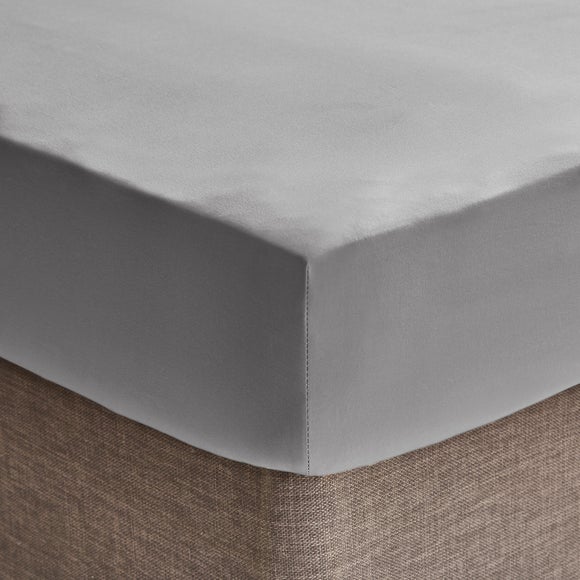
6. Dunelm Super Soft Microfibre Plain Fitted Sheet
★★☆☆☆ 2.4 / 5
£5 for a double, and it deserves one piece of real credit before anything else. It is the only sheet in this comparison that publishes a low thread count without embarrassment. Eighty five, stated plainly in the specification table, which is the honest number for a microfibre and which nobody has tried to dress up. Two sheets on this page cost sixteen and eighteen times as much and are less straightforward about their numbers than this one.
It is 100 per cent recycled polyester, which is to say plastic, and the owner reviews divide sharply along exactly that line. Some people are delighted at the price. Others are not, and their objections are specific rather than snobbish: sheets ripping within days, a king size shrinking to fit a double after washing, and a white that reviewers say is not white. There is also a recurring complaint about the synthetic feel and the environmental question of a sheet that is effectively a woven plastic bottle.
On certification it is the vaguest page here. Dunelm says the sheet is verified by OEKO-TEX and independently tested for harmful substances, and does not name the standard, the institute or a number. That is a claim with nothing behind it that a buyer could check.
If you need a spare sheet for a guest bed, a caravan or a child who has just been ill, this does that job for a fiver and there is no shame in it. As the sheet you sleep on every night, the John Lewis percale is £5.80 more and is cotton.
Pros
- £5 for a double, and there is a real place in a house for a £5 spare sheet
- The only sheet here that publishes a low thread count without dressing it up, at a plain 85
- 100 per cent recycled polyester, so at least the plastic has had a previous life
- 28cm depth on the white double
- Machine washable and quick drying, which is the practical case for microfibre
Cons
- Verified by OEKO-TEX with no standard named, no institute and no number, the vaguest certification claim on this page
- Owners report sheets ripping within days and a king size shrinking to a double after washing
- The colour is reported as not properly white
- It is plastic, and a significant share of the negative reviews are specifically about that
- No weave, no GSM, no origin and no shrinkage figure published
- Polyester traps heat, which is the opposite of what most people want from a sheet
Buy it if you need a cheap spare for a guest bed or a child, and you are not choosing it as the sheet you sleep on every night.
Prices checked 5 August 2026 and may have changed since.
The clean pick, and the honest catch
Our clean pick
Piglet in Bed Linen
The only certificate on this page that can be looked up
Why it wins on evidence
✓
A certificate number, and we checked it
✓
It claims no thread count at all
✓
Linen is a lawful fibre name
✓
It is the one that gets better
What you give up
✕
No care instructions at all
✕
Two different pocket depths
✕
Nine reviews is not evidence
The catch, said plainly. Our rule is that if a category has a genuinely clean option we name it, and here there is one, with a caveat you should hear before you spend £89. A 2024 systematic review in the Journal of Sleep Research went looking for human studies on how bedding fibre affects sleep and found nine in the entire literature, and bamboo is not among them. One of the better designed ones, using full polysomnography, found no bedding effect on sleep at all. So the claims made across this whole category about cooling, breathability and sleep quality are, for the most part, not standing on measured human evidence. What we can verify is what is in the sheet, who certified it, whether the number on the front is arithmetically possible, and whether you can wash it hot. That is what these scores are made of, and it is why the £10.80 cotton percale beats the £80.50 sateen.
What to look for when you buy one
Thread count above about 400 on single ply cotton is arithmetic, not a measurement. Thread count is the number of yarns per square inch, defined by ISO 7211-2 and by the American ASTM D3775, and both count yarns rather than the plies inside them. Weave with a four ply yarn, count every ply, and a 250 becomes a 1000. The physical ceiling for single ply cotton is somewhere around 400 to 500, because above that the yarns will not fit in the space. So when you see a four figure number, the question is not whether it is a lie, it is what was counted. The American regulator issued a staff advisory opinion in August 2005 saying the practice is misleading. Nobody in the UK has ever been asked to rule on it: a search of the advertising regulator’s rulings database for thread count returns nothing at all, despite a British Standard existing for measuring it.
So ask for the ply, and treat a refusal as an answer. Only one product in this comparison states its ply, and it is the 1000 count sheet, which says in its own copy that the yarns are plied before weaving. That is unusually straightforward. Everybody else leaves the field blank. A 200 count sheet does not need to tell you, because 200 is achievable single ply. A 1000 count sheet that will not tell you is telling you.
Bamboo is not a fibre name in UK law. The textile labelling regulations carry a closed list of permitted fibre names, and we read the annex in full. Bamboo appears zero times. Viscose is on it, lyocell is on it, modal and cupro are on it. Almost everything sold as bamboo fabric is viscose, a chemically regenerated fibre made by dissolving cellulose, and the correct declaration is bamboo viscose or viscose made from bamboo. This is not a technicality: viscose and lyocell are different processes with different chemistry and different environmental footprints, and lyocell recovers most of its solvent while conventional viscose does not. If you specifically want the better process, look for the word lyocell, not the word bamboo.
Look for the certificate number, not the logo. OEKO-TEX STANDARD 100 is the common one in bedding, and every certificate has a number and an issuing institute. Both are meant to be published. Of the six sheets here, five show the logo or the words and one publishes the number. We put that number through the register and it came back valid, and we checked the register was working by feeding it invented numbers first. If you are paying a premium for a certification, ask for the number, because without it there is nothing to check. The same applies with more force to MADE IN GREEN, which works through a product ID printed on the label: one retailer here promises full supply chain traceability in the same paragraph in which it omits the ID that would make traceability possible.
Check whether it can be washed at 60 degrees, because that is the number that matters for allergies. Dust mites die at around 55 degrees. A 60 degree wash kills them. A 40 degree wash has been measured as removing only a small fraction. Around 60 per cent of house dust mites live in the bed, which makes the bedding wash the single most effective thing you can do about them, more effective than any vacuum. Now look at the care labels in this comparison. The bamboo sheet is capped at 30 degrees. The 1000 count sateen recommends 30 and permits 40. The linen sheet publishes no instructions at all. If allergy is the reason you are buying, that rules out most of the shelf before you have touched anything.
Percale or sateen is a real decision, and it is about weave rather than quality. Percale is a plain one over one weave: crisp, matte, cool, and it wears well because the interlacings are frequent and short. Sateen floats several warp threads over each weft thread, which is what produces the sheen and the slippery hand, but those long floats snag more easily and trap a little more heat. Neither is better. If you sleep hot, percale. If you want the sheet to feel luxurious, sateen. And note that most of the sheets in this comparison do not state their weave at all, which means you are buying the feel blind.
Buy the pocket depth, not the bed size. Fit is the loudest complaint theme in this entire category, and it is loudest of all on the expensive sheets. Measure your mattress including the topper, then buy that depth. One retailer in this group sells the same sheet in five depths from 25cm to 40cm, which is the correct way to solve this. Two brands here state their own pocket depth two different ways on the same page, which is the incorrect way.
Do not buy the sleep claims, because the human evidence barely exists. A 2024 systematic review in the Journal of Sleep Research searched the literature for human studies on bedding fibre and sleep and found nine in total. Bamboo was not among them. One of the better designed studies, using full polysomnography rather than self reporting, found no bedding effect on sleep at all. That does not mean linen and cotton feel the same, because they plainly do not. It means the industry’s cooling and sleep quality claims are marketing rather than measurement, and you should buy on feel, fibre and fit instead.
Take the environmental claims one step further back than the brand does. Cotton is water intensive to grow but is a single natural fibre at the end of its life. Conventional bamboo viscose is a chemically regenerated fibre and the process, not the plant, is where the impact sits, which is why a plant that grows fast and needs little water can still produce a fabric with a significant footprint. Lyocell uses a closed loop solvent system that recovers most of what it uses and is the better version of the same idea. Linen from European flax needs little irrigation and few inputs. Recycled polyester keeps a plastic bottle out of the ground for one more cycle and then sheds microplastics in the wash for years. None of that is settled by the word on the front of the packet.
And expect to replace them. A cotton sheet in regular rotation is a consumable, not an heirloom. Wash temperature, tumble drying and how many sheets you rotate all matter more than thread count for how long it lasts, and a higher count is not a proxy for durability: long staple fibre is. That is the real argument for Supima or Egyptian cotton, and it is a better one than the number those sheets are usually sold on.
Final verdict
Buy the £10.80 one, and wash it at 60
Three things to take away.
The first is that the two headline claims in this category do not survive being read carefully. A 1000 thread count sheet reaches that number by counting the plies inside each yarn, and the brand selling it says so in writing on its own page. A sheet sold in its title as 100 per cent bamboo is bamboo viscose, which the same page confirms two paragraphs lower down, and bamboo is not a permitted fibre name in UK law at all. Neither of those is hidden. Both are simply not read.
The second is that a logo is not a certificate. Five of these six sheets show OEKO-TEX branding and one publishes the number that makes it checkable. We looked that number up and it is valid. The others may well be certified too, but you have no way of finding out, which is the opposite of what a certification scheme is for.
The third is the practical one. If anyone in the house has a dust allergy, the temperature on the care label matters more than everything else on this page combined, because most mites live in the bed and 60 degrees kills them while 40 does not. Two of these six will take a 60 degree wash. One of those two costs £10.80.
Our pick is the John Lewis Crisp and Fresh percale, because 200 threads of single ply cotton is an honest number, it washes hot, and it is a tenth the price of the sheet with the biggest number on it. The Piglet in Bed linen is the one to buy if you want the certificate and the longevity, and the £5 microfibre has a real place in a house, just not on the bed you sleep in.