Home · Living room · Air quality
Best air purifiers: six compared, and only one publishes the number that matters
Six purifiers from £62.99 to £549, checked against the one specification that tells you whether a machine can actually clean your room. Clean Air Delivery Rate, in cubic metres an hour, tested to a named standard. One of the six publishes it properly. Everyone else sells you a room size in square metres without telling you how many times an hour they assume the air gets changed, which is the difference between a real claim and a number chosen by the marketing department.
By Mrs House · Updated 9 September 2026 · 16 minute read
Mrs House is independent. Nobody pays for a place in a ranking here.
The short answer
Buy the Philips PureProtect 3200 at £279. It is the only machine here with a performance figure tied to a published standard and a written statement that it emits no ozone.
- Best overall: Philips PureProtect 3200, £279. CADR published to GB/T 18801, no ioniser, and £617 to own over five years.
- Best for a bedroom: Levoit Core 300S, £149.99. CARB certified and independently confirmed to have no ioniser.
- Skip: Blueair Blue Max 3250i, £129. Its particle charging stage cannot be switched off and no ozone figure is published anywhere.
If a brand will not publish a CADR figure or an ozone statement, that silence is the answer.
How we assessed these
Six machines, one question: can this thing actually clean the room you are going to put it in?
The answer lives in a number called Clean Air Delivery Rate, measured in cubic metres an hour against AHAM AC-1 or the Chinese standard GB/T 18801. It tells you how much genuinely clean air the machine delivers. Room coverage claims in square metres are derived from it, but the derivation depends on how many air changes an hour the maker decides to assume, and that assumption is almost never printed. The same machine can be sold as covering 40 square metres at five air changes an hour or 120 at one and a half. Both are true. Only one is useful.
Five things decided the scores.
Is the CADR published, with the standard it was tested to? And is the room claim backed by a stated air change rate.
Is there a filter class and a sealed system? HEPA is defined by EN 1822 and ISO 29463 in classes from H11 to H14. A machine saying HEPA without a class has told you nothing testable.
Ozone. Any purifier with an ioniser or plasma stage can generate ozone, which is a respiratory irritant. We looked for whether each machine has one, whether it can be turned off, and whether any emission figure is published.
Independent certification. We searched the AHAM Verifide directory, the American asthma and allergy friendly list and the Allergy UK directory ourselves rather than trusting logos.
Five year cost. Filters plus electricity at the Ofgem cap, twelve hours a day. On several of these the filters cost more than the machine.
All prices read on 9 September 2026.
The ranking, at a glance
| Machine | Price | CADR published? | Ioniser? | 5 year cost | Score | |
|---|---|---|---|---|---|---|
| 1 | Philips PureProtect 3200 | £279 | Yes, 520 m³/h to GB/T 18801 | No, states no ozone | £617 | 3.7 |
| 2 | Levoit Core 300S | £149.99 | No, not on the UK site | No, CARB certified | £448 | 3.5 |
| 3 | Shark NeverChange5 HP150UK | £279 | No | Not stated | £355 | 3.3 |
| 4 | Dyson Purifier Hot+Cool HP1 | £549 | No, uses its own test | No | £966 | 3.0 |
| 5 | Blueair Blue Max 3250i | £129 | No, but states 4.8 air changes | Yes, cannot be switched off | £396 | 2.6 |
| 6 | Russell Hobbs Clean Air Compact 2 | £62.99 | No | Not stated | £214 | 2.2 |
The two we would actually buy
Best overall
Publishes a CADR
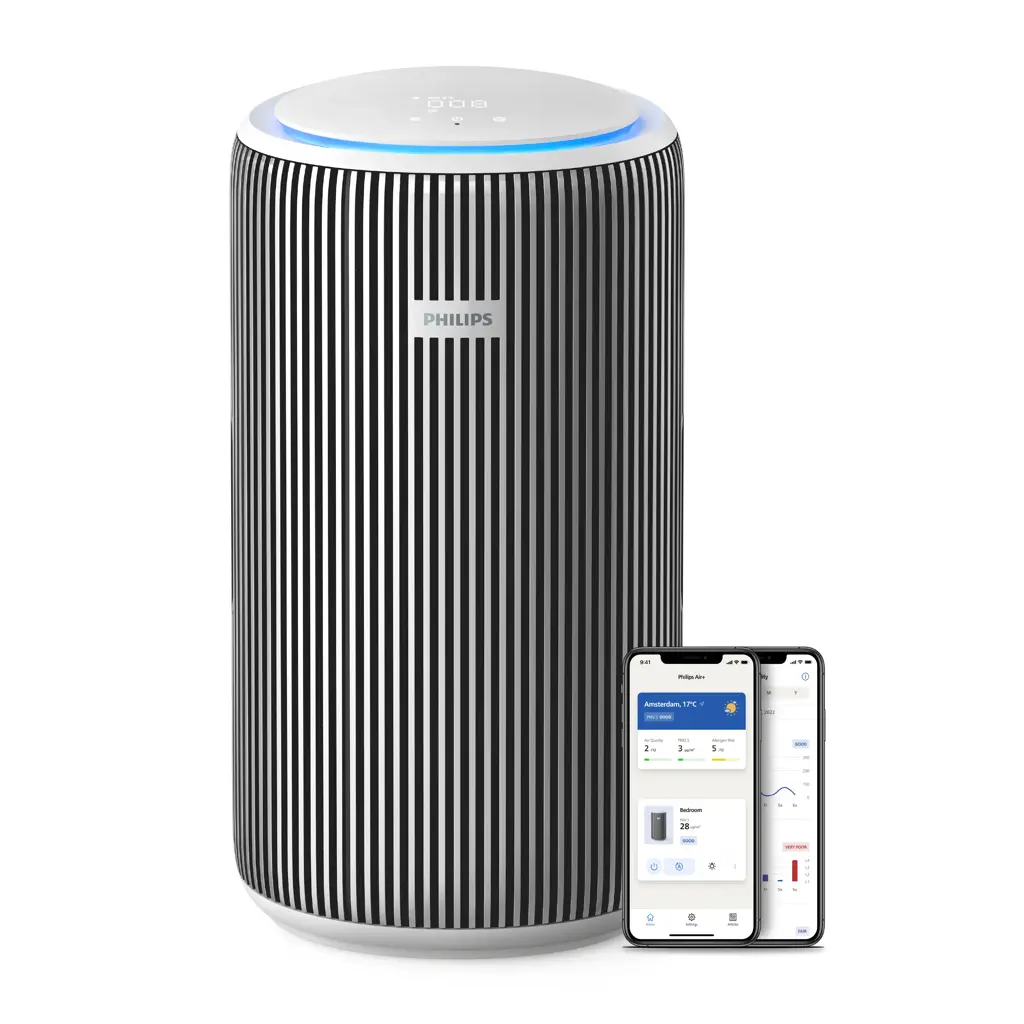
1. Philips PureProtect 3200 Series AC3220/10
★★★★☆ 3.7 / 5
This is the only machine in the comparison that gives you a Clean Air Delivery Rate and names the standard it was measured against: 520 cubic metres an hour, tested to GB/T 18801-2022. That single sentence puts it ahead of five rivals, because it is the only performance claim here that another laboratory could check.
It also answers the ozone question in the plainest possible terms. Philips states outright that the machine emits no ions, no chemicals and no ozone. Given that one machine in this group has a particle charging stage you cannot switch off and publishes no ozone figure at all, being told directly is worth something. It carries the ECARF allergy seal, which is the only third party allergy mark in this group that applies to a model actually on sale in the UK.
The honest caveat is the gap between the laboratory figure and the useful one. Independent measurement by HouseFresh recorded 423 cubic metres an hour against the claimed 520, and only 287 once the machine was held below 45 decibels, which is roughly the loudest most people will tolerate in a room they are sitting in. At that quieter setting the room it genuinely turns over is more like 35 square metres than the 135 on the box. That is not Philips being dishonest, it is what happens to every purifier when you turn it down, but it is the number to plan around.
Pros
- The only machine here that publishes a CADR with the standard it was tested to, at 520 m³/h to GB/T 18801-2022
- States explicitly that it emits no ions, no chemicals and no ozone
- Carries the ECARF allergy seal, the only third party allergy mark here covering a model on sale in the UK
- Consumables are 121 per cent of the purchase price over five years, which is mid pack rather than punitive
- A genuine three stage filter with a real activated carbon layer rather than a token coating
Cons
- Independently measured at 423 m³/h against the 520 claim, and 287 once held below 45 decibels
- The realistic quiet mode coverage is nearer 35 square metres than the 135 the packaging implies
- No HEPA class published, and no EN 1822 or ISO 29463 reference
- The 0.003 micron claim is marketing language rather than a filter grade
- The HEPA and carbon layers are bonded together, so you bin perfectly good HEPA media when the carbon is spent
- £279 is a real outlay for a machine that only properly serves one room
Buy it if you want the one performance figure in this group that is attached to a standard, and you would rather be told about ozone than left to guess.
Best for a bedroom
No ioniser
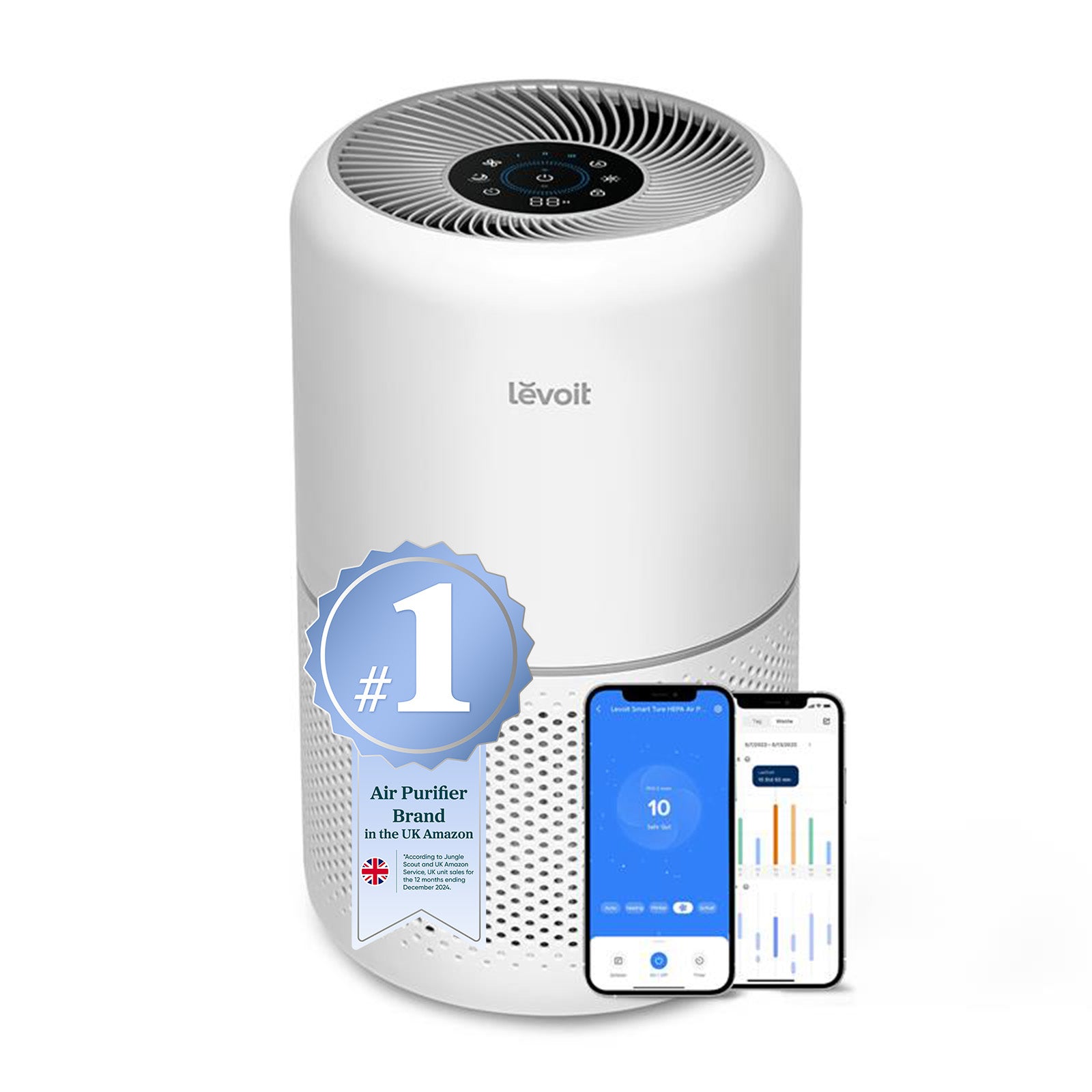
2. Levoit Core 300S
★★★★☆ 3.5 / 5
£149.99, small, quiet and the safest choice in the group on the question most buyers never think to ask. The Core 300S has no ioniser. That is independently confirmed rather than merely unstated, and the machine is CARB certified, which is the Californian regime and the strictest ozone standard applied to consumer air cleaners anywhere. If you are putting a purifier in a bedroom and running it all night beside your head, that matters more than any percentage on the box.
A word of warning about the specifications you will read while shopping. The price comparison site PriceSpy lists this model as Ionization plus HEPA. It is wrong. We checked against Levoit’s own documentation and the CARB listing, and there is no ionising stage. This is a good illustration of why the retailer page is not the place to settle a question like this.
Where it falls down is disclosure. Levoit publishes no CADR on its UK site at all. Amazon quotes 258 cubic metres an hour and the independent testing at HouseFresh measured roughly 214 to 262, which is at least consistent, but none of that comes from the maker. Consumables run to 198 per cent of the purchase price over five years, so you will spend more on filters than on the machine.
Pros
- No ioniser, independently confirmed, and CARB certified, which is the strictest ozone regime applied to consumer air cleaners
- £149.99, and small and quiet enough to run in a bedroom overnight
- Independent measurement of roughly 214 to 262 m³/h broadly matches the 258 quoted at retail
- A genuinely appropriate size for a bedroom, which is where most people actually need one
- The app works without forcing an account for basic operation
Cons
- No CADR published on the UK site, so the only figures available come from a retailer and an independent tester
- No HEPA class, no EN 1822 or ISO 29463 reference
- Filters cost 198 per cent of the machine price over five years, so £448 all in
- Not in the AHAM Verifide directory, the American certified list or the Allergy UK directory
- Too small for a large open plan room, whatever the coverage claim says
- At least one major price comparison site lists it with an ioniser it does not have
Buy it if you want a bedroom machine and you care about not generating ozone next to your face for eight hours a night.
The cheapest to run, and the most expensive to buy
Cheapest to run
£355 over 5 years
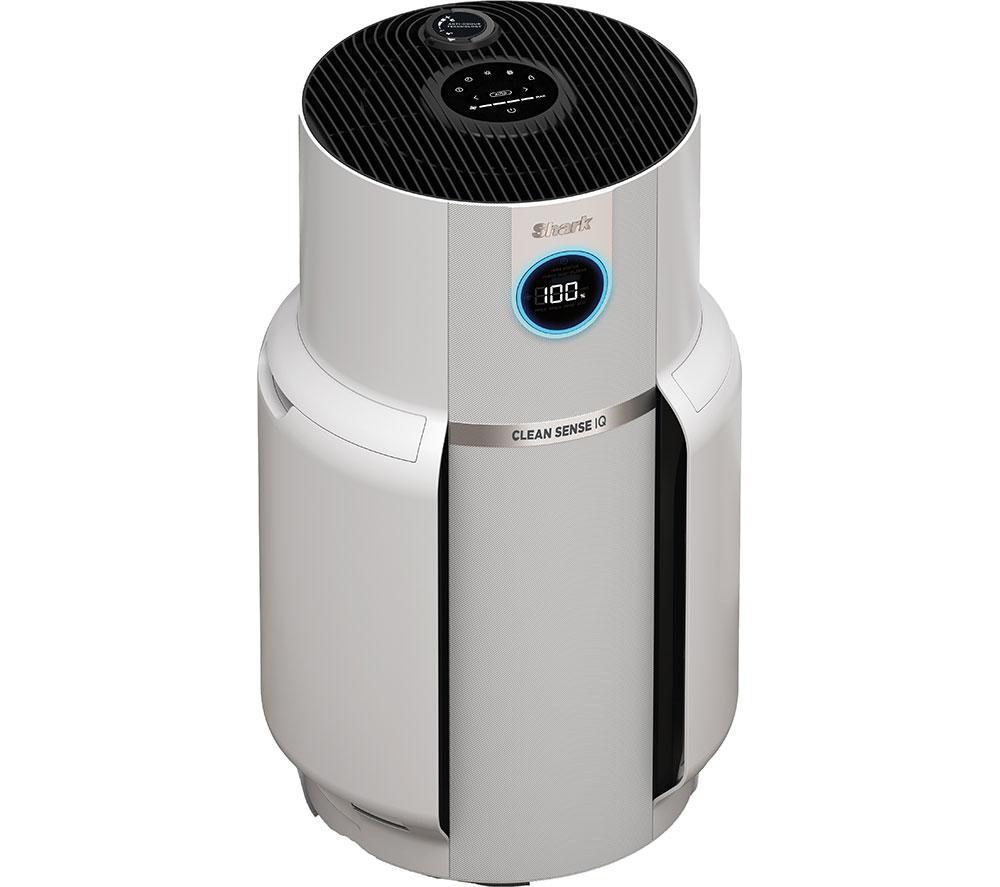
3. Shark NeverChange5 HP150UK
★★★☆☆ 3.3 / 5
Here is a genuinely counterintuitive result. The £279 Shark is the cheapest machine in this comparison to own over five years, at about £355 all in. The £149.99 Levoit costs £448 and the £129 Blueair costs £396. The reason is the filter: Shark rates it for five years rather than six to twelve months, so consumables come to just 27 per cent of the purchase price against 198 per cent for the Levoit and 240 per cent for the cheapest machine here.
If you buy air purifiers the way most people buy printers, looking only at the sticker, you will get this category badly wrong. Work out the five year number before anything else.
The catch is that Shark tells you very little else. It names GB/T 18801-2015 as a standard but publishes no CADR of its own, and the two third party figures we found disagree with each other: Currys quotes at least 87 cubic feet a minute for smoke while Expert Reviews measured 99 cubic metres an hour. Those are not the same claim in different units. There is no HEPA class, no certification in any of the three directories we searched, no app and no remote in the UK. And the five year filter claim is, by its nature, not something anyone has been able to verify yet.
Pros
- £355 total cost over five years, the cheapest in this group and less than half the Dyson
- The filter is rated for five years, so consumables are only 27 per cent of the purchase price
- Cites a real test standard, GB/T 18801-2015, which is more than three machines here manage
- No filter to remember to buy every six months, which is the maintenance most people skip
- A washable pre filter rather than a bonded unit
Cons
- Publishes no CADR of its own, and the two third party figures we found are not consistent with each other
- No HEPA class, no EN 1822 or ISO 29463 reference
- Not in the AHAM Verifide directory, the American certified list or the Allergy UK directory
- The five year filter life is unverifiable at this stage and the whole cost case rests on it
- Bulky at 38.5 by 23.7 by 26.6 cm, plasticky, and no app or remote in the UK
- Whether it has an ionising stage is not stated either way
Buy it if you want the lowest five year cost and you are comfortable buying on the running cost rather than on a published performance figure.
Only H13 here
£549
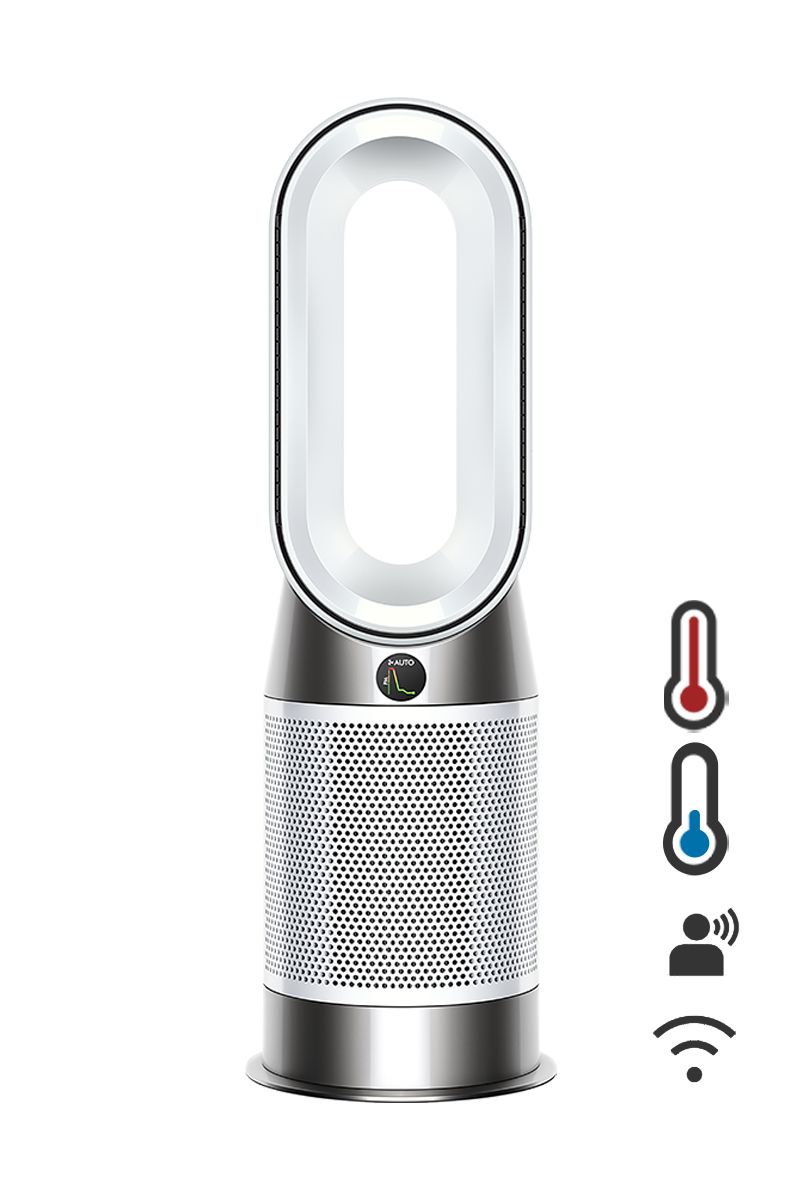
4. Dyson Purifier Hot+Cool HP1
★★★☆☆ 3.0 / 5
Dyson is the only maker in this comparison that names a filter class against the standard that defines it: H13 to EN 1822. That is the disclosure everyone else withholds, and it deserves saying clearly, because on the vacuum equivalent of this test Dyson came out badly on exactly this point. Here it is the best in the group.
And then it does not publish a CADR. Not to AHAM AC-1, not to GB/T 18801, not at all. Instead Dyson substitutes its own proprietary POLAR test, which is its own room, its own protocol and its own reporting. It may well be a better test. It is not a comparable one, which means you cannot line this machine up against any other purifier on the shelf and that is precisely what a standard exists to let you do.
It is also the most expensive machine here to buy at £549 and to own at about £966 over five years, though in fairness consumables are only 76 per cent of the purchase price, which is proportionally better than most of this group. It heats and cools as well as filtering, which is a real argument for the price if you would otherwise buy a fan and a heater. The known complaints are noise at higher speeds, the filter cost, and the app requirement for full functionality.
Pros
- The only machine here that names a HEPA class against a standard, H13 to EN 1822
- A genuinely sealed system, and the engineering reputation behind that is earned
- Heats and cools as well as purifying, so it replaces two other appliances
- Consumables are 76 per cent of purchase price over five years, proportionally the best ratio in the group
- No ioniser
Cons
- Publishes no CADR to any recognised standard, substituting its own proprietary POLAR test
- You cannot compare it with any other purifier on the shelf, which is the whole purpose of a standard
- £549 to buy and about £966 over five years, the most expensive on both counts
- Not in the AHAM Verifide directory, the American certified list or the Allergy UK directory
- Noise at higher fan speeds is the recurring complaint, and full functionality wants the app
- The heating function is expensive to run compared with central heating
Buy it if you want the heating and cooling as well, and you accept that the filtration claim cannot be compared with anything else on sale.
The one with an ioniser you cannot turn off, and the one with no real filter
Cheapest smart one
Ioniser always on

5. Blueair Blue Max 3250i
★★★☆☆ 2.6 / 5
£129 at Currys for a smart purifier with a good reputation, and Blueair does one thing better than anyone else here: it publishes the air changes per hour behind its room coverage claim, 4.8 down to 2 depending on room size. That is the honest way to state coverage and nobody else in this group does it.
The reason it finishes fifth is its HEPASilent technology, and this needs stating carefully because it is easy to get wrong in both directions. HEPASilent works by electrostatically charging particles so a less dense filter can catch them, which is genuinely clever and is why the machine is quiet. But that charging stage cannot be switched off, it is how the machine works. Any electrostatic charging stage has the potential to produce some ozone, and Blueair publishes no ozone emission figure for this model anywhere we could find. Independent measurement by Smart Air recorded 181 parts per billion from a Blueair unit, though with the important caveat that the probe was placed directly beside the ioniser rather than at the chamber distance a certification test would use, so that figure is not comparable to a limit.
What we are left with is a machine you cannot run without the charging stage, from a maker who will not tell you what it emits, in a country with no ozone regime at all for these products. California sets 50 parts per billion and the voluntary UL 2998 validation sets 5. The UK sets nothing. That is not a reason to panic. It is a reason to want the number, and to prefer a machine that either has no ioniser or publishes a figure.
Pros
- £129 at Currys, the cheapest smart machine here and reduced from £169
- The only maker in this group that publishes the air changes per hour behind its room coverage claim
- Genuinely quiet for the airflow it moves, which is the real benefit of the technology
- Good build and a well regarded app with real air quality history
- £396 over five years, mid pack
Cons
- The electrostatic particle charging stage cannot be switched off, because it is how the machine filters
- No ozone emission figure is published for this model on the Blueair site or at any retailer we checked
- No CADR figure and no HEPA class published
- The AAFA certified list covers Blueair Classic Pro CP7i and CP9i, not this model
- The sensor detects PM2.5 only and cannot see VOCs, so auto mode is blind to cooking fumes and solvents
- Not enough activated carbon for serious odours, and no removable pre filter for cleaning
- Consumables run to 207 per cent of the purchase price over five years
Buy it if you want quiet and cheap, you are putting it in a well ventilated living room rather than beside a bed, and you have read the ioniser note above.
Cheapest
No filter sold
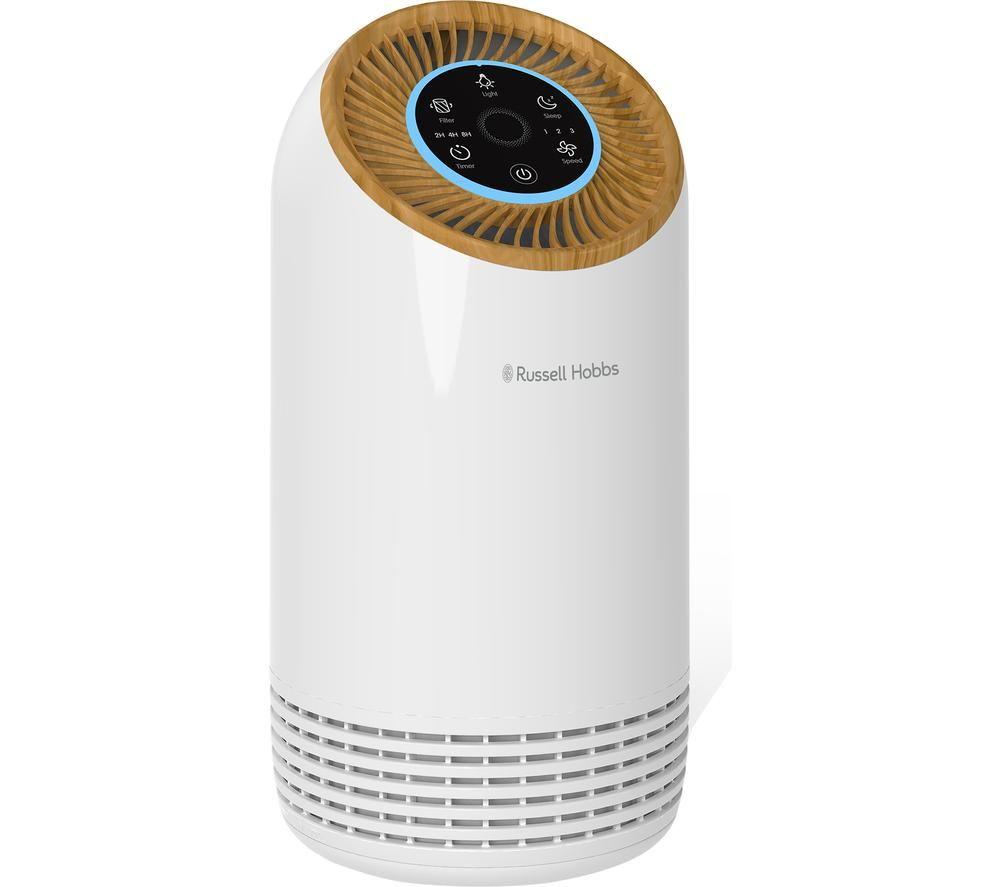
6. Russell Hobbs Clean Air Compact 2 RHAP1031WDW
★★☆☆☆ 2.2 / 5
£62.99 at Currys and the cheapest way into the category. It is small, light and it moves air through a filter, and if what you want is something that takes the worst of the dust out of a small room then it does that.
The problem is what happens next. Russell Hobbs does not sell a genuine replacement filter for it. We looked. That means the machine is either a disposable appliance or you are buying unbranded third party filters of unknown specification, and either way the thing that makes a purifier work is the one part you cannot reliably replace. On the five year arithmetic the consumables still come to 240 per cent of the purchase price, the worst ratio in the group, because you end up buying whatever fits.
Beyond that it is silent on everything. No CADR. No HEPA class. No wattage published. No certification in any directory. No ozone statement. It is not making false claims, which counts for something, but there is nothing here you can check.
Pros
- £62.99, the cheapest entry into the category by a wide margin
- £214 over five years, the lowest absolute cost of ownership here
- Small, light and easy to move between rooms
- Makes no filtration claim it cannot support
Cons
- Russell Hobbs sells no genuine replacement filter for it, which for a purifier is a serious gap
- Consumables still reach 240 per cent of the purchase price, the worst ratio in the group
- No CADR, no HEPA class, no wattage and no ozone statement published anywhere
- No certification in the AHAM, American allergy or Allergy UK directories
- No published noise figure
- No independent review data of any kind could be retrieved for it
Buy it if you want the cheapest thing that moves air through a filter in a small room, and you are treating it as disposable.
Prices checked 5 August 2026 and may have changed since.
The clean pick, and the honest catch
Our clean pick
Levoit Core 300S
No ioniser, and certified to the strictest ozone regime there is
Why it wins on air quality
✓
It has no ioniser at all
✓
CARB certified
✓
The independent numbers match the retail ones
✓
It is the right size for the job
What you give up
✕
Levoit will not publish a CADR either
✕
The filters cost more than the machine
✕
No independent certification
The catch, said plainly. Our rule is that if a category has a genuinely clean option we name it, and here there is one, but the evidence for what these machines do for your health is thinner than the marketing suggests. The American Agency for Healthcare Research and Quality reviewed the field and found no improvement in asthma exacerbations at high strength of evidence where purifiers formed part of a wider strategy. NICE guideline NG149 on indoor air quality contains no recommendation on air purifiers at all, which is itself telling. Asthma and Lung UK put it at about the right level, saying filtration probably only works well in small rooms. The one case where the evidence is genuinely encouraging is hay fever: a placebo controlled trial of ninety people found a 3.3 point symptom advantage at four to eight air changes an hour, though quality of life improved just as much in the placebo group. And no filter of any kind removes nitrogen dioxide from a gas hob. For that, and for most cooking pollution, opening a window beats every machine on this page.
What to look for when you buy one
Find the CADR, and if there is not one, treat the room size claim as decoration. Clean Air Delivery Rate in cubic metres an hour, tested to AHAM AC-1 or GB/T 18801, is the only number that tells you how much clean air a machine actually makes. Room coverage in square metres is derived from it using an assumed number of air changes an hour, and that assumption is almost never printed. At 4.8 air changes an hour a machine covers a small room properly. At 1.5 it covers a big one badly. Same machine, same CADR, two very different claims, and only one brand in this comparison prints the air change figure at all.
Then halve it in your head, because the number is measured at full speed. Every CADR is measured with the fan flat out, which on most of these machines is loud enough that nobody actually runs them there. Independent testing of the Philips found 520 on paper, 423 in a real room, and 287 once it was held below 45 decibels. The machine you will really live with is the quiet one, so size up: buy for a room smaller than the box says, or accept that you will run it loud.
Ask about the ioniser, and do not accept silence as a no. Ionisers and plasma stages charge particles so they clump and fall or stick to a filter. Any such stage can generate ozone, which is a respiratory irritant and is the last thing you want to add to the air of an asthmatic’s bedroom. In this group one machine has a charging stage that cannot be switched off and publishes no ozone figure; one is independently confirmed to have none and is CARB certified; one states outright that it emits no ozone; and three simply do not say. There is no UK regime here at all. California sets a 50 parts per billion limit and the voluntary UL 2998 validation sets 5, so a CARB listing is the only ozone assurance a British buyer can get.
Look for a filter class, not the word HEPA. EN 1822 and ISO 29463 define HEPA in classes from H11 to H14, each with a stated capture efficiency at the hardest particle size to trap. Only one machine in this comparison names a class. The rest say HEPA, which by itself is not a specification and is not regulated on a UK box.
Work out the five year cost before you look at the price. This is where the category gets genuinely surprising. Consumables as a share of purchase price run from 27 per cent to 240 per cent across these six. The £279 Shark works out cheaper over five years than the £149.99 Levoit and the £129 Blueair, because its filter is rated for five years rather than six months. The cheapest machine here has the worst ratio of all, and does not have a genuine replacement filter available at any price. Filters plus electricity, five years, then compare.
Know what a filter cannot do. A HEPA filter catches particles. It does nothing about gases. Nitrogen dioxide from a gas hob, and most of what comes off cooking, frying and solvents, passes straight through unless there is a serious quantity of activated carbon in the machine, and a thin carbon coating on a HEPA sheet is not that. Carbon also saturates, and no brand in this comparison publishes how quickly. So if your air quality problem is cooking, the answer is the extractor fan and an open window, not a purifier.
Check the certification directories yourself. There are three worth searching: AHAM Verifide, the American asthma and allergy friendly certified list, and the Allergy UK product directory. We searched all three for all six machines. None carries AHAM Verifide. The American list has Blueair, but only the Classic Pro CP7i and CP9i, not the model on sale here. Allergy UK’s directory lists NAMUH, Daikin and Samsung, none of which are these brands. A logo on a box is not a listing, and the model number matters.
Be honest with yourself about what the evidence supports. The strongest synthesis available, from the American Agency for Healthcare Research and Quality, found no improvement in asthma exacerbations at high strength of evidence where purifiers were part of a multi component strategy. NICE guideline NG149 on indoor air quality makes no recommendation about air purifiers at all. Asthma and Lung UK say filtration probably only works well in small rooms. The best case is seasonal pollen: a placebo controlled trial of ninety people found a 3.3 point symptom advantage at four to eight air changes an hour, statistically significant, though quality of life improved just as much in the placebo group.
And put it in the right place. A purifier in a corner behind a sofa is filtering the corner. It needs air to reach it and leave it, so give it clearance on all sides and put it in the part of the room you actually occupy. In a bedroom, that means somewhere it can turn the air over without pointing a draught at your face, and quiet enough that you leave it on. A machine you turn off because it is annoying has a Clean Air Delivery Rate of zero.
Final verdict
Buy for the room you have, not the room on the box
Three things to take away.
The first is that this category has almost no honest arithmetic in it. One machine of six publishes a Clean Air Delivery Rate against a named standard. One publishes the air changes an hour behind its room claim. One names a HEPA class. Nobody publishes all three. Everyone publishes a room size in square metres, which without the other numbers is not a specification at all.
The second is that the sticker price tells you very little about what a purifier costs. Filters over five years run from 27 per cent to 240 per cent of the purchase price across these six, which is why the £279 Shark is cheaper to own than the £129 Blueair. The cheapest machine on this page does not have a genuine replacement filter available at all, which makes it an appliance you throw away rather than one you keep.
The third is the ozone question, and it is the one nobody asks in the shop. A purifier with an electrostatic or ionising stage can produce ozone, which is a respiratory irritant, and the UK has no standard governing it. If the machine is going in a bedroom, buy one that either has no ioniser or publishes a figure. Two machines here qualify. One actively does not.
Our pick is the Philips PureProtect 3200 at £279 because it is the only one whose performance figure is attached to a standard, and the Levoit Core 300S at £149.99 for a bedroom because it has no ioniser and is CARB certified. And before you buy any of them, open a window.