Home · Bathroom · Cleaning
Best toilet cleaners: six compared, and 99.9 per cent is a fail
Six toilet cleaners read against their labels, their safety data sheets and the standard everyone quotes without naming. EN 1276 is the European suspension test for bactericidal activity and it requires a five log reduction, which is 99.999 per cent. A 99.9 per cent result is three log, and against that standard it is a fail. The 74p own brand is the only one of the six that names a standard, a contact time and the organisms together. The £1.78 market leader cites nothing at all.
By Mrs House · Updated 9 September 2026 · 15 minute read
Mrs House is independent. Nobody pays for a place in a ranking here.
The short answer
Buy the Asda Cool Aqua at 74p. It is the only one here that names BS EN 1276, a five minute contact time and the organisms it is tested against.
- Best overall: Asda Cool Aqua Toilet Gel, 74p for 750ml. Benzalkonium chloride, with the standard actually named.
- For limescale: Harpic Power Plus 10X Original, £1.78. 9 per cent hydrochloric acid at pH 1.5, and acid is the only thing that shifts scale.
- Fragrance free: Bio-D, £2.99. Citric and lactic acid, no hazard classification, though its germ claim contradicts itself.
Never use an acid cleaner and bleach together. That makes chlorine gas, in a small room, with the door shut.
How we assessed these
Six products, and the first thing to understand is that they are not doing the same job. There are three chemistries on this shelf and each is good at something the others are not.
Acid cleaners use hydrochloric acid, at 9 per cent in the case of the market leader, at around pH 1.5. Acid dissolves limescale. It does very little to biofilm. Bleach cleaners use sodium hypochlorite at pH 11.5 or higher. Bleach kills and whitens. It does almost nothing to limescale. Plant based cleaners use citric or lactic acid at around pH 3, which is far too weak to shift established scale and carries no germ claim at all.
Nothing on this shelf does both jobs well, and no pack tells you that.
Five things decided the scores.
The germ claim, checked against the standard. Whether a standard is named, whether a contact time is given, and whether the organisms are listed. A kill claim without a contact time is close to meaningless.
The hazard label and the mixing warning, including whether the pack carries EUH031, contact with acids liberates toxic gas.
Ingredient disclosure against the Annex VII duty to publish on an unrestricted website.
Limescale performance, which is what most British households in hard water areas actually buy these for.
Cost per use, on a stated 50ml dose, because not one of the five liquids publishes a dose.
All prices read on 9 September 2026.
The ranking, at a glance
| Product | Size and price | Chemistry | Standard named? | Hazard | Score | |
|---|---|---|---|---|---|---|
| 1 | Asda Cool Aqua Toilet Gel | 750ml, £0.74 | Benzalkonium chloride | Yes, BS EN 1276, 5 min | Warning | 3.5 |
| 2 | Ecover Pine and Mint | 750ml, £2.50 | Citric acid 1 to 5%, pH 3 | No germ claim made | None | 3.3 |
| 3 | Harpic Power Plus 10X Original | 750ml, £1.78 | 9% hydrochloric acid, pH 1.5 | No | Danger, corrosive | 3.1 |
| 4 | Domestos Original Thick Bleach | 750ml, £1.50 | 4.5% sodium hypochlorite | No | Danger | 3.0 |
| 5 | Bio-D Fragrance Free | 750ml, £2.99 | Citric and lactic acid, pH 3 | Contradicts itself | None | 2.8 |
| 6 | Duck Fresh Discs Mint | 36ml, £3.47 | Surfactant and fragrance only | No | Warning | 2.5 |
The two we would actually buy
Best overall
74p, and it names the standard
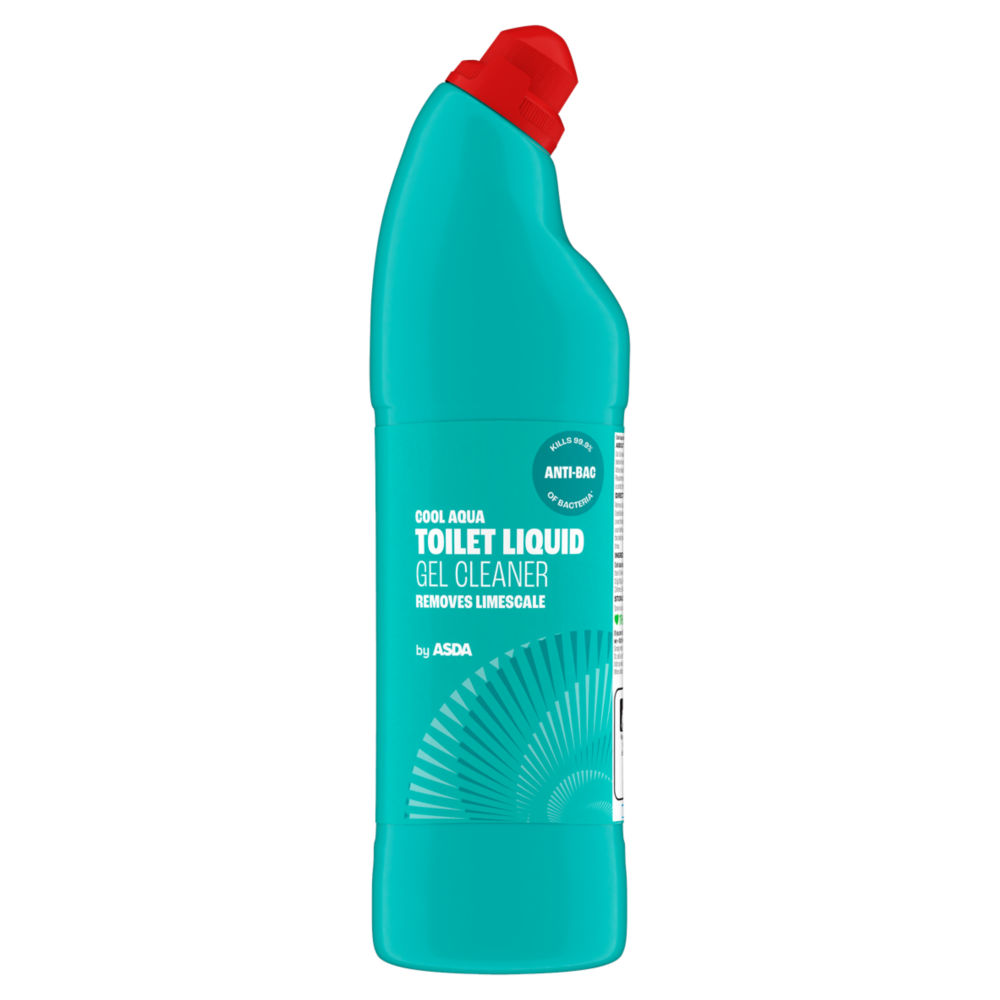
1. Asda Cool Aqua Toilet Liquid Gel Cleaner, 750ml
★★★★☆ 3.5 / 5
The cheapest product in this comparison is the only one that makes a germ claim you can check. Asda names the standard, BS EN 1276:2009, gives a contact time of five minutes, and lists the organisms. Not one of the five other products does all three, and the market leader at more than twice the price names no standard at all.
That matters because of what EN 1276 actually requires. It is a suspension test demanding a five log reduction, which is 99.999 per cent. The familiar 99.9 per cent on the front of half this aisle is a three log result, and against EN 1276 that is a fail. A brand quoting 99.9 per cent without naming a standard is quoting a number that has no test behind it that anyone can identify.
The chemistry is benzalkonium chloride at 0.5g per 100g, which is a quaternary ammonium biocide. That is effective and it is also the one genuine environmental criticism of this product, set out in the guide below. It carries Warning rather than Danger, which puts it a step below both the acid and the bleach here on hazard. At 74p it is a fifth the price of the eco brands.
Pros
- The only product here that names a standard, a contact time and the organisms together: BS EN 1276:2009, five minutes
- 74p, the cheapest product in this comparison by a wide margin
- Warning rather than Danger, so a step below the acid and bleach products on hazard
- Asda operates an Annex VII ingredient portal, which most supermarkets in this category do not
- Works as a general clean without the corrosive handling of an acid product
Cons
- Benzalkonium chloride at 0.5g per 100g, a quaternary ammonium biocide with a real wastewater problem set out below
- Asda’s own ingredient portal lists a different variant and not this Cool Aqua one
- Sold only at Asda, so there is no independent second source of reviews anywhere
- Does almost nothing to established limescale, because it is not an acid product
- No dose published, so the cost per use rests on a 50ml assumption
- No verbatim owner complaints could be retrieved
Buy it if you want a germ claim with a standard behind it, at the lowest possible price, and your water is soft enough that limescale is not the problem.
The clean pick
No biocide
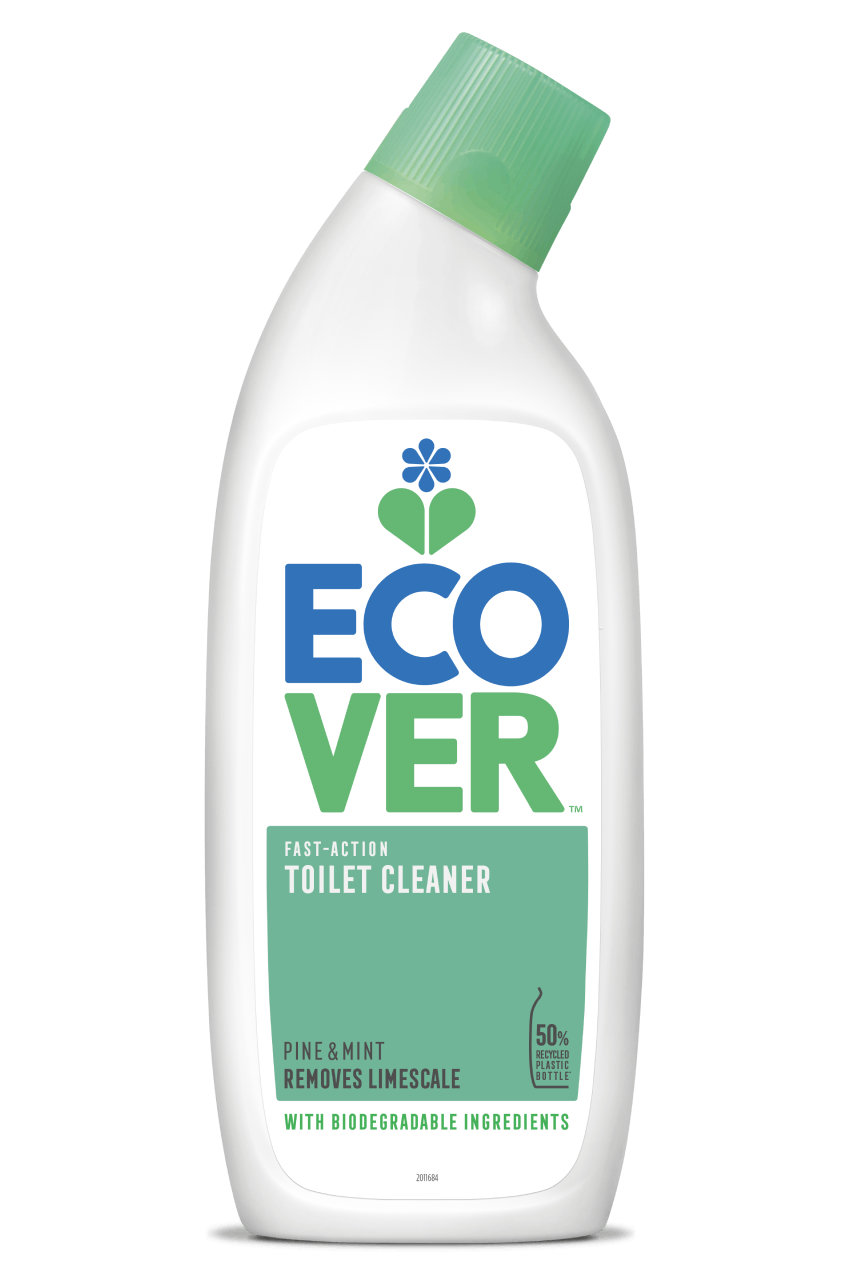
2. Ecover Toilet Cleaner, Pine and Mint, 750ml
★★★☆☆ 3.3 / 5
Ecover does two things well here. It publishes a full ingredient list and a CAS numbered safety data sheet on an unrestricted website, which is what the regulation requires and which the transparency focused competitor in this comparison does not manage. And it makes no germ kill claim at all.
That second point deserves credit rather than criticism. Citric acid at 1 to 5 per cent, pH 3, is a descaling and cleaning product and it is not a disinfectant, so Ecover does not pretend it is. In a category where the standard practice is to print 99.9 per cent with nothing behind it, declining to make the claim is the honest position.
It also has no quaternary ammonium biocide in it, which is the real environmental difference between the eco brands and the cheap own brand. Not the bottle, not the fragrance, the biocide. The weakness is performance and price: at £2.50 it is over three times the Asda bottle, its pH 3 is far too weak to shift established limescale, and it sits at 2.9 out of 5 from 35 reviews at Ocado, which is the worst mainstream rating in this comparison.
Pros
- Publishes a full ingredient list and a CAS numbered safety data sheet on an unrestricted website
- Makes no germ kill claim, which is the honest position for a citric acid product
- No quaternary ammonium biocide, which is the genuine environmental difference in this category
- No hazard classification, so no Danger and no corrosive handling
- Refillable through Ecover’s refill network
Cons
- 2.9 out of 5 from 35 reviews at Ocado, the worst mainstream rating in this comparison
- pH 3 citric acid is far too weak to shift established limescale
- £2.50, over three times the price of the Asda bottle
- No certificate number published for any of its certifications
- Does not disinfect, which for some households is the whole reason they buy a toilet cleaner
- Pine and mint fragrance is divisive in the reviews
Buy it if you want the shortest honest ingredient list, you have soft water, and you are cleaning rather than disinfecting.
The acid and the bleach, and why they must never meet
Best for limescale
pH 1.5
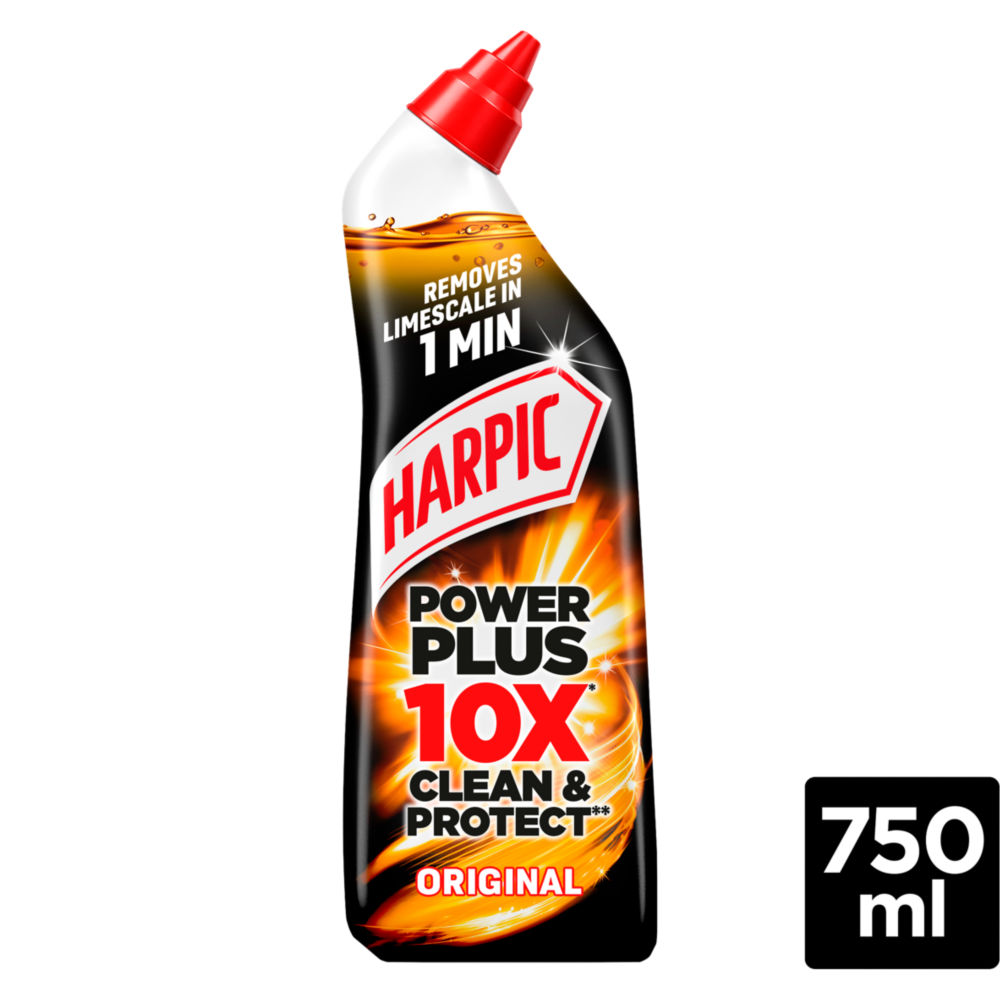
3. Harpic Power Plus 10X Clean & Protect Original, 750ml
★★★☆☆ 3.1 / 5
Nine per cent hydrochloric acid at pH 1.5. If you live in a hard water area and there is a scale ring under the rim that nothing else has shifted, this is the product on this page that will shift it, and none of the gentler options will come close. Acid dissolves calcium carbonate. That is the job and Harpic does it.
Two things stop it scoring higher. The first is that it makes a germ claim with no standard behind it. There is no EN number, no contact time on the front, and when you read the directions they concede sixty minutes for disinfection, which is not how anyone cleans a toilet. Nobody leaves a cleaner in the bowl for an hour and Harpic knows that.
The second is where the mixing warning lives. Reckitt’s safety data sheet does say do not use with any bleaches or other cleaning products, but it appears in section 2.3, headed other hazards which do not result in classification. We checked the Asda, Tesco and Sainsbury listings and all three reproduce the burns and metals hazard statements while none of them reproduces the mixing warning. So the single most important safety line for this product is the one a shopper is least likely to see, and hydrochloric acid poured onto bleach in a small bathroom produces chlorine gas.
Pros
- Nine per cent hydrochloric acid at pH 1.5, genuinely effective on established limescale where nothing gentler is
- £1.78, cheaper than both eco brands
- The thick formula clings under the rim, which is where the scale ring forms
- Widely available everywhere and the best known product in the category
Cons
- Makes a germ claim with no standard, no contact time on the front and no organisms listed
- Its own directions concede sixty minutes for disinfection, which nobody does
- The mixing warning sits in a safety data sheet section headed as not resulting in classification, and no retailer listing reproduces it
- Danger and corrosive, at a pH low enough to damage skin and eyes on contact
- Reckitt’s ingredient portal would not render, so we could not retrieve a full ingredient list
- Contains a quaternary ammonium compound under 1 per cent, with the same wastewater issue as the own brand
Buy it if you have hard water and a scale problem, and you will keep it well away from anything containing bleach.
Best on stains
4.5% just under the line
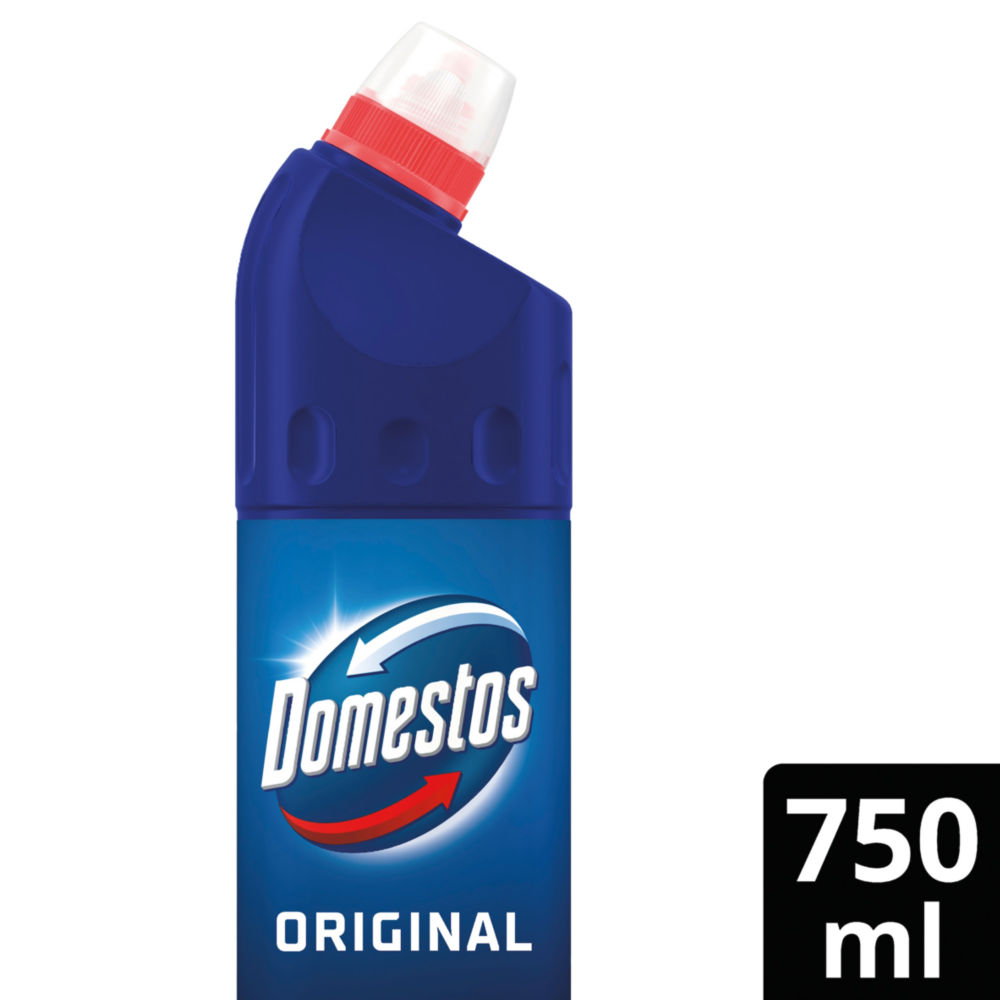
4. Domestos Original Thick Bleach, 750ml
★★★☆☆ 3.0 / 5
£1.50 and it whitens, which is what people buy bleach for. Unilever also publishes its ingredients in full on an unrestricted website, which is more than the other two big brands in this comparison manage, and that transparency is how we found the next paragraph.
Sodium hypochlorite triggers the EUH031 label, contact with acids liberates toxic gas, at 5 per cent and above. Retail Domestos declares 4.5 grams per 100 grams. So the consumer bottle sits just under the threshold and legally does not carry EUH031, and does not. The professional version of the same product states the rule verbatim in its own safety data sheet: EUH031 at greater than or equal to 5 per cent. The chlorine chemistry in your bathroom is the same either way. The label is quieter because of an arithmetic threshold, and the household most likely to pour this on top of an acid cleaner is the one least likely to know that.
On performance, bleach does almost nothing to limescale, which is the other half of what people expect from a toilet cleaner. And there is a real question about how much it does to the biofilm under the rim: research published in 2021 found bacteria forming biofilms even under continuous chlorine at 9 milligrams per litre, and specifically noted that the area under the rim was particularly difficult to disinfect even with bottles designed to reach it.
Pros
- £1.50 and genuinely effective at whitening and removing organic staining
- Unilever publishes a full ingredient list on an unrestricted website
- The thick formula holds on the bowl surface long enough to work
- Kills on contact in a way the plant based products do not claim to
Cons
- Declares 4.5 per cent sodium hypochlorite, just under the 5 per cent threshold that would force the EUH031 toxic gas warning onto the label
- Does almost nothing to limescale, which is half of what people buy a toilet cleaner for
- Published research found biofilms forming even under continuous chlorine, with the area under the rim the hardest to disinfect
- Danger classification, and dangerous with any acid product including the market leading toilet cleaner
- No EN standard, contact time or organism list published for any germ claim
- Sodium hypochlorite has a genuine wastewater profile that the eco brands avoid
Buy it if your problem is staining rather than scale, and there is no acid cleaner anywhere in the house.
The transparency brand, and the one that only smells nice
Fragrance free
Contradicts itself

5. Bio-D Toilet Cleaner, Fragrance Free, 750ml
★★★☆☆ 2.8 / 5
Fragrance free, citric and lactic acid at pH 3, no biocide, no hazard classification and a certified B Corp behind it. For anyone whose objection to this aisle is the chemistry, everything about that sentence is right, and Bio-D is the product here we would put in a house with someone sensitive in it.
Two problems, and they are both about what the company says rather than what is in the bottle. The first is a straight contradiction on its own website: the product page says tested to BS EN 1276, while the Bio-D FAQ that lists which products carry that testing names the Multi Surface Cleaner, the All Purpose Sanitiser and the Cleansing Hand Wash, and does not name the toilet cleaner. Those two pages cannot both be right and the company should fix one of them.
The second is the disclosure, which is the same criticism we have now made of Bio-D on washing up liquid, on dishwasher tablets and on stain removers. It publishes the pack threshold declaration and sends the safety data sheet by email on request. Annex VII requires the ingredient data sheet to be on a website with unrestricted access. Ecover manages it. Unilever manages it. The brand that markets hardest on transparency does not.
Pros
- Fragrance free, so no declared fragrance allergens at all
- No quaternary ammonium biocide and no hazard classification
- Certified B Corp with a published impact score, made in the East Riding of Yorkshire
- Refill options in five and twenty litre containers, and a zero waste shop network
- The right choice for a household with someone chemically sensitive in it
Cons
- The product page claims BS EN 1276 testing while the company’s own FAQ lists the products that carry it and does not include this one
- Ingredient data sheet is sent by email on request rather than published on an unrestricted website, which is not what Annex VII requires
- £2.99, the most expensive liquid here and four times the Asda bottle
- pH 3 will not shift established limescale
- Out of stock direct on biod.co.uk at the time of writing
- No certificate numbers published for the Leaping Bunny or Vegan Society marks
Buy it if somebody in the house reacts to fragrance or biocides, and you are cleaning rather than descaling or disinfecting.
Rim block
No cleaning claim
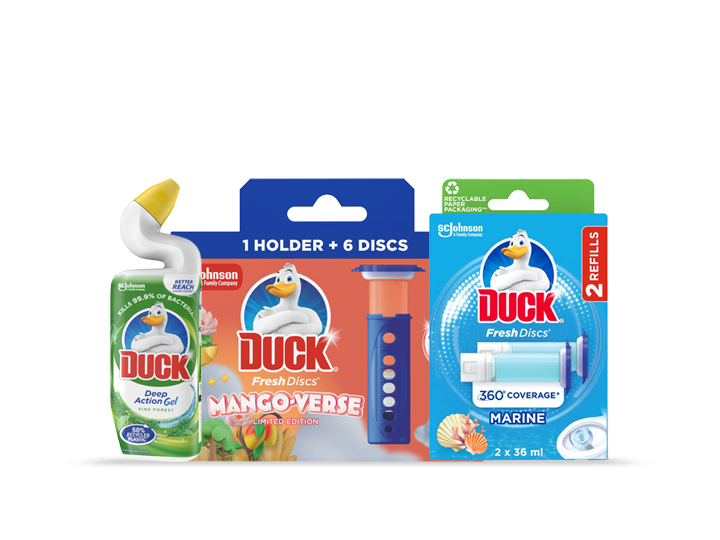
6. Duck Fresh Discs, Mint Mission, 36ml
★★★☆☆ 2.5 / 5
A gel disc stamped onto the bowl that releases fragrance and a little surfactant with each flush. SC Johnson publishes its ingredients properly, in dated versioned per variant documents in descending quantity order, which is the best disclosure practice in this whole comparison and deserves saying.
What the product contains is surfactant and fragrance at pH 5 to 6. No acid worth the name, no bleach, no biocide. It will not descale, it will not disinfect and it will not remove a stain. It keeps the bowl smelling of mint between proper cleans, and if you buy it understanding that, it does that job.
The review split is the largest in this comparison and worth knowing about: 4.2 out of 5 from 576 reviews at Tesco against 2.0 out of 5 from 88 on an Australian review site for the same product. Every verbatim complaint we could retrieve is about the dispenser rather than the chemistry, in terms like discs are an absolute nightmare to get out, pathetic design. One useful clarification: this is a rim product, not an in cistern one, so the warnings about cistern blocks damaging valves do not apply to it. That confusion happens on the shelf because the two sit together.
Pros
- SC Johnson publishes dated, versioned, per variant ingredient documents in descending quantity order, the best disclosure in this comparison
- Keeps the bowl smelling clean between proper cleans, which is what it is actually for
- 4.2 out of 5 from 576 reviews at Tesco
- A rim product rather than an in cistern block, so it does not risk damaging cistern components
Cons
- Surfactant and fragrance only at pH 5 to 6, so no descaling, no disinfecting and no stain removal
- £3.47 for 36ml, by far the highest price per millilitre here
- 2.0 out of 5 from 88 reviews on an Australian site against 4.2 at Tesco for the same product
- Every retrievable complaint is about the dispenser being difficult and unpleasant to use
- Retailer copy gives the flush count as both 500 and 630, which cannot both be right
- It is a fragrance product sold in the cleaning aisle, which is the confusion it trades on
Buy it if you want the bowl to smell fresh between cleans and you have something else that actually cleans it.
Prices checked 5 August 2026 and may have changed since.
The clean pick, and the honest catch
Our clean pick
Ecover Pine and Mint
Publishes everything, and claims nothing it cannot support
Why it wins on ingredients
✓
It makes no germ claim
✓
Full ingredients and a CAS numbered safety sheet
✓
No quaternary ammonium biocide
✓
No hazard classification at all
What you give up
✕
It will not descale and it will not disinfect
✕
2.9 out of 5, the worst mainstream rating here
✕
£2.50 against 74p
The catch, said plainly. Our rule is that if a category has a genuinely clean option we name it, and here there is one, but no product on this page does both jobs. Acid descales and does not disinfect. Bleach disinfects and whitens and does not descale. Plant based products do neither strongly. If you have hard water and you also want disinfection, you need two products, and the single most important thing on this page is that you must never let them meet. There is one more finding worth carrying away, from a 2021 study of toilet bowl microbiology: bacteria formed biofilms even under continuous chlorine at 9 milligrams per litre, and the area under the rim was the hardest place to disinfect even with bottles designed to reach it. The one intervention that moved the numbers in that research was not a product at all. It was the brush.
What to look for when you buy one
Never let an acid toilet cleaner meet bleach. This is the only thing on this page that could seriously hurt you. The market leading toilet cleaner is 9 per cent hydrochloric acid. The market leading thick bleach is 4.5 per cent sodium hypochlorite. Both are usually in the same bathroom cupboard, often bought on the same shop. Pour one into a bowl that still holds the other and you generate chlorine gas in a small room, often with the door shut and the window closed. UKHSA guidance on sodium hypochlorite confirms chlorine and sulphur oxides are released on acid contact. Flush between products, or better, own one of them and not the other.
99.9 per cent is a fail against the standard everyone is implying. EN 1276 is the European suspension test for bactericidal activity and it requires a five log reduction, which is 99.999 per cent. A three log result is 99.9 per cent, and for surface disinfection under that standard it does not pass. So when a bottle says kills 99.9 per cent of germs without naming a standard, it is either quoting a test it failed, or quoting no test at all. Of six products here, one names the standard, the contact time and the organisms, and it costs 74p.
A kill claim without a contact time is meaningless, and the contact times are unrealistic. Disinfection is a function of concentration and time. The market leader’s own directions concede sixty minutes for disinfection. Nobody leaves toilet cleaner in the bowl for an hour, and the products are not sold on the basis that you will. When you see a germ claim, look for the number of minutes next to it. If there is not one, the claim describes laboratory conditions you will never reproduce.
Work out whether your problem is scale or staining, because nothing does both. Limescale is calcium carbonate and only an acid dissolves it. Hydrochloric acid at pH 1.5 will. Citric acid at pH 3 will not touch established scale, whatever the eco packaging implies. Organic staining and the ring at the water line are a bleach job, and bleach does essentially nothing to scale. If you have hard water and staining, you need two products and a rule about never using them together.
Look at the concentration threshold, because one label is quiet by arithmetic. Sodium hypochlorite only triggers the EUH031 warning, contact with acids liberates toxic gas, at 5 per cent and above. The retail thick bleach in this comparison declares 4.5 per cent, so it legally does not carry that warning and it does not. The professional version of the same product states the threshold verbatim in its own safety data sheet. The chemistry in your bathroom is identical. The difference is half a percentage point and a labelling rule.
Check where the mixing warning lives, not just whether it exists. On the market leading acid cleaner, the instruction not to use with bleaches or other cleaning products appears in section 2.3 of the safety data sheet, under a heading that reads other hazards which do not result in classification. We checked three supermarket listings for that product and all three reproduce the burns and metals hazard statements, and none of them reproduces the mixing warning. The most important line for that product is the one a shopper is least likely to encounter.
The brush matters more than the product. Research published in 2021 found bacteria forming biofilms in toilet bowls even under continuous chlorine at 9 milligrams per litre and up to 27 milligrams per litre of free chlorine, and found salmonella surviving below the water line for fifty days. The authors specifically noted that the area under the rim was particularly difficult to disinfect, even using cleaners with bottles designed to deliver product there. In a separate study, the intervention that produced a greater than four log reduction in bowl water was brushing, with or without a commercial product. Mechanical removal of the biofilm is what works.
In cistern blocks can damage your cistern, and rim blocks are a different thing. Fluidmaster, which makes the fill valves in a very large number of British cisterns, states in capitals on its own installation sheet and warranty page that in tank drop in bowl cleaners containing bleach or chlorine will damage tank components, may cause flooding and property damage, and will void the warranty. That is about blocks that sit in the cistern. It does not apply to rim hung blocks or stamped gel discs, which sit in the bowl. The two categories are shelved together and constantly confused, so check which one you are buying.
Quaternary ammonium compounds are the real environmental question, not the bottle. Several cleaners here, including the cheapest and the market leader, use benzalkonium chloride or a related quat as the biocide. Research published in Environmental Science and Technology in 2023 measured quats in wastewater effluent at tens of micrograms per litre, in biosolids up to 500 milligrams per kilogram, and found fifteen different quats in up to 97 per cent of a tested population, with a 77 per cent rise during the pandemic and detection in breast milk. Algal toxicity begins as low as 14 micrograms per litre. That is the genuine gap between the eco brands and the cheap own brand, and it is also precisely why the eco brands cannot make a germ claim.
And close the lid, but do not expect miracles. The evidence on toilet plume is genuinely mixed. Two 2023 and 2024 studies found lid position made no significant difference to aerosol dispersal. A 2025 study found closing the lid gave around 90 per cent exposure reduction for someone across the room while slightly increasing it for the person standing at the toilet, because aerosol escapes through the gap at speed. Closing it is free and probably helps the room. It is not a substitute for cleaning under the rim.
Final verdict
Buy the 74p one, own one chemistry not two, and use the brush
Three things to take away.
The first is that the 99.9 per cent on half this aisle is not backed by the standard it is imitating. EN 1276 needs 99.999 per cent, and 99.9 per cent is a fail against it. One product of six names a standard, a contact time and the organisms, and it is the 74p own brand rather than the £1.78 market leader. If a germ claim has no minutes attached to it, treat it as decoration.
The second is that nothing here does both jobs. Acid descales and does not disinfect. Bleach disinfects and does not descale. Plant based products do neither strongly, and the two that make no germ claim are being honest rather than weak. If you need both, you need two bottles and an absolute rule that they never go in the bowl together, because hydrochloric acid and sodium hypochlorite make chlorine gas in a room with the door shut.
The third is that the most effective thing in your bathroom is not on this page. In the published research, the intervention that produced the biggest reduction in bacteria in bowl water was the brush, with or without a commercial product, and the hardest place to disinfect chemically was under the rim. Buy whichever of these suits your water, and then actually scrub.
Our pick is the Asda Cool Aqua at 74p for a germ claim you can check, the Harpic if you have hard water and a scale ring, and the Ecover if you want the shortest honest ingredient list in the aisle.