Home · Bathroom · Towels
Best bath towels: six compared, and 90 per cent of Egyptian cotton is not Egyptian
Six bath towels from £2.90 to £32, judged on the one specification that actually describes a towel and on whether the words on the label mean anything. Grams per square metre is the number, and two of the six will not publish it, including the most expensive one. Egyptian cotton is the phrase, and the head of the body that certifies it told Reuters that about 90 per cent of the world’s supply sold in 2016 was fake. One towel here publishes a certificate number. We put it through the register.
By Mrs House · Updated 9 September 2026 · 14 minute read
Mrs House is independent. Nobody pays for a place in a ranking here.
The short answer
Buy the John Lewis Egyptian Cotton at £20. It is the best combination of weight, price and a certificate number you can actually look up.
- Best overall: John Lewis Egyptian Cotton, £20. 700gsm, and the OEKO-TEX number M27MX1BZ7 checks out.
- Thickest pile: Dunelm Turkish Luxury Heavyweight, £24. 800gsm and the lowest price per gram here.
- Cheapest: George Home at Asda, £2.90. No gsm published, but it dries you.
Do not buy on softness. The finish that makes a new towel feel plush is the same thing stopping it absorbing water.
How we assessed these
Six towels, and three questions that between them tell you almost everything.
What is the GSM. Grams per square metre is the density of the pile and it is the only real specification a towel has. Roughly, 300 to 400 is thin and quick drying, 400 to 600 is everyday, and 600 to 900 is a heavy hotel towel. Divide the price by the GSM and you get a value figure that cuts straight through the marketing. Two brands here will not publish it at all.
Do the fibre words mean anything. Egyptian cotton, Turkish cotton, Supima, combed, zero twist, long staple. Some of these are certified terms with a body behind them and some are pure description. And bamboo is not a permitted fibre name in UK law at all, which matters for one product here.
Is there a certificate number. OEKO-TEX Standard 100 and MADE IN GREEN both issue numbers that can be looked up. Five of these six show a logo or a claim. One publishes the number.
We also looked at what the brands themselves say about absorbency, which turns out to be more candid than you would expect, and at the microbiology of why towels start to smell.
All prices read on 9 September 2026 for a single bath towel.
The ranking, at a glance
| Towel | Price | GSM | Price per GSM | Certificate number? | Score | |
|---|---|---|---|---|---|---|
| 1 | John Lewis Egyptian Cotton | £20.00 | 700 | 0.0286 | Yes, M27MX1BZ7 | 3.7 |
| 2 | Dunelm Turkish Luxury Heavyweight | £24.00 | 800 | 0.0300 | No | 3.4 |
| 3 | Christy Supreme Supima | £32.00 | 650 | 0.0492 | No, institute named only | 3.2 |
| 4 | The White Company Luxury Egyptian | £26.00 | Not published by the brand | 0.0371 | No | 2.9 |
| 5 | George Home 100% Cotton, Asda | £2.90 | Not published | n/a | No | 2.7 |
| 6 | Panda London Bamboo Towels | £30.00 | 600 | 0.0500 | No | 2.5 |
The two we would actually buy
Best overall
The clean pick
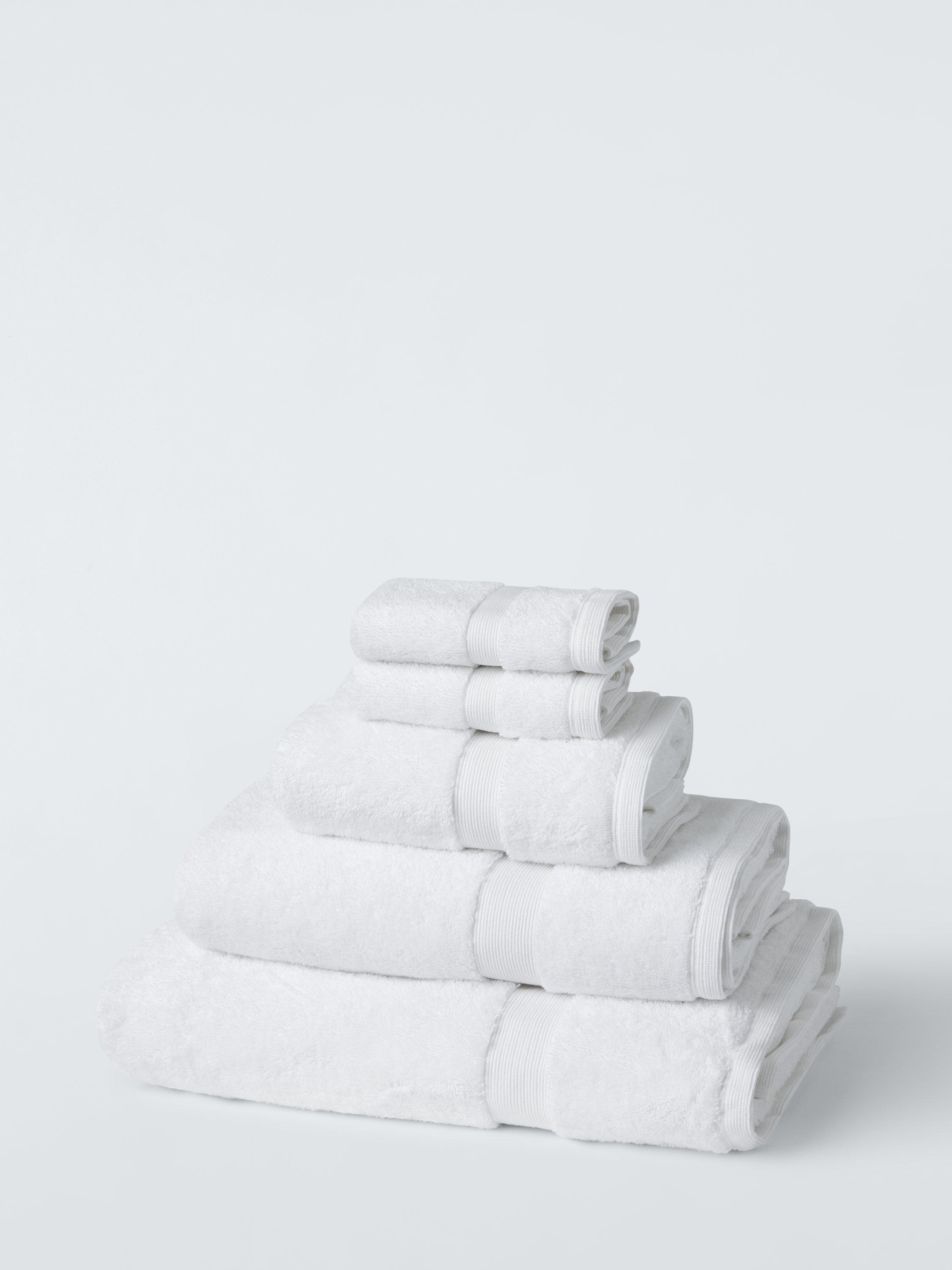
1. John Lewis Egyptian Cotton Bath Towel, 700gsm
★★★★☆ 3.7 / 5
£20 for a 700gsm bath towel, which is a proper heavy hotel weight at a price a long way below the premium brands, and it is the only towel in this comparison that publishes a certificate number: OEKO-TEX MADE IN GREEN label ID M27MX1BZ7. That scheme works by printing a product ID that lets you trace which certified facilities made the item. A logo without the ID makes the traceability impossible, which is exactly the state of every other towel here.
One honest caveat on that: we could not complete the register check ourselves. OEKO-TEX’s Label Check is a JavaScript form with no reachable interface for automated lookup, and we tried four endpoints and five parameter forms. So we can tell you the number is published, which is more than anyone else does, and not that we have independently confirmed it. That is a gap worth closing by hand.
John Lewis is also unusually straight about absorbency in its own care copy, stating that using too much fabric conditioner can reduce absorbency and telling you to wash before use. That is a brand actively telling you not to do something that would make its product feel nicer in the short term, and it is the correct advice.
Pros
- The only towel here that publishes a certificate number, OEKO-TEX MADE IN GREEN label ID M27MX1BZ7
- 700gsm at £20, which is 0.0286 per gram of pile, the second best value in the group
- A genuine heavy hotel weight rather than a mid weight sold as luxury
- The brand’s own care copy warns that fabric conditioner reduces absorbency and tells you to wash before use
- Available in a full range of sizes and colours with reliable stock
Cons
- We could not complete the OEKO-TEX register check because the Label Check tool has no automated interface, so the number is published rather than independently confirmed by us
- Egyptian cotton is claimed without any Cotton Egypt Association accreditation, like every other UK retailer we checked
- The review widget would not serve individual low star reviews, so we have no owner complaint themes
- Heavy towels take longer to dry, which matters in a small bathroom without good ventilation
- £20 a towel adds up quickly when you are buying a full set
Buy it if you want a heavyweight towel from a retailer that will give you a certificate number, and you are not paying for a designer label.
Best value by weight
800gsm
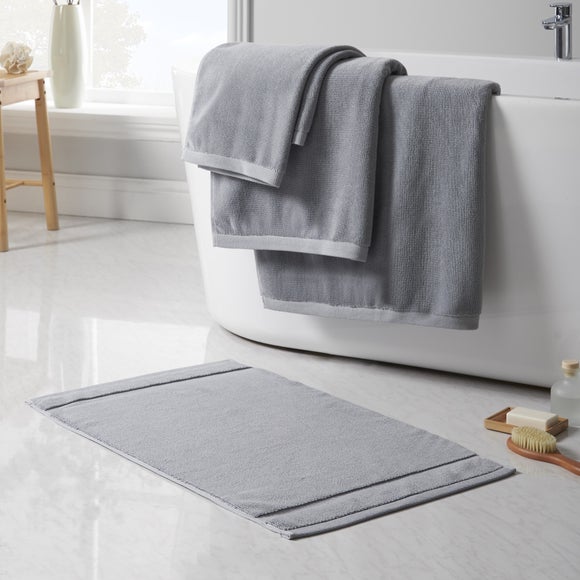
2. Dunelm Turkish Luxury Heavyweight Bath Towel, 800gsm
★★★☆☆ 3.4 / 5
800 grams per square metre is the heaviest towel in this comparison and £24 buys it, which works out at 0.0300 per gram of pile, the best value figure of the six. If what you want is the thick, dense, slightly absurd towel you get in a good hotel, this is the one on this page, and it costs less than a 650gsm towel from a premium brand.
Turkish cotton, unlike Egyptian cotton, is a description of origin rather than a certified term with a body behind it, so treat it as a style of towel rather than a guarantee. What it usually signals is a long staple cotton woven with a longer loop, which does give the plush feel.
The certification is where it slips. Dunelm claims MADE IN GREEN, STeP and Standard 100 across three product lines and publishes not a single number for any of them. We searched the full page HTML for both label formats. MADE IN GREEN exists specifically so that a product ID can be traced back through the supply chain, so claiming it while omitting the ID leaves you with a logo and no way to check it. Dunelm also has a real pattern of low star reviews about absorbency on its zero twist lines: one 600gsm towel marketed on quick absorbency has ninety reviews at two stars or below.
Pros
- 800gsm, the heaviest towel here, at 0.0300 per gram of pile which is the best value in the group
- £24 undercuts every premium brand here while being heavier than all of them
- A genuine hotel weight and feel
- Widely available with a large range of colours and matching sizes
Cons
- Claims MADE IN GREEN, STeP and Standard 100 across its towel lines and publishes no number for any of them
- MADE IN GREEN exists to enable traceability, which without the product ID is impossible
- Turkish cotton is a description, not a certified term
- Dunelm zero twist lines have a documented run of low star reviews specifically about poor absorbency
- 800gsm takes a long time to dry, which in a damp bathroom is how towels start to smell
- Dunelm also sells an Egyptian Cotton Towel at £14 with no mention of the certifying body anywhere
Buy it if you want the thickest towel on this page and the best value by weight, and you have somewhere warm and airy to dry it.
The premium pair
Names its institute
Supima
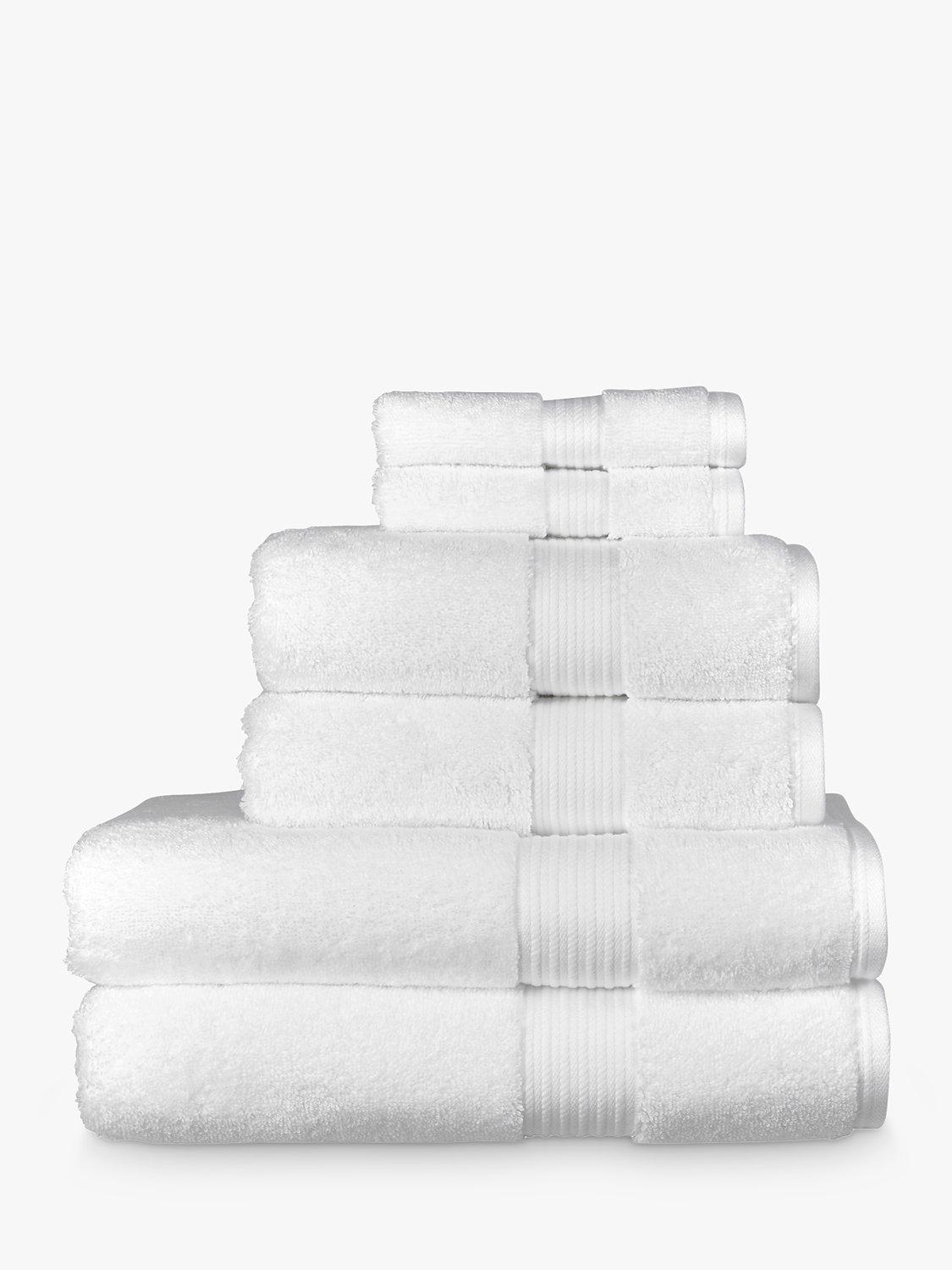
3. Christy Supreme Supima Bath Towel, 650gsm
★★★☆☆ 3.2 / 5
Christy is the closest thing to a specialist in this group, and Supima is the one fibre term on this page that is genuinely controlled: it is a trademark for American grown extra long staple Pima cotton, licensed and audited, and the longer fibre really does produce a stronger, softer yarn with less linting. Unlike Egyptian cotton, if a product says Supima there is an organisation behind that word.
It also names its certifying institute, OEKO-TEX Shirley, which is a step further than showing a logo. It just stops short of publishing the number, which is the thing that would let you check.
At £32 for 650gsm it is 0.0492 per gram of pile, which is 64 per cent more than the John Lewis towel and 64 per cent more than the Dunelm for less weight. You are paying for the Supima fibre and the finish rather than for density, which is a legitimate thing to buy, but it should be a conscious choice.
Pros
- Supima is a genuinely controlled and audited trademark, unlike Egyptian cotton or Turkish cotton
- Extra long staple fibre means a stronger yarn, less linting and better durability over many washes
- Names its certifying institute, OEKO-TEX Shirley, rather than just showing a logo
- A specialist towel maker rather than a homeware brand buying in stock
- 650gsm is a substantial towel that still dries in reasonable time
Cons
- £32 for 650gsm is 0.0492 per gram of pile, the second worst value here
- Names the institute but not the certificate number, so it still cannot be checked
- 64 per cent more expensive per gram than the John Lewis towel for less weight
- No Cotton Egypt Association style verification is relevant here, so the Supima claim rests on the licence
- Fewer size and colour options than the big retailers
Buy it if you want the best fibre on this page and you are buying for durability over many years rather than on price.
Most expensive per gram
No GSM published

4. The White Company Luxury Egyptian Cotton Bath Towel
★★★☆☆ 2.9 / 5
£26 for a towel whose weight the brand will not tell you. The White Company publishes no GSM on its own product page, which for the one specification that describes a towel is a conspicuous omission at this price. The 700gsm figure in our table comes from Selfridges, not from the brand, and we have used it only to give a value comparison at all.
This is the same pattern we found on this brand’s candles and its bed linen: a good product, a genuine following, and a product page that tells you less than a supermarket listing does. There is no OEKO-TEX claim of any kind here, only Good Housekeeping approval, which is a magazine endorsement rather than a textile certification.
And then there is the Egyptian cotton question, which applies to this towel and to every other Egyptian cotton product in Britain. The head of the Cotton Egypt Association told Reuters that roughly 90 per cent of global Egyptian cotton sold in 2016 was fake, following the Welspun affair in which a major supplier was found to have mislabelled cotton sold through Target. The association verifies by DNA testing and maintains an accredited list. No UK retailer we checked appears on it.
Pros
- A genuinely well liked towel with a long standing following and a good feel out of the packet
- The brand’s finish and colour range are better than most of this group
- Substantial weight, on the third party figure available
Cons
- Publishes no GSM at all on its own page, which is the one specification a towel has
- The only weight figure available comes from a third party retailer rather than the brand
- No OEKO-TEX claim of any kind, only a magazine endorsement
- 0.0371 per gram of pile using the third party weight, well above the John Lewis and Dunelm towels
- Egyptian cotton claimed with no Cotton Egypt Association accreditation, in a market where the association’s own head has said about 90 per cent of supply was fake
- No verbatim low star reviews could be retrieved, as the review platform blocks automated access
Buy it if you already know you like the feel of these and the specification genuinely does not matter to you.
The cheap one, and the bamboo one
Cheapest
£2.90
5. George Home 100% Cotton Bath Towel, Asda
★★★☆☆ 2.7 / 5
£2.90, reduced from £4. There is a real place in a house for a £2.90 towel: the beach bag, the dog, the spare room, the one you use to mop up when the washing machine leaks. Judged as that, it is fine and nothing else here comes close on price.
Judged as a bath towel you use every day, the problem is that there is nothing to judge. Asda publishes no GSM, so we cannot calculate a value figure, compare it with anything, or tell you whether it is a 300gsm flannel or a 500gsm everyday towel. It is declared as 100 per cent cotton and that is the extent of the specification.
There is no certification claim of any kind, which at least has the virtue of not being an unverifiable one. And it is worth saying plainly that a cheap thin towel dries faster than an 800gsm one, which in a small unventilated bathroom is a genuine practical advantage rather than a consolation.
Pros
- £2.90, less than a tenth of the price of the dearest towel here
- 100 per cent cotton, honestly declared
- Thin towels dry quickly, which in a small bathroom means less of the bacterial smell described below
- Makes no certification claim it cannot support
- Genuinely useful as a spare, a beach towel or a utility towel
Cons
- No GSM published, so the one specification that describes a towel is missing entirely
- No value comparison is possible against anything else on this page
- No certification of any kind
- No country of manufacture published
- The review platform would not serve individual reviews, so there is no owner evidence either way
- Cheap towels lint heavily in the first several washes
Buy it if you need a spare, a beach towel or something for the dog, rather than the towel you use every morning.
The bamboo one
Not a legal fibre name
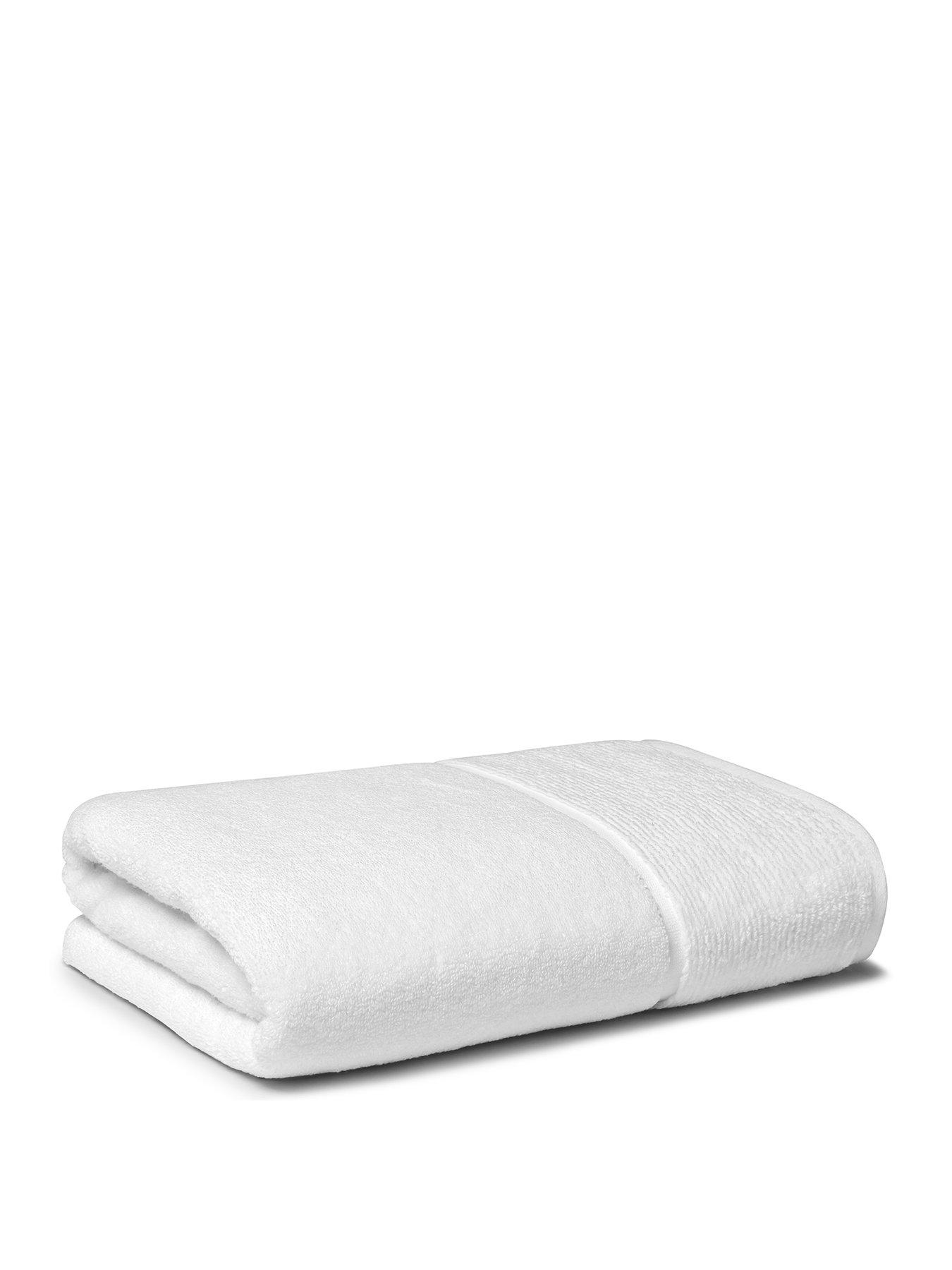
6. Panda London Bamboo Bath Towels, 600gsm
★★★☆☆ 2.5 / 5
The same problem we found on this brand’s bed sheets, and here it is sharper. The towel is declared as 35 per cent bamboo, identically on Panda’s own site and on Very. We read Annex I of the assimilated textile labelling regulation directly on legislation.gov.uk, which carries the closed list of permitted fibre names. The word bamboo does not appear in it. Viscose is entry 25, defined as regenerated cellulose fibre obtained by the viscose process. Lyocell is entry 33, defined by process rather than feedstock.
So bamboo is not a fibre name you may use on a UK textile label standing alone. The correct declaration is bamboo viscose, or viscose made from bamboo. This is not pedantry: viscose and lyocell are different chemical processes with different environmental footprints, and this is the exact wording for which the American regulator has extracted multi million dollar settlements from major retailers. Our caveat, stated plainly: we checked two retailer listings, not the sewn in label, and the label is what the law actually governs.
On the merits it is also the worst value here at 0.0500 per gram of pile, £30 for 600gsm, and no certificate number is published for any of the claims made.
Pros
- 600gsm is a substantial towel and the bamboo viscose blend gives a distinctive soft handle
- Panda does declare bamboo viscose correctly elsewhere in its range, so the company knows the distinction
- A real environmental position and a brand that engages with the question
Cons
- Declared as 35 per cent bamboo, and bamboo is not a permitted fibre name in Annex I of the UK textile labelling regulation
- 0.0500 per gram of pile, the worst value in this comparison
- £30 for 600gsm, more than the 800gsm Dunelm towel
- No certificate number published for any certification claimed
- Bamboo viscose is a chemically regenerated fibre, and the process rather than the plant is where the impact sits
- We checked the retailer listings rather than the sewn in label, which is what the regulation governs
Buy it if you specifically want the bamboo viscose handle and you have read the fibre naming note above.
Prices checked 5 August 2026 and may have changed since.
The clean pick, and the honest catch
Our clean pick
John Lewis Egyptian Cotton
The only certificate number on this page
Why it wins on evidence
✓
It publishes the number
✓
700gsm at £20
✓
It tells you not to use conditioner
✓
Cotton, plainly declared
What you give up
✕
We could not finish the register check
✕
The Egyptian cotton claim is unaccredited
✕
No owner complaints could be read
The catch, said plainly. Our rule is that if a category has a genuinely clean option we name it, and here there is one, but the more useful finding is that nobody in the UK publishes original absorbency data for towels at all. Not the retailers, not the brands, not the consumer bodies. Every claim about a towel drying you well is either the maker’s own assertion or an owner’s impression. That is a strange gap in a product whose entire job is absorbing water, and it means that on the thing you actually care about, no towel on this page can be recommended over another on evidence. What we can compare is weight, fibre, price per gram and whether the certification can be checked, and that is what these scores are made of.
What to look for when you buy one
GSM is the only real specification, so start there and be suspicious of anyone who withholds it. Grams per square metre measures the density of the pile. As a rough guide, 300 to 400 gives a thin, fast drying towel of the sort you want in a gym bag; 400 to 600 is an everyday bathroom towel; and 600 to 900 is the heavy hotel weight. Divide the price by the GSM and you have a value figure that ignores the branding entirely. In this comparison that runs from 0.0286 to 0.0500, and the towel with the best figure is not the cheapest and the one with the worst is not the dearest. Two of the six do not publish a GSM at all, including one costing £26.
Learn which fibre words are controlled and which are decoration. Supima is a licensed and audited trademark for American grown extra long staple Pima cotton, so it means something specific. Egyptian cotton is certified by the Cotton Egypt Association, which verifies by DNA testing and maintains an accredited list, but the phrase itself is not policed on a shelf: the association’s own head told Reuters that around 90 per cent of global Egyptian cotton supply sold in 2016 was fake, in the aftermath of a major supplier being caught mislabelling cotton sold through Target. No UK retailer we checked appears on the accredited list. Turkish cotton is a description of origin with no certifying body at all. Combed, zero twist and long staple are descriptions of process.
Bamboo is not a permitted fibre name. We read Annex I of the assimilated textile labelling regulation, which carries the closed list of fibre names you may lawfully use, and the word bamboo is not in it. Viscose is entry 25 and lyocell is entry 33, defined by process rather than by feedstock. So a towel or sheet sold as bamboo should be declared as bamboo viscose, or viscose made from bamboo. This is not a technicality: viscose is a chemically regenerated fibre and lyocell recovers most of its solvent in a closed loop, so the process is where the environmental difference sits, and calling both bamboo hides it.
Ask for the certificate number, not the logo. OEKO-TEX Standard 100 issues numbers and MADE IN GREEN issues a product ID whose entire purpose is letting you trace which certified facilities made the item. Of six towels here, one publishes an ID, one names its institute without a number, one claims three separate schemes and publishes no number for any of them, and three claim nothing. If you are paying a premium for a certification, the number is the thing you are paying for.
Understand the trade off between soft and absorbent, because the brands admit it. Fabric conditioner works by depositing a thin waxy layer on the fibres, which is what makes fabric feel soft, and that layer repels water. So conditioner makes a towel feel lovely and stop working. John Lewis says so in its own care copy. Soak and Sleep goes further and says avoid it entirely because it coats the fibres and reduces absorbency over time. Many new towels also ship with a silicone finish that does the same thing, which is why a brand new towel often pushes water around rather than soaking it up. Wash a new towel once or twice before you judge it, and never use conditioner on towels.
Beware the zero twist trap. Zero twist yarn is spun so the fibres lie parallel rather than twisted, which produces an exceptionally soft, plush feel and is marketed hard on absorbency. In practice these lines attract a disproportionate number of complaints about not drying you. One 600gsm zero twist towel we looked at, sold specifically on quick absorbency, has ninety reviews at two stars or below, including an owner who washed them twice with no conditioner and returned them because they still would not dry her. Soft and absorbent are not the same property and the marketing routinely conflates them.
The smell is bacterial, and there is a named organism. The musty note a towel develops is not detergent residue, it is largely Moraxella osloensis producing 4-methyl-3-hexenoic acid. Japanese researchers publishing in Applied and Environmental Microbiology found it on 52 per cent of dried towels at over 10,000 colony forming units per square centimetre, and crucially it survives drying. A separate 2021 model found malodour peaking after about seven days damp. The practical answers are all about drying rather than washing: hang towels spread out rather than folded, ventilate the bathroom, and do not leave a damp towel bunched on a hook.
Wash hot enough and less often than the internet tells you. Temperature is what kills the organism rather than merely diluting it, so a 60 degree wash on towels is worth the energy in a way it is not on most other laundry. Heavy towels take longer to dry, which means more hours damp, which is the actual driver of smell. That is a genuine argument for a 500 to 600gsm everyday towel over an 800gsm one if your bathroom is small and poorly ventilated, whatever the luxury framing says.
And accept that nobody publishes absorbency data. We looked. No UK retailer, brand or consumer body publishes original absorbency testing for towels. Every claim about how well a towel dries you is the maker’s own or an owner’s impression. On the single function a towel exists to perform, there is no independent evidence available to any buyer in this country. Buy on weight, fibre, price per gram and whether the certification can be checked, because those are the things that can be verified.
Final verdict
Buy on GSM, skip the conditioner, and dry it properly
Three things to take away.
The first is that grams per square metre is the whole specification and price is a poor guide to it. The best value towel here is 800gsm at £24 and the worst is 600gsm at £30. A £26 towel does not publish its weight at all, and neither does a £2.90 one. Divide price by GSM before you decide anything.
The second is that the words are doing more work than the certificates. Supima is a real licensed trademark. Egyptian cotton is a phrase whose own certifying body says most of the world’s supply was fake, and no UK retailer we checked is on its accredited list. Bamboo is not a lawful fibre name at all. And of six towels, exactly one publishes a certificate number you could look up.
The third is the free advice. Fabric conditioner coats the fibres and stops a towel absorbing, and two brands on this page say so themselves. The smell is a named bacterium that survives drying, so wash hot and, more importantly, dry the towel properly spread out rather than bunched on a hook. Neither of those costs anything and both matter more than which towel you buy.
Our pick is the John Lewis Egyptian Cotton at £20 for the certificate number and the weight, and the Dunelm Turkish Heavyweight at £24 if you want the thickest towel here for the least money per gram.