Home · Laundry · Stain removal
Best stain removers: six compared, and the law says you should be able to read the ingredients
Six stain removers from £1.39 to £6.50, read against their own labels, their own safety data sheets and the regulation that says a manufacturer must publish a full ingredient list on a website with no restriction on access. One of the six meets that duty. The market leader points you at a portal that requires a login. Another publishes a document in which twenty five of the twenty eight ingredient rows read hash N slash A, because somebody exported a broken spreadsheet to PDF and nobody checked.
By Mrs House · Updated 9 September 2026 · 15 minute read
Mrs House is independent. Nobody pays for a place in a ranking here.
The short answer
Buy the Astonish Oxy Active powder at £3.49 for 1.25kg, about 6p a wash. It is the cheapest oxygen bleach here that works.
- Best overall: Astonish Oxy Active Non Bio powder, £3.49 for 1.25kg. 27.9p per 100g.
- Best disclosure: Bio-D Laundry Bleach, £2.10 for 400g. Names TAED and tells the truth about what temperature it needs.
- Skip: Vanish Oxi Action Powder Colours, £6.50 a kilo. Four hazard statements and an ingredient portal that wants a login.
In independent testing a good ordinary washing powder beat every dedicated stain remover in this group.
How we assessed these
Six products, and a simple test. What is in it, does the maker tell you, does it carry a hazard warning you would want to know about, and does it actually beat the detergent already under your sink.
That last question turns out to be the important one. Stiftung Warentest looked at twenty three stain removers and rated only two of them good, and found that a good full wash powder outperformed every dedicated stain remover in the test. The Australian consumer body CHOICE went further and ran a control with no stain remover at all, and found three sprays were barely any better than using nothing, while a homemade mix of hydrogen peroxide and washing up liquid scored 63 per cent against 78 for the winner. Keep that in mind while reading what follows.
Five things decided the scores.
Does the maker publish the ingredients. Annex VII of the detergents regulation requires an ingredient data sheet on a website, and says access must not be subject to any restriction or condition. That is a legal duty, and most of this group does not meet it.
What the hazard label actually says. Several of these carry H318, causes serious eye damage, with the signal word Danger. People do not expect that from a laundry product.
Does it work at the temperature you wash at. Sodium percarbonate needs heat to release its oxygen. Most people wash at 30 degrees. This is where the packs contradict each other and sometimes themselves.
Cost per wash at today’s price, worked out from the maker’s own dose where one is published.
Whether the claims survive checking, including the optical brighteners that make things look whiter without removing anything.
All prices read on 9 September 2026.
The ranking, at a glance
| Product | Size and price | Per 100g | Hazard | Ingredients published? | Score | |
|---|---|---|---|---|---|---|
| 1 | Astonish Oxy Active Non Bio powder | 1.25kg, £3.49 | 27.9p | Danger, H318 | Broken PDF, mostly unreadable | 3.4 |
| 2 | Bio-D Laundry Bleach | 400g, £2.10 | 52.5p | Not published | Names TAED, bands only | 3.3 |
| 3 | Ocado Stain Remover Powder for Whites | 1kg, £2.95 | 29.5p | Danger, H318 | Label bands only | 3.1 |
| 4 | Dr. Beckmann Stain Devils Pre-Wash | 250ml, £2.75 | £1.10 | Danger, H318 | Partial | 3.0 |
| 5 | Vanish Oxi Action Powder Colours | 1kg, £6.50 | 65.0p | Danger, H318, H315, H272, H302 | No, portal needs a login | 2.6 |
| 6 | Ace Ultra for Whites | 1L, £1.99 | 19.9p | H410 very toxic to aquatic life | Label bands only | 2.3 |
The two we would actually buy
Best value
6p a wash
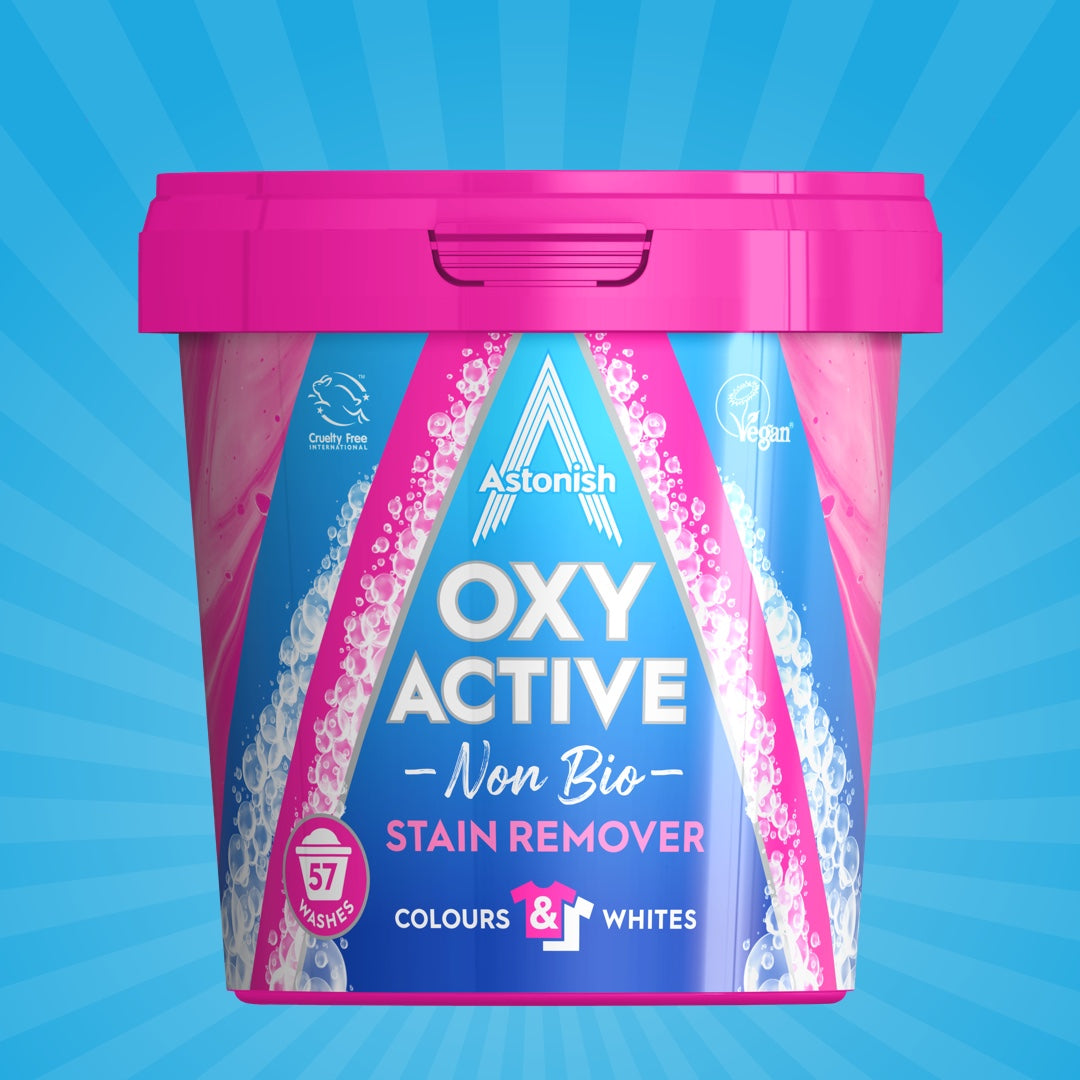
1. Astonish Oxy Active Non Bio Stain Remover Powder, 1.25kg
★★★☆☆ 3.4 / 5
£3.49 for 1.25kg at B&M, which works out at about 6.1p a wash and 27.9p per 100g. That is less than half the price per gram of Vanish and it is the same underlying chemistry: sodium percarbonate, which releases hydrogen peroxide in water and does the actual bleaching. On oxygen bleach there is no premium ingredient to buy. There is percarbonate, an activator, some surfactant and a fragrance, and the difference between a £3.49 tub and a £6.50 one is mostly the brand on the front.
It is also, of this group, the most honest about temperature. Astonish states 40 degrees or above for an in wash dose and 40 to 60 degrees for soaking. That is the truth about percarbonate, which bleaches poorly below 40 unless there is enough of the activator TAED in the mix. Vanish, by contrast, sells the same chemistry on the line that it works even in a cold wash at 30 while its own pack caps the soak at 40. Tesco manages to contradict itself between two pack sizes of the same product, with 500g saying even at 30 degrees and 1kg instructing a 40 to 50 degree soak.
Where it comes badly unstuck is the ingredient list, and this is worth describing exactly because it is not the usual story of a brand declining to publish. Astonish does publish a PDF. We downloaded it and read it. Rows four to twenty eight all read hash N slash A, which is a spreadsheet error exported into a document, leaving three legible ingredients out of twenty eight. So we cannot tell you whether it contains optical brighteners or isothiazolinones. There is also a live discrepancy between the safety data sheet for the spray version and its retail pack: the sheet lists H318 and H319 together with the signal word Warning, which is not a valid combination under CLP, while the pack says only H319.
Pros
- About 6.1p a wash and 27.9p per 100g, less than half the price per gram of the market leader
- Honest about temperature, stating 40 degrees and above for the wash and 40 to 60 for a soak
- The same sodium percarbonate chemistry as everything else at this end of the shelf
- A 1.25kg tub lasts a long time in an ordinary household
- Actually publishes an ingredient document, which is more than the market leader manages
Cons
- That document is broken: twenty five of its twenty eight ingredient rows read as a spreadsheet error, so most of the formula is unknowable
- Whether it contains optical brighteners or isothiazolinones cannot be established
- Danger, H318, causes serious eye damage, on a tub that lives next to the washing machine
- The spray version’s safety data sheet and its retail pack disagree, and the sheet carries an invalid hazard combination
- Vegan and cruelty free are claimed with no certificate number behind either
- Sold mainly through discount retailers, so availability is patchy
Buy it if you want oxygen bleach at the lowest sensible price, you wash at 40 rather than 30, and you keep it away from children and out of eyes.
The clean pick
Names TAED

2. Bio-D Laundry Bleach, 400g
★★★☆☆ 3.3 / 5
Bio-D is the only brand in this comparison that names TAED in its own ingredient list, and that single detail tells you the maker understands its own product. TAED is tetraacetylethylenediamine, the activator that lets sodium percarbonate bleach at lower temperatures. Without it, percarbonate needs real heat. With it, a 30 or 40 degree wash becomes arguable. Every brand here relies on it. One names it.
It is also fragrance free, declares no optical brighteners, and comes from a certified B Corp in the East Riding of Yorkshire with a published impact score, which is more independent verification than anything else on this page carries. At about 8.1p a wash it is not the cheapest, but it is close to the middle of the group and well under the market leader.
The gaps are real and we are not going to skate over them. Bio-D publishes label bands rather than a full INCI list, which is the same criticism we made of its washing up liquid, and it is a strange gap for a brand that sells itself on transparency. Its hazard statements are not published online at all, so you find out what warnings the tub carries when it arrives. And no certificate numbers are given for the Leaping Bunny or Vegan Society marks it displays.
Pros
- The only product here that names TAED, the activator that makes oxygen bleach work at lower temperatures
- Fragrance free, so no declared fragrance allergens, and no optical brighteners
- Certified B Corp with a published impact score, made in the East Riding of Yorkshire
- About 8.1p a wash, comfortably below the market leader
- 4.6 out of 5 from 104 reviews, and 4.8 on Trustpilot at company level
Cons
- Label bands only, with no full INCI list published, which is short of what Annex VII requires
- Hazard statements are not published online, so you cannot check the warnings before buying
- No certificate numbers for the Leaping Bunny or Vegan Society marks
- 400g is a small tub, so the price per gram is higher than the big discount tubs
- Mostly sold direct or through independents rather than supermarkets
- No independent group test has ever included it
Buy it if you want the shortest ingredient list, no fragrance and a maker with a certification you can look up.
The own brand, and the targeted one
Cheap own brand
29.5p per 100g
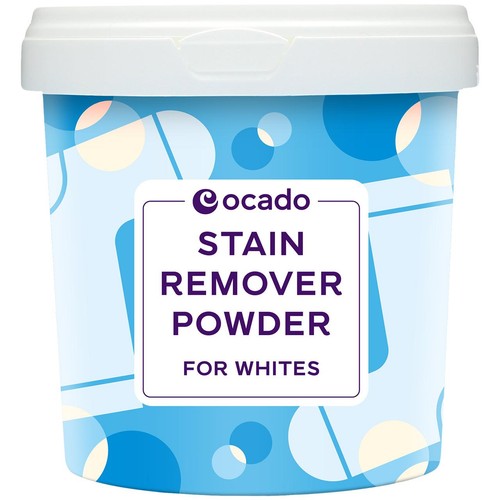
3. Ocado Stain Remover Powder for Whites, 1kg
★★★☆☆ 3.1 / 5
£2.95 for a kilo, about 8.9p a wash, and in independent testing this tier consistently holds its own. The Independent’s group test put Tesco Oxypower at £3.15 and Waitrose Essential at £3.25 ahead of the branded field, which is the same finding every group test in this category reaches: the supermarket powder is the same percarbonate and it works.
It carries optical brighteners, which is the honest reason a whites powder makes things look whiter than a colours one. Optical brighteners are fluorescent dyes that absorb ultraviolet and re emit it as blue, which cancels the yellow cast of ageing cotton. They do not remove anything. That is not a scandal, it is how every whitening product on the shelf works, but it is worth understanding that a good part of the whiter than white effect is optics rather than cleaning.
The label is bands only, no INCI list, and the hazard warning is the one everybody in this category shares: Danger, H318, causes serious eye damage, with the precautionary statement telling you to call a poison centre immediately. On a £2.95 tub of laundry powder that is a genuinely startling thing to read, and it is on almost all of them.
Pros
- £2.95 a kilo and about 8.9p a wash, and its tier beats the branded field in independent testing
- Names its preservatives and declares its optical brighteners on the pack
- Sold alongside the weekly shop, so no special trip or minimum order
- The same sodium percarbonate chemistry as products costing twice as much
Cons
- Optical brighteners do the whitening optically rather than by removing anything
- Danger, H318, causes serious eye damage, with a precautionary statement to call a poison centre
- Label bands only, no INCI list published
- No certifications of any kind
- No dose published in millilitres or grams, so the cost per wash is an estimate
- Ocado only, so you cannot pick it up elsewhere
Buy it if you want the cheapest thing that works on white cotton and you are not troubled by optical brighteners.
Best for one specific stain
Targeted
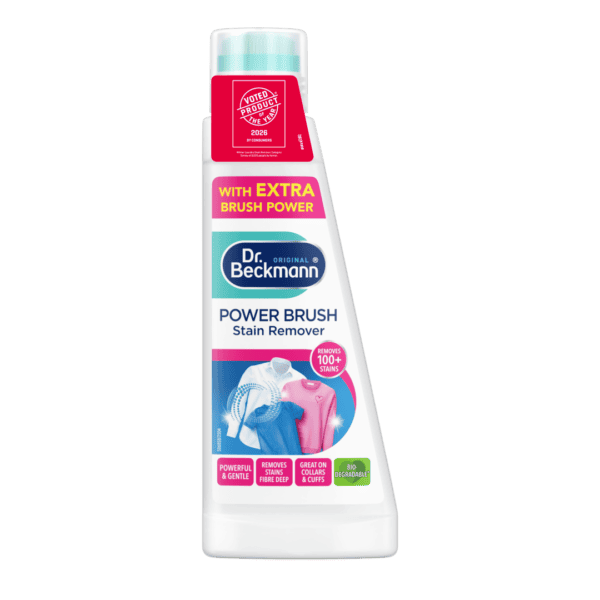
4. Dr. Beckmann Stain Devils Pre-Wash, 250ml
★★★☆☆ 3.0 / 5
Dr. Beckmann does something the rest of this group does not: it sells different products for different stains, because different stains need different chemistry. Protein stains such as blood, egg and milk need enzymes and cool water. Tannin stains such as tea, wine and grass need oxygen bleach. Grease needs a surfactant and a solvent. One tub of percarbonate is not good at all three, whatever the front of the pack says, and a targeted product genuinely can outperform a general one on the stain it was made for.
It is also the only product here that declares no optical brighteners, which for a pre wash makes sense: it is meant to remove the stain, not disguise the fabric.
Against that, it is much the most expensive per unit at £1.10 per 100ml, which is four times the Astonish powder. Disclosure is partial rather than full, and the version of the range that does name its isothiazolinones is the Power Brush rather than this one, which was out of stock on the maker’s own site when we looked. It carries the same Danger and H318 as the rest.
Pros
- A targeted product for a specific stain type, which genuinely does beat a general oxygen bleach on the stain it was made for
- Declares no optical brighteners, so it removes rather than disguises
- Small bottle that lives in the utility cupboard rather than a kilo tub
- A real dosing instruction rather than a vague scoop
Cons
- £1.10 per 100ml, four times the price per unit of the cheapest powder here
- Disclosure is partial, and the sibling product that does name its isothiazolinones was out of stock
- Danger, H318, causes serious eye damage
- 250ml does not go far if you have a household that produces a lot of stains
- You need to know which stain you have and buy the matching product
- No certifications published with numbers
Buy it if you have one recurring stain problem you can name, and you would rather solve that than buy a general purpose tub.
The market leader, and the one with the aquatic warning
The market leader
Login required
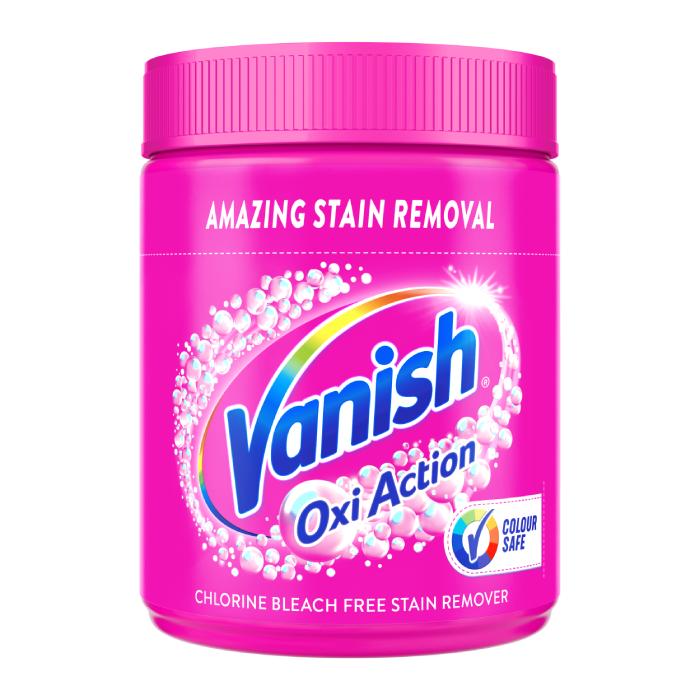
5. Vanish Oxi Action Powder, Colours, 1kg
★★★☆☆ 2.6 / 5
Vanish is the brand everyone reaches for and it scores 4.8 out of 5 from 191 reviews at Tesco, so plenty of people are happy. We are not going to tell you it does not work. What we can tell you is what happened when we tried to find out what is in it.
The pack points you to Reckitt’s ingredient portal. Annex VII of the detergents regulation is explicit that access to the manufacturer’s ingredient website must not be subject to any restriction or condition. We tested it. The products endpoint redirects to a login page. The ingredients page returns Page Not Found with a login link. The root is an empty application shell. There is no route to a Vanish ingredient data sheet without an account. That is the market leader in this category, and on our reading it does not meet the duty.
Two other things. At £6.50 a kilo it is 65p per 100g, which is 2.3 times the Astonish powder and 2.2 times the Ocado own brand for the same underlying percarbonate chemistry. And it carries the heaviest hazard label of the six: Danger, with H318 causes serious eye damage, H315 causes skin irritation, H272 may intensify fire as an oxidiser, and H302 harmful if swallowed. Worth knowing before it goes in a cupboard a child can reach. The same formula sold in Australia rates 1.6 out of 5 from 176 reviews with 88 per cent negative, against 4.8 here, which is a gap large enough to be worth mentioning even though we cannot explain it.
Pros
- 4.8 out of 5 from 191 reviews at Tesco, and a very large number of people find it works
- Available in every supermarket in the country, in a dozen formats
- A colours version that genuinely does omit the optical brighteners in the whites version
- The most heavily tested and iterated formula in the category
Cons
- No ingredient data sheet reachable without a login, which on our reading does not meet the Annex VII duty of unrestricted access
- 65p per 100g, over twice the price of own brand and Astonish for the same chemistry
- The heaviest hazard label here: Danger, H318, H315, H272 and H302
- Sold on working even in a cold wash at 30 degrees while its own pack caps the soak at 40
- The identical formula scores 1.6 out of 5 from 176 reviews in Australia against 4.8 in the UK
- A good ordinary washing powder beat every dedicated stain remover in the Stiftung Warentest group test
Buy it if it has always worked for you and you would rather not change, having read the hazard statements above.
Cheapest per litre
H410

6. Ace Ultra for Whites, 1 litre
★★☆☆☆ 2.3 / 5
£1.99 a litre at Savers, which is 19.9p per 100ml and the cheapest thing on this page. If all you want is to brighten white cotton in a soak, it will do that.
The reason it finishes last is a single line on the label that none of the others carry: H410, very toxic to aquatic life with long lasting effects. That is the most serious environmental hazard classification in ordinary consumer use, and it is on a £1.99 bottle that goes down the drain by design. Everything in this comparison ends up in the wastewater system, but this is the only one whose own label says that is a problem.
It also carries optical brighteners, publishes label bands only rather than an ingredient list, and offers no certifications of any kind. On a whites product the brighteners are at least doing the job people buy it for, but combined with the aquatic classification it makes for a product that is cheap in one specific and narrow sense.
Pros
- 19.9p per 100ml, the cheapest product in this comparison
- Genuinely effective at brightening white cotton in a soak
- Widely available in discount chemists and supermarkets
Cons
- H410, very toxic to aquatic life with long lasting effects, on a product designed to go down the drain
- Optical brighteners rather than additional cleaning power
- Label bands only, with no ingredient list published anywhere
- No certifications of any kind
- Whites only, so it is not a general purpose product
- No independent test data available for it
Buy it if you want the cheapest possible whites soak and the aquatic toxicity classification does not trouble you.
Prices checked 5 August 2026 and may have changed since.
The clean pick, and the honest catch
Our clean pick
Bio-D Laundry Bleach
No fragrance, no brighteners, and it names the activator
Why it wins on ingredients
✓
It names TAED
✓
No fragrance, so no fragrance allergens
✓
No optical brighteners
✓
A certification with a number
What you give up
✕
It still will not give you an INCI list
✕
The hazard warnings are not online
✕
It costs more per gram than the discount tubs
The catch, said plainly. Our rule is that if a category has a genuinely clean option we name it, and here there is one. But the more useful finding is that this whole category is close to optional. Stiftung Warentest tested twenty three stain removers, rated only two of them good, and found a good ordinary washing powder outperformed every one of them. CHOICE ran a control with no stain remover at all and found three sprays barely improved on doing nothing, while a homemade mix of hydrogen peroxide and washing up liquid scored 63 per cent against 78 for the test winner. So before you buy any of these, try more of the detergent you already own, a longer soak and a warmer wash. If that fails, buy the cheapest percarbonate powder on the shelf, because they are all the same thing.
What to look for when you buy one
Try your detergent first, because the evidence says it probably wins. Modern biological powders already contain the same enzymes and the same sodium percarbonate that a dedicated stain remover contains. Stiftung Warentest tested twenty three stain removers, rated two of them good, and found that a good full wash powder beat every one of them. The Australian consumer body CHOICE included a control with no stain remover at all and reported that three of the sprays were barely any better than using nothing. More detergent, a longer soak and a warmer wash is a free experiment and it works more often than the aisle suggests.
Match the chemistry to the stain, because no single product does all three jobs. Protein stains, meaning blood, egg, milk, sweat and grass, are broken down by enzymes and are set permanently by heat, so cold water first and never a hot wash until the mark has gone. Tannin stains, meaning tea, coffee, wine and fruit, are bleached by oxygen and want warmth. Grease needs a surfactant and often a solvent. A tub of percarbonate is excellent at the second, mediocre at the first and poor at the third, whatever the front of the pack claims.
Oxygen bleach needs heat, and most people wash at 30. Sodium percarbonate releases hydrogen peroxide in water, and that reaction is temperature dependent. Below 40 degrees it is sluggish unless the formula contains enough TAED, the activator that makes low temperature bleaching possible. Only one product in this comparison names TAED in its own ingredient list. The rest simply assert that they work cold, and the packs contradict each other and occasionally themselves: one brand advertises working at 30 on the front while instructing a 40 degree soak on the back, and one supermarket sells the same powder in two sizes with two different temperature instructions.
Read the hazard label, because it is stronger than people expect. Five of the six here carry H318, causes serious eye damage, with the signal word Danger. One adds H315 skin irritation, H272 may intensify fire, and H302 harmful if swallowed. One carries H410, very toxic to aquatic life with long lasting effects, on a product designed to go down the drain. These are laundry products that live in a cupboard next to the machine, often at floor level, and the warnings on them are more serious than most people assume.
Understand what optical brighteners actually do. They are fluorescent dyes that absorb ultraviolet light and re emit it as visible blue, which cancels the yellow cast that old cotton develops. They make fabric look whiter. They remove nothing. Whites formulas here contain them and colours formulas mostly do not, which is the real difference between the two products. That is not fraud, it is how the whole category works, but a good part of what you are buying in a whites powder is an optical effect rather than a cleaning one. They also persist in wastewater, which is the more substantial objection to them.
The ingredient list is a legal duty, so check whether the brand meets it. Annex VII of the detergents regulation requires manufacturers to make an ingredient data sheet available on a website, and states that access must not be subject to any restriction or condition. Of seven brands we checked, one publishes a genuine full list. The market leader points at a portal where the products endpoint redirects to a login and the ingredients page returns a not found error. Another publishes a document where twenty five of twenty eight rows read as a spreadsheet error. When a maker will not tell you what is in a product that touches everything you wear, that is information in itself.
Buy on price per 100 grams, not price per tub. The range in this comparison runs from 19.9p to £1.10 per 100 units, and the chemistry at the bottom of that range is the same as the chemistry at the top. Per wash, the spread is roughly 6p to 30p. Over a year of ordinary family laundry that is the difference between about £12 and about £60 for a benefit that independent testing struggles to detect at all.
Do not put a hot wash on a protein stain. This is the single most useful piece of laundry advice in this whole article and it costs nothing. Heat denatures protein and sets blood, egg, milk and sweat into the fibre where no amount of oxygen bleach will shift them afterwards. Cold water, an enzyme product, time, and only then a warm wash. Almost every ruined shirt in Britain was ruined by somebody helpfully putting it straight in at 60.
And treat colour safe as a claim rather than a guarantee. Colours formulas leave out the optical brighteners and usually run a gentler bleach system, but oxygen bleach is still bleach and dye is still dye. The single most common one star complaint we found across every brand in this group was a coloured garment coming out patchy from a product sold as safe for colours. Test on a seam or a hem, every time, whatever the pack says.
Final verdict
Try more detergent first, then buy the cheapest percarbonate
Three things to take away.
The first is that this category may not need to exist for most households. Two independent group tests, in Germany and Australia, both found that an ordinary good washing powder matched or beat the dedicated stain removers, and one found three sprays were barely better than using nothing at all. Before you spend anything, use more of what you already have, soak for longer, and wash warmer.
The second is that when you do buy, you are buying sodium percarbonate, and it costs between 19.9p and 65p per 100 grams depending entirely on whose name is on the tub. The market leader is roughly twice the price of the own brand and the discount brand for the same active chemistry, and in the one group test we found that included own brands, the own brands won.
The third is that you should be able to read what is in these, and mostly you cannot. The regulation says the list must be on a website with no restriction on access. The market leader’s portal asks you to log in. One brand’s published document is a broken spreadsheet. That is worth knowing when a product is going onto the clothes your family wears every day.
Our pick is the Astonish Oxy Active powder at about 6p a wash if you are buying on price, and the Bio-D Laundry Bleach if you want no fragrance, no brighteners and a maker that names its own activator. And put the hot wash away until the protein stain has gone.