Home · Cleaning · Vacuums
Best vacuums for allergies: six compared, and the £170 one is the only one with a certificate
Six vacuums from £69.99 to £649.99, all marketed at people with dust or pet allergies, checked against the one thing that actually matters: not whether there is a HEPA filter in the machine, but whether the air is forced through it rather than round it. Not one of the six publishes a filter class to the European standard that defines what HEPA means. One of them holds an independent certification, and it is not the expensive one. And the strongest published study in this area says the thing that raises your allergen exposure is not the filter grade at all, it is emptying the bin.
By Mrs House · Updated 27 August 2026 · 17 minute read
Mrs House is independent. Nobody pays for a place in a ranking here.
The short answer
Buy the Numatic Henry Allergy at £169.99. It is the only machine here with an independent certification you can look up, and it is bagged, so you never tip a cloud of dust back into the room.
- Best overall: Numatic Henry Allergy HVA160, £169.99. Allergy UK Seal, and the cheapest allergy machine to own over five years by a wide margin.
- Best built: Miele Guard L1 Allergy, £379. The same bagged logic, quieter, and it names EN 1822:2019.
- Skip the premium: Dyson V15 Detect at £649.99 and Samsung Bespoke AI Jet Ultra at £599. Good vacuums, but no filter class and no certificate.
Buy a cordless if you want one, just do not pay a premium for the allergy words on the box, because none of them are backed by a class or a certificate.
How we assessed these
Six machines, one question. A HEPA filter is a component. A sealed system is a design. If the machine leaks air around the filter through its own seams, the filter grade is irrelevant, and it is the second thing that decides what comes out of the back of your vacuum.
So for each machine we asked five things.
Is there a filter class, and to which standard? HEPA is defined by EN 1822 and ISO 29463, which sort filters into classes from H11 to H14. A brand that says HEPA without naming a class has told you nothing testable. None of the six names a class on its own website.
Is a sealed system claimed, and is there a whole machine figure behind it? A whole machine percentage tested against a real clause is worth something. A percentage with no standard, or a sealed claim that only appears in a retailer’s copy and not the maker’s, is worth much less.
Is there independent certification? We checked the Allergy UK product directory and the American asthma and allergy friendly certified list ourselves rather than believing the logos. One machine here is in a directory for the model actually on sale.
Bagged or bagless, and what happens when you empty it. This turned out to matter more than anything else, for reasons set out in the guide.
What it costs to own for five years. Bags, filters and the machine, added up.
Everything read on 27 August 2026. Where a maker does not publish something, we say so and say where we looked.
The ranking, at a glance
| Machine | Price | Type | Filter class published? | Independent certificate? | Score | |
|---|---|---|---|---|---|---|
| 1 | Numatic Henry Allergy HVA160 | £169.99 | Bagged cylinder | No, but H13 is listed by Allergy UK | Yes, Allergy UK Seal | 3.9 |
| 2 | Miele Guard L1 Allergy | £379.00 | Bagged cylinder | No class, but names EN 1822:2019 | No | 3.6 |
| 3 | Samsung Bespoke AI Jet Ultra | £599.00 | Bagless into a bagged station | No | Not for this model | 3.2 |
| 4 | Dyson V15 Detect Absolute | £649.99 | Bagless cordless | No | No | 3.1 |
| 5 | Shark Stratos IZ411UKT | £199.99 | Bagless cordless | No | No | 2.8 |
| 6 | Vax Mach Air Revive UCA2GEV1 | £69.99 | Bagless upright | Makes no filtration claim at all | No | 2.4 |
The two we would actually buy
Best overall
The clean pick

1. Numatic Henry Allergy HVA160
★★★★☆ 3.9 / 5
The cheapest serious machine here is the only one in the whole comparison with an independent certification covering the model actually on sale. The Henry Allergy holds the Allergy UK Seal of Approval, and Allergy UK’s own listing describes a three stage HEPA13 system scientifically proven to reduce exposure to house dust mite and cat allergen. We found it in the directory ourselves rather than taking the logo on trust. The certificate number is not published, which is a fair criticism, but a directory entry naming the model and the allergens tested is a completely different order of evidence from a percentage on a marketing page.
It is also bagged, and after reading the research that turns out to be the single most consequential design choice in this category. A 2006 study in the journal Allergy found that HEPA vacuums made no measurable difference to airborne allergen against an ordinary old machine, but that emptying the dust compartment significantly increased exposure to both mite and cat allergen. A 6 litre HepaFlo bag that seals as you pull it out sidesteps the entire problem. Numatic calls it allergy free emptying, and for once the marketing phrase describes something real.
It is not fashionable and it is not light. 7.7 kilos, a cylinder you drag, and reviewers consistently say it can be hard to push. It also takes up real cupboard space assembled. But over five years, on around ten bags a year at £12.99 and one TriTex filter change, the consumables come to roughly £90, which puts the total cost of ownership at about £260. The Dyson is £649.99 before you have vacuumed anything.
Pros
- The only machine here with an independent certification covering the model on sale: the Allergy UK Seal, for house dust mite and cat allergen
- Bagged, so you never tip an open bin of dust back into the air, which the published research says is the moment that matters
- Roughly £260 total cost of ownership over five years, less than half the Dyson’s purchase price
- Three year warranty, four if you buy direct and register it, against one year on the budget machine
- Made in the UK, and parts and bags are available everywhere
- 620W motor with 2,300 mm of water lift and a 25.7 metre cleaning range, so you plug in once for a whole floor
Cons
- Numatic itself publishes no HEPA class. The H13 figure comes from Allergy UK and from a magazine review, never from the maker
- No certificate number is published for the Allergy UK Seal
- 7.7kg and a cylinder body, and reviewers say it is hard to push and needs substantial cupboard space
- Corded, so this is not the machine you grab for a two minute spill
- Numatic does not publish a noise figure anywhere
- We could not retrieve a second independent aggregate rating for the Allergy model specifically, only for the standard Henry
Buy it if you want the allergy claim to be backed by something other than the brand saying it, and you would rather spend the difference on anything else.
Best built
Names a standard
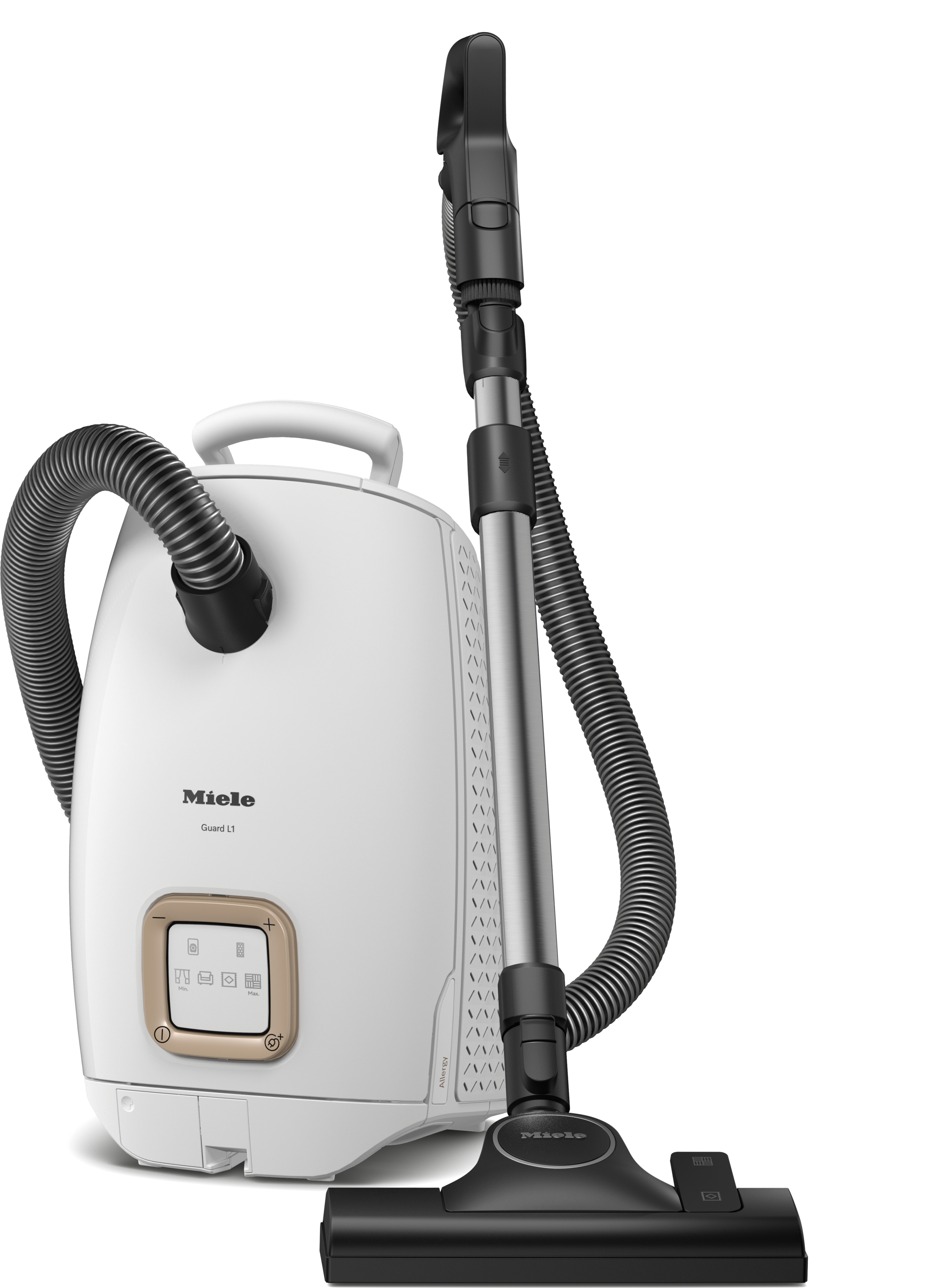
2. Miele Guard L1 Allergy
★★★★☆ 3.6 / 5
Miele comes closest of anyone here to answering the question properly. It is the only maker in this group that names the actual filtration standard, EN 1822:2019, on its own website. It does not give you the class that goes with it, which is frustrating because the class is the whole point of the standard, but naming EN 1822 at all puts it a step ahead of five machines that just say the word HEPA and leave it there.
Like the Henry it is bagged, which is the design decision that matters most, and its HEPA AirClean filter is a replaceable cartridge rather than something you rinse and hope. Miele fits a Timestrip indicator that tells you when the filter is spent, which is a sensible answer to the fact that it publishes no replacement interval anywhere. Reviews are excellent but thin, at 4.8 out of 5 from twenty on Miele’s own site and 4.8 from twelve at Currys, because the Guard L1 is a recent replacement for the long running Complete C3 Allergy.
The cost is where it slips behind the Henry. £379 to buy, and on Miele’s own three month bag life you are looking at twenty bags over five years, which with two HEPA cartridges comes to about £135 in consumables, or £27 a year. Total five year ownership is around £514, which is roughly double the Henry for a machine that has no independent certification at all.
Pros
- The only maker here that names the filtration standard, EN 1822:2019, on its own website
- Bagged, with a replaceable HEPA cartridge rather than a washable filter you might not clean properly
- A Timestrip indicator on the filter, which tells you when it is actually spent
- 4.8 out of 5 at both Miele and Currys, and Miele build quality has a long record behind it
- Quiet, well made and easy to push compared with the Henry
Cons
- No independent certification. It is not in the Allergy UK directory and not on the American certified list
- Names EN 1822:2019 but does not give the filter class, which is the number the standard exists to define
- About £514 over five years against the Henry’s £260, for a machine with less third party evidence behind it
- Publishes no filter replacement interval, only the Timestrip
- Review counts are very low because the model is new, so there is little owner evidence either way
- Corded cylinder, so the same convenience trade off as the Henry without the price advantage
Buy it if you want the bagged logic in a quieter, better finished machine and you are willing to pay roughly twice the Henry for it.
The two expensive cordless machines
Best cordless
Empties into a bag

3. Samsung Bespoke AI Jet Ultra VS90F40DEK
★★★☆☆ 3.2 / 5
Samsung is the only cordless brand here that has actually engineered an answer to the emptying problem. The handheld drops into a Clean Station which empties it into a sealed 2 litre dust bag, so the one moment the research identifies as raising your allergen exposure is the moment you never perform. If you want a cordless and you have an allergy in the house, that design decision is worth more than any percentage on the box.
Read the footnotes though, because they are the story. The headline is that a multi layered filtration system traps 99.999 per cent of fine dust. Footnote eleven says that figure covers particles from 0.5 to 4.2 microns, measured to IEC 62885-2 clause 5.11, which is the right clause, on internal testing. Not a lab. Samsung pays SLG for its suction claims and SGS-IBR for a filtration comparison, so it plainly knows how to buy third party testing. It did not buy it for the number on the front page. And the separate HEPA claim is benchmarked, in Samsung’s own words, compared to our non-HEPA filter model, which is a claim about Samsung’s back catalogue rather than about your air.
One more thing worth knowing before you buy on the badge. Samsung does hold an Allergy UK Seal of Approval, and we went and read the listing. It covers the VS20R90 series, which is the older Jet 90 range. The Bespoke AI Jet line is not on it. So the certification is real and it is not for this machine.
Pros
- The Clean Station empties the handheld into a sealed dust bag, which is the only design here that removes the bin emptying problem from a cordless
- The 99.999 per cent figure is at least measured against the correct clause, IEC 62885-2 CL.5.11, which is the dust emission test
- Washable dustbin and cyclone assembly, plus a washable microfilter
- 400W and a genuinely capable machine for a whole house
- A real alternative if a corded cylinder is not going to get used
Cons
- The headline filtration figure is internal testing, not a lab, on a brand that buys external testing for its other claims
- The measured range is 0.5 to 4.2 microns, so the ultrafine particles the vacuum emission research concentrates on sit outside it
- The HEPA claim is relative, benchmarked against Samsung’s own non-HEPA model rather than against a standard
- Its Allergy UK Seal covers the older VS20R90 series, not this machine, and no certificate number is published
- No filter class and no EN 1822 or ISO 29463 reference anywhere
- Roughly £770 to £800 over five years once you include station bags and filters
Buy it if you want a cordless and you take the emptying problem seriously, and you are buying the Clean Station rather than the percentage.
Most expensive
Three different numbers
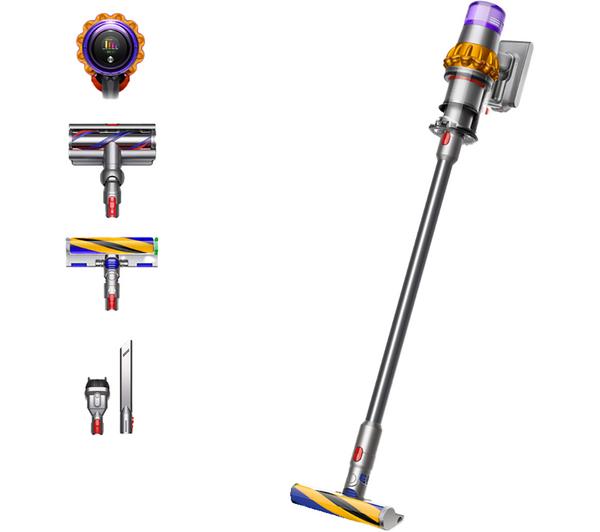
4. Dyson V15 Detect Absolute
★★★☆☆ 3.1 / 5
Dyson says more about its filtration than anyone else here, claims a fully sealed whole machine system explicitly, and cites a real test clause, EN60312-1 clause 5.11. On paper that is the most substantive filtration claim in the group and we want to give it credit for that.
Then you read three of its own pages on the same afternoon. The V15 Detect Absolute page says HEPA filtration captures 99.97 per cent of microscopic particles down to 0.1 microns, and separately that whole machine filtration captures 99.9 per cent. The V15 range page says 99.99 per cent to 0.3 microns. The Absolute Plus page says 99.99 per cent to 0.1 microns. That is three different percentages and two different particle sizes for the same machine, on the same website, on the same day. Any one of them might be right. Collectively they are the clearest possible demonstration of why an unaudited number is weak evidence, and it is Dyson’s own website making the point.
It is also bagless, so every empty is the moment the Allergy journal study identified as the one that raises exposure. There is no independent certification: not in the Allergy UK directory, not on the American certified list, and no filter class to any standard on any UK page. The machine itself is excellent. At £649.99 it is the most expensive thing here, and what you are buying is engineering and convenience, not allergy evidence.
Pros
- Claims a fully sealed whole machine system explicitly, which is the right claim to make, and cites a real test clause in EN60312-1
- Washable filter with a stated maintenance routine of a monthly cold water rinse, so consumables can be close to zero
- Genuinely excellent as a vacuum cleaner, which is why people buy them
- The particle counting display gives you feedback that no other machine here offers
Cons
- Three different whole machine percentages across three of its own pages, at two different particle sizes, for the same machine on the same day
- No filter class published, and no EN 1822 or ISO 29463 reference anywhere
- No independent certification: not in the Allergy UK directory and not on the American certified list
- Bagless, so every emptying is exactly the event the published research identifies as raising allergen exposure
- £649.99, the most expensive machine here, with less third party evidence than a £169.99 one
- Filter replacement price and interval are not published, so the five year cost carries an unquantified risk
- Two year warranty against three or four on the Henry
Buy it if you want the best cordless vacuum on its own merits and you are clear that the allergy wording on the box is not backed by a class or a certificate.
The one whose claim is not its own, and the one that makes none
Well reviewed
Retailer copy only
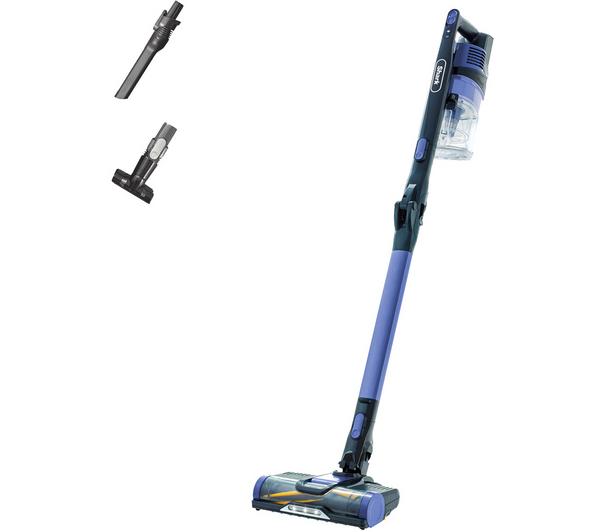
5. Shark Stratos Anti Hair Wrap Plus IZ411UKT
★★★☆☆ 2.8 / 5
People like this machine. 4.5 out of 5 from 311 reviews at Currys on this model and 4.7 from 1,840 on its sibling, and the anti hair wrap system is a genuinely good solution to a genuinely annoying problem. As a vacuum at £199.99 it is easy to recommend.
As an allergy vacuum it has a specific problem, and it is worth setting out exactly. The claim you will read when you shop for it, a HEPA Media filter with an Anti-Allergen Complete Seal trapping up to 99.9 per cent of dust and allergens, comes from Currys. It is retailer copy. We ran a full text search of SharkNinja UK’s own product page for this machine and got zero occurrences of HEPA, zero of Complete Seal, zero of sealed, zero of 99.9 and zero of micron. The only appearance of the word allergen on the maker’s page is in the name of a dusting brush accessory.
That is not the same as the brand making a false claim. It is the brand being silent and the shop filling the silence, which is a common pattern and one worth recognising when you are standing in front of a shelf edge label. Note also what the phrase HEPA Media filter is doing: media is the material, not a grade, and up to is carrying real weight in up to 99.9 per cent. There is no class, no standard, no lab and no certification in either directory.
Pros
- 4.5 out of 5 from 311 reviews at Currys, and 4.7 from 1,840 on the closely related Pet Pro version
- Anti hair wrap genuinely works and is the reason most people buy one
- £199.99 is reasonable for a capable cordless
- Washable filter, with spares at £8.99 to £12.99
- Five year warranty on the sibling model, which is generous
Cons
- The entire sealed system and HEPA claim exists in retailer copy. The maker’s own page for this machine contains none of it
- HEPA Media filter is not a grade. No H class, no EN 1822, no ISO 29463 anywhere
- Up to 99.9 per cent with no particle size and no standard attached is close to unfalsifiable
- No independent certification in either the Allergy UK directory or the American certified list
- Bagless, so the emptying problem applies in full
- No filter replacement interval published, so the five year running cost cannot be worked out
Buy it if you want a good cordless with anti hair wrap at a fair price and you are not relying on it for allergy control.
Cheapest
£69.99
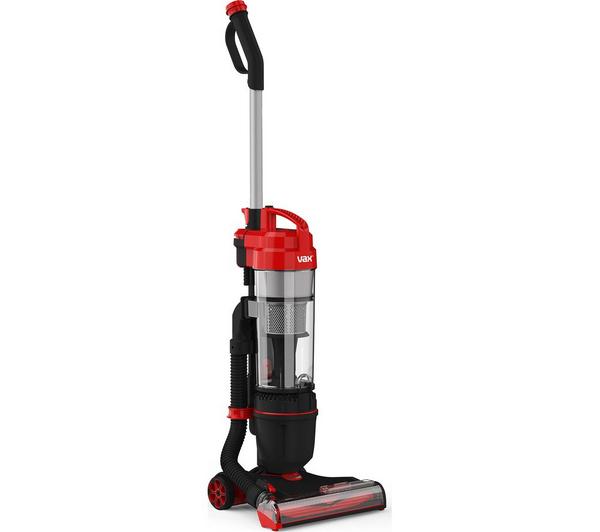
6. Vax Mach Air Revive UCA2GEV1
★★☆☆☆ 2.4 / 5
This one finishes last on the question the article is asking, and it is important to be clear about why, because it is not for the reason you might assume. The Vax does not make a bad filtration claim. It makes no filtration claim at all. There are zero instances of the word HEPA on its page, and the entry in the specification table under Filters reads, in full, Rinseable. It cites IEC 62885-2 clauses 5.10 and 5.12, which cover suction and dust removal from carpet. Clause 5.11, the dust emission clause that measures what comes out of the back, is not cited.
By the standards we apply everywhere else on this site, saying nothing is better than saying something unverifiable, and we would rather have this than the Shark situation where a shop invents a claim the maker never made. But an allergy comparison has to score on whether the machine does the job, and on the evidence available this one has not been shown to do anything for allergens at all. It is a £69.99 upright that picks up dust.
On that basis it is decent value. 4.9 kilos, an 820W motor, a 1.5 litre bin, a 7 metre cord. The five year cost of ownership is about £90 including a filter kit, which is the cheapest here by a distance. The thing to weigh against that is the warranty: one year, against three or four on the Henry and five on the Shark sibling. On a bagless upright at this price the machine itself is the risk, not the consumables.
Pros
- £69.99, and about £90 to own over five years including a filter kit, the cheapest in the group
- Makes no filtration claim it cannot support, which is more than two pricier machines here manage
- 4.9kg with a 7 metre cord and a 1.5 litre bin, so it is easy to carry up stairs
- Rinseable filters, so no consumable lock in
Cons
- No filtration claim of any kind, so there is no evidence it does anything for allergens
- The standard clauses it cites cover suction and carpet pick up, not dust emission
- No filter class, no sealed system claim, no certification, nothing to check
- One year warranty, the shortest here by a factor of three
- Bagless, so the emptying problem applies with no mitigation at all
- Vax publishes no noise figure
Buy it if you want a cheap upright that picks up dust and you are not buying it for allergies, because on that question it offers nothing.
Prices checked 5 August 2026 and may have changed since.
The clean pick, and the honest catch
Our clean pick
Numatic Henry Allergy
The only certificate in the group, on the cheapest serious machine
Why it wins on evidence
✓
It is in the directory, and we looked
✓
Bagged, which is the decision that matters
✓
It is the cheapest to own
✓
It is repairable and it lasts
What you give up
✕
Numatic will not give you a filter class either
✕
It is heavy and awkward
✕
A vacuum is not the main intervention
The catch, said plainly. Our rule is that if a category has a genuinely clean option we name it, and here there is one, but the honest version comes with a bigger caveat than usual. The Cochrane review of physical and chemical measures for reducing house dust mite exposure pulled together 55 trials and 3,121 patients and concluded that these methods cannot be recommended for asthma. That review is dominated by mattress encasings rather than vacuum filtration, so it does not settle the vacuum question on its own, but it is the largest body of evidence there is and it is not encouraging. A separate study found that more than twenty vacuums, across every price point, all emitted ultrafine particles, and that emissions were not related to price. So the Henry Allergy is our pick because it is the only machine in this comparison whose allergy claim has anything independent behind it, not because we can promise you it will change your symptoms. If you want the intervention with the strongest evidence behind it, it is a hot wash of the bedding, and it costs nothing.
What to look for when you buy one
A HEPA filter is a component. A sealed system is a design. Only the second one matters. If the machine draws air through gaps in its own body and lets it out again past the filter, the filter grade is irrelevant. This is why the phrase whole machine filtration exists, and why a brand that says it has a HEPA filter but will not claim a sealed system has told you very little. Of the six here, Dyson claims a sealed system explicitly and with a test clause, Miele names a standard, Samsung says finely tuned machine sealing with no figure attached, Shark’s sealed claim appears only in a shop’s copy, and Vax makes no claim at all.
Ask which class, and to which standard. HEPA is defined by EN 1822 and ISO 29463, which sort filters into classes from H11 to H14, each with a specified capture efficiency at the hardest particle size to trap. A grade is checkable. The word HEPA on its own is not, because nothing in UK law governs it. Not one of the six machines in this comparison publishes a class to either standard on its own website. Miele names EN 1822:2019 without giving the class, which is closer than anyone else gets. The H13 figure attached to the Henry comes from Allergy UK, not from Numatic.
Nothing regulates the word HEPA on a UK vacuum box, and here is why. The EU energy label for vacuum cleaners, which included dust re-emission among its measured categories, was annulled in its entirety by the General Court in Case T-544/13 in November 2018 after Dyson’s challenge, and it has never been replaced. So the one piece of mandatory, comparable, independently verified performance labelling this category ever had no longer exists. What you are left with is whatever each manufacturer chooses to publish, in whatever form it chooses.
The emptying matters more than the filter, and there is a study that shows it. Gore and colleagues, publishing in the journal Allergy in 2006, compared HEPA vacuums against an old control machine and found no significant difference in airborne allergen. What they did find, at statistical significance, was that emptying the dust compartment raised exposure to both mite and cat allergen. Read that twice, because it reorders the whole category: the filter grade did not matter and the moment you tip the bin out did. That single finding is why two bagged cylinders and one cordless that empties into a bag finish above two cordless machines costing three times as much.
The bag itself is a variable nobody mentions. Vaughan and colleagues, in the Journal of Allergy and Clinical Immunology in 1999, measured allergen recovered from two layer vacuum bags and found a range from 0.93 to 2,450 nanograms. That is a factor of more than two thousand across bags. So a bagged machine is only as good as what you put in it, and buying the cheap compatible bags off a marketplace is not a neutral saving.
Do not expect price to buy you cleaner air. Knibbs and colleagues tested more than twenty vacuums and found every one of them emitted ultrafine particles, with emissions not directly attributable to price, age or other obvious factors. In this comparison the machine with independent certification costs £169.99 and the machine with three contradictory filtration percentages on its own website costs £649.99. There is no reliable relationship between what you pay and what you can verify.
Check the directory, not the logo. Two certifications are worth looking for: the Allergy UK Seal of Approval and the American asthma and allergy friendly certification. Both publish searchable directories. We looked up all six machines and found one, the Henry Allergy, listed for the model actually on sale. Samsung is in the Allergy UK directory but for the older VS20R90 series rather than the machine in the shops, which is exactly the kind of thing a logo on a box will not tell you. Neither listing publishes a certificate number, which is a fair criticism of the schemes as much as of the brands.
Be realistic about where the mites are. Roughly 60 per cent of house dust mites live in the bed and about 10 per cent in carpet. Mites need warmth and humidity, and a mattress supplies both along with the skin cells they eat. So the machine you drag round the living room is working on the smaller share of the problem. A 60 degree wash kills mites outright. A 40 degree wash has been measured as removing about 6.5 per cent of them. If you buy one thing off the back of this article, make it a hotter wash cycle for the bedding.
Vacuuming stirs things up before it takes them away. Every machine tested in the ultrafine particle work emitted particles while running, and beating a carpet with a motorised head lifts settled dust into the air whatever comes out of the exhaust. The practical consequences are simple. If someone in the house has asthma triggered by dust, they should not be the one vacuuming, and they should not be in the room while it happens. Open a window afterwards rather than during, and give the air twenty minutes before the room is used properly.
And know what the evidence base actually says before you spend £650. The Cochrane review of chemical and physical methods for reducing house dust mite exposure covers 55 trials and 3,121 patients and concludes that these methods cannot be recommended. It is weighted towards mattress encasings rather than vacuums specifically, and it is about asthma outcomes rather than allergen counts, so it is not the last word on vacuuming. But it is the largest synthesis available and it should temper what you expect. A vacuum is a reasonable thing to own. It is not a treatment.
Final verdict
Spend £170, wash the bedding at 60, and do not buy the word HEPA
Three things to take away.
The first is that in this category the word HEPA is unregulated and the number next to it is usually unaudited. Nothing in UK law governs the term on a vacuum box, the one piece of mandatory comparable labelling this category had was annulled in court in 2018 and never replaced, and not one of these six machines publishes a filter class to the standard that defines what HEPA means. When Dyson’s own website gives three different whole machine percentages at two different particle sizes for the same machine on the same day, that is not carelessness so much as a demonstration of how little the numbers are constrained.
The second is that the design decision beats the specification. The published study that actually tested this found HEPA machines no better than an ordinary old vacuum, and found that emptying the bin significantly raised allergen exposure. That is why a £169.99 bagged cylinder finishes ahead of a £649.99 cordless, and why the one cordless here that empties itself into a sealed bag scores above the one that does not.
The third is the uncomfortable one. The largest synthesis of the evidence, a Cochrane review of 55 trials and over three thousand patients, concludes that physical and chemical measures for reducing dust mite exposure cannot be recommended. Around 60 per cent of mites live in your bed and a 60 degree wash kills them, while a 40 degree wash removes about one in fifteen. The cheapest, best evidenced intervention in this whole article is the temperature dial on your washing machine.
Our pick is the Numatic Henry Allergy at £169.99, because it is the only machine here whose allergy claim has an independent listing behind it and the only one you can cost over five years from published figures. If you want a cordless, buy the one you will actually use, and buy it on how well it vacuums.